


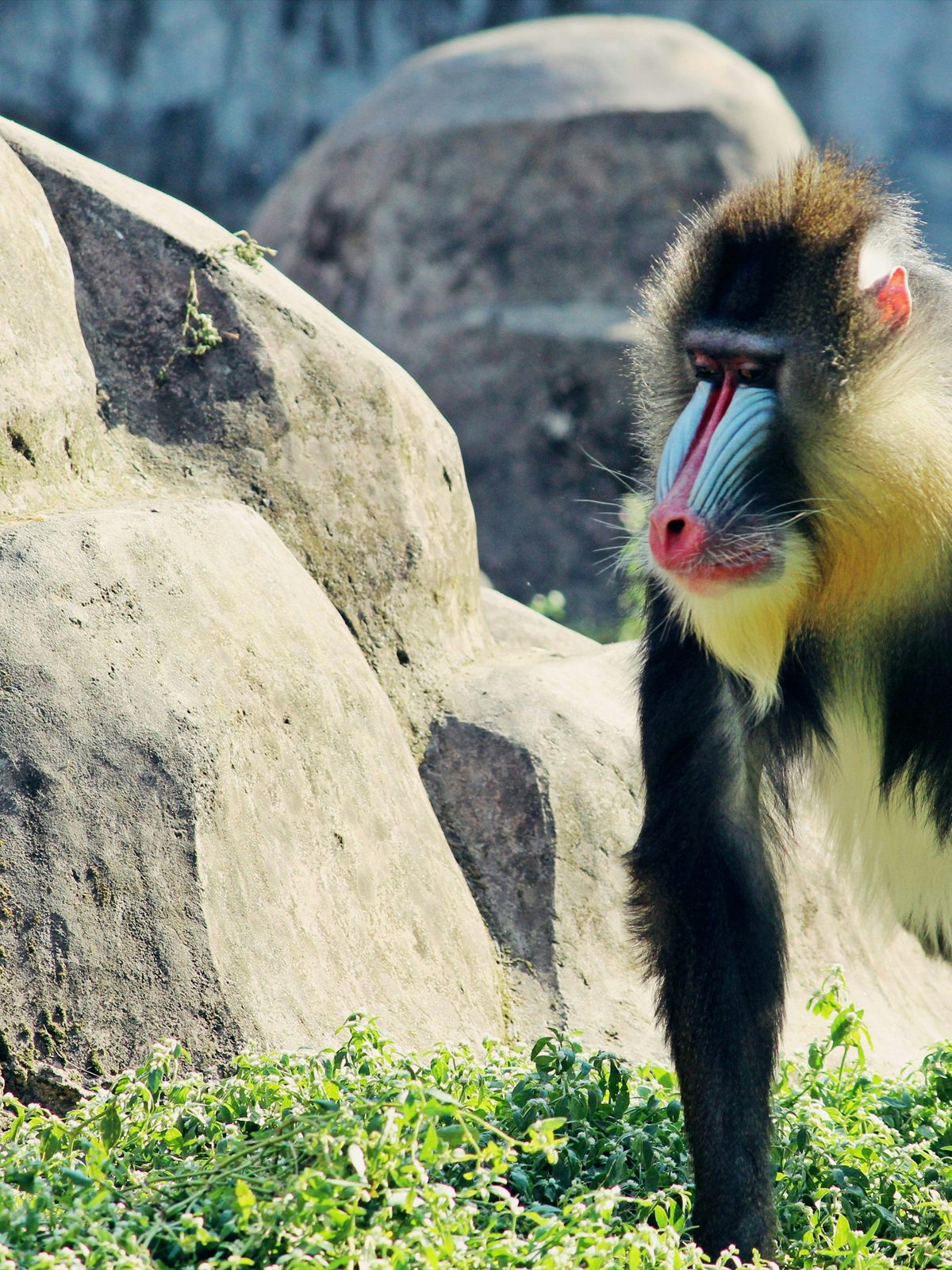
MANDRILL
Mandrillus sphinx
DESCRIPTION
The mandrill is a large primate known for its striking facial coloration and distinctive appearance. It is the largest species of monkey and is native to the rainforests of Central Africa.
FUN FACTS
- Mandrills are the largest monkeys in the world | Their colorful faces are a result of their social status and health | They can run up to 30 km/h on the ground
QUICK INFO
Lifespan20-30 years in the wild, up to 40 in captivity
Average Weight30-50 kg
Average Length75-100 cm
Diet TypeOmnivore
Social Structuregroup — they live in large, multi-male and multi-female groups.
Activity PatternDiurnal
Breeding SeasonYear-round
- Habitat
- Mandrills inhabit dense tropical rainforests and are often found near rivers and streams. They prefer areas with abundant vegetation for foraging and shelter.
- Biomes
- Tropical Rainforest
- Native Range
- Central Africa, primarily in Gabon, Cameroon, and the Republic of the Congo.
- Continent
- Africa
- Countries
- Gabon, Cameroon, Republic of the Congo
- Diet
- Mandrills are omnivorous and consume a varied diet that includes fruits, seeds, and small animals. They are known to forage on the forest floor for food.
- Diet Type
- Omnivore
- Favorite Food
- fruits, seeds, small animals
- Social Structure
- group — they live in large, multi-male and multi-female groups.
- Activity Pattern
- Diurnal
- Group Size
- 20-200
- Territorial
- 0
 VU
VU
 LC
LC
30-50 kg
Weight
75-100 cm
Length
- Coloration
- Mandrills have a colorful face with blue and red skin, and their bodies are covered in coarse fur that is mostly brown.
- Sexual Dimorphism
- Males are significantly larger and more colorful than females.
- Lifespan
- 20-30 years in the wild, up to 40 in captivity
- Gestation Period
- 180 days
- Offspring per Birth
- 1
- Sexual Maturity
- 3-4 years
- Breeding Season
- Year-round
VU
Vulnerable
IUCN Red List Status
- Population Status
- The population is currently decreasing due to habitat loss and hunting.
- Wild Population Estimate
- Unknown, but believed to be declining
- Population Trend
- Decreasing
- Endangered
- 1
- Threats
- Main threats include habitat destruction due to logging and agriculture, as well as hunting for bushmeat.
- Predators
- Leopards, large snakes
- Defense Mechanisms
- Mandrills use their size and social structure to deter predators, and they can also display aggressive behaviors.
- Found in Zoos
- Common