


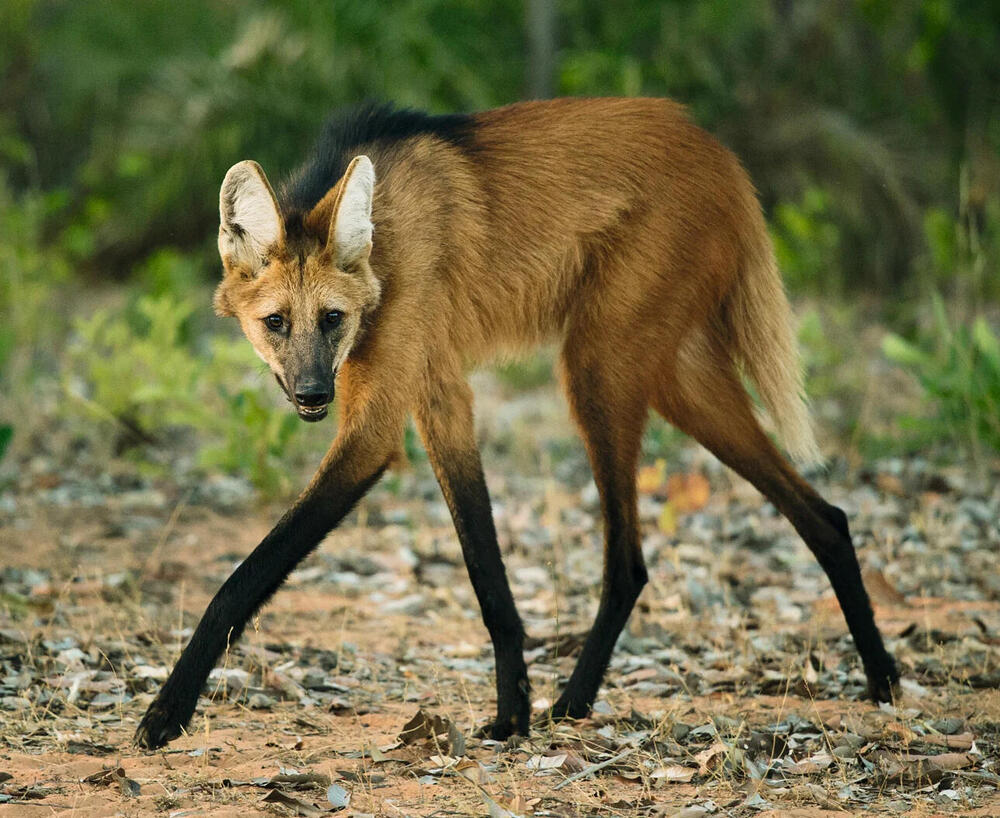
MANED WOLF
Chrysocyon brachyurus
DESCRIPTION
The Maned Wolf is a unique canid species known for its long legs and distinctive mane that runs along its neck. It has a slender body, large ears, and a reddish-brown coat, which helps it blend into its grassland habitat. Unlike other canids, the Maned Wolf has a more fox-like appearance and is known for its solitary behavior, often roaming large territories in search of food.
FUN FACTS
- The Maned Wolf is often referred to as a 'wolf' due to its name, but it is more closely related to foxes than to true wolves
- They have a unique way of communicating, using a variety of vocalizations that can be heard over long distances, making them one of the most vocal canids in the wild
- | Unlike many other canids, the Maned Wolf has a diet that is heavily based on fruit, particularly the lobeira fruit, which makes up a significant portion of its diet
- This fruit is not only a food source but also plays a role in the ecosystem by helping to disperse seeds
QUICK INFO
Lifespan10-15 years in the wild, up to 20 years in captivi
Average Weight20-30 kg
Average Length90-100 cm
Diet TypeOmnivore
Social StructureSolitary, with occasional pair bonds during the breeding season.
Activity PatternCrepuscular
Breeding SeasonLate summer to early fall
- Habitat
- Maned Wolves inhabit open grasslands, savannas, and scrub forests, often near water sources. They prefer areas with tall grass and scattered bushes that provide cover for hunting and resting.
- Biomes
- Savanna, Grassland
- Native Range
- The Maned Wolf is native to South America, primarily found in Brazil, Argentina, Paraguay, and Bolivia.
- Continent
- South America
- Countries
- Brazil, Argentina, Paraguay, Bolivia
- Diet
- The Maned Wolf primarily feeds on small mammals, birds, and fruits, with a particular fondness for the fruit of the lobeira plant. This omnivorous diet allows it to adapt to varying food availability in its habitat.
- Diet Type
- Omnivore
- Favorite Food
- Fruits, small mammals
- Social Structure
- Solitary, with occasional pair bonds during the breeding season.
- Activity Pattern
- Crepuscular
- Group Size
- 1-2
- Territorial
- 1

20-30 kg
Weight
90-100 cm
Length
75-90 cm at shoulder
Height (Shoulder)
- Coloration
- Reddish-brown coat with black legs and a distinctive black mane.
- Sexual Dimorphism
- Males and females are similar in size and appearance.
- Lifespan
- 10-15 years in the wild, up to 20 years in captivi
- Gestation Period
- 60-65 days
- Offspring per Birth
- 1-6
- Sexual Maturity
- 1-2 years
- Breeding Season
- Late summer to early fall
NT
Near Threatened
IUCN Red List Status
- Population Status
- The Maned Wolf population is currently stable, but habitat loss poses a threat to its long-term survival.
- Wild Population Estimate
- Around 20,000 individuals
- Population Trend
- Stable
- Endangered
- 0
- Threats
- Main threats include habitat destruction due to agriculture and urbanization, as well as road accidents. Additionally, they face competition with domestic dogs and hunting in some areas.
- Predators
- Main predators include large cats such as jaguars and pumas, as well as humans.
- Defense Mechanisms
- Maned Wolves rely on their speed and agility to escape predators, and they can also use their vocalizations to warn others of danger.
- Found in Zoos
- Uncommon