


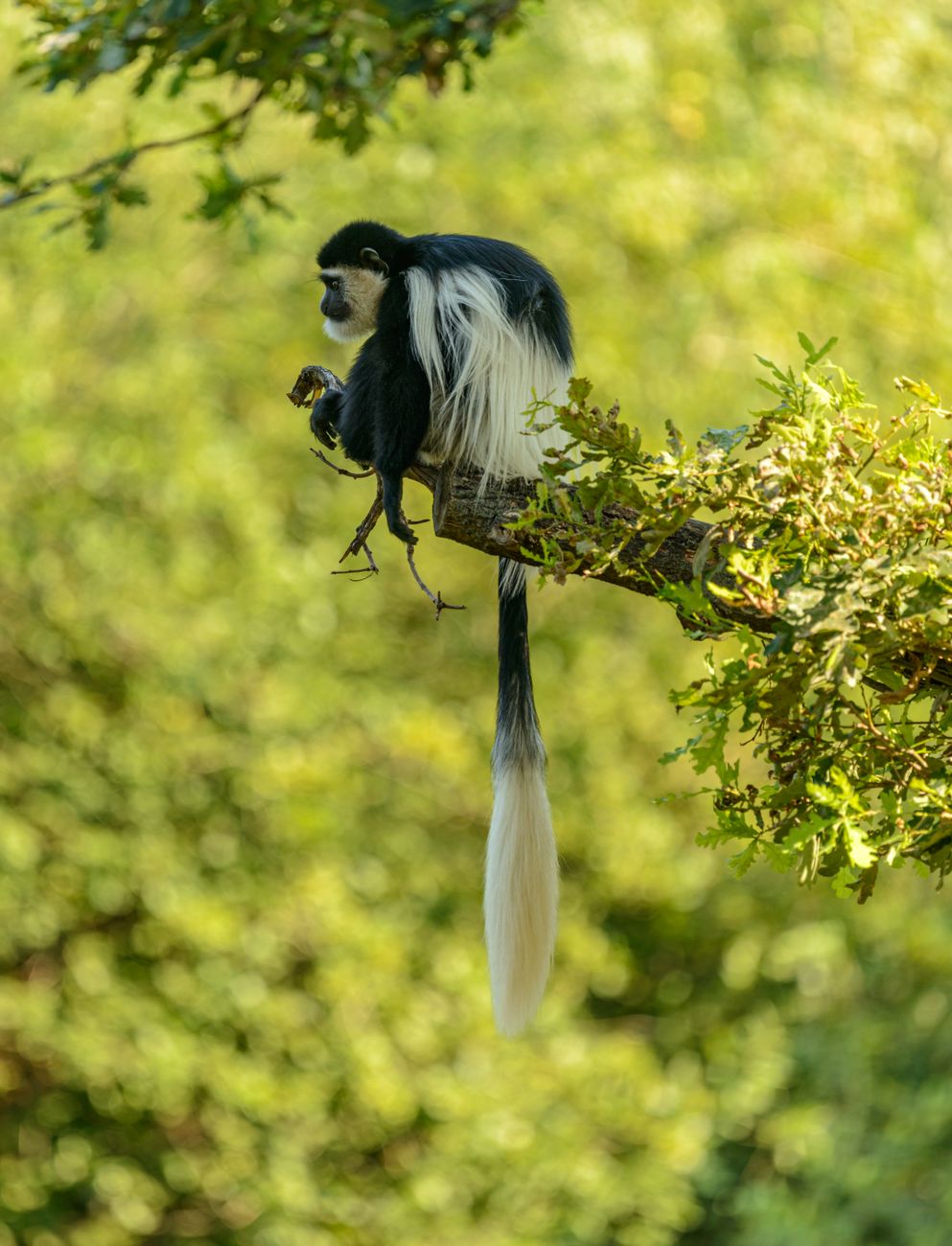
MANTLED GUEREZA
Colobus guereza
DESCRIPTION
Mantled Guereza, also known as the Eastern Black-and-white Colobus, is a striking primate characterized by its long, flowing black fur and distinctive white mantle that extends from its shoulders. This species is arboreal, spending most of its time in the treetops of tropical rainforests, where it moves gracefully among branches. Socially, Mantled Guerezas live in groups, exhibiting complex social behaviors and vocalizations that facilitate communication within their troop.
FUN FACTS
- Mantled Guereza is known for its unique vocalizations, which include a variety of calls that can be heard over long distances
- These calls play a crucial role in maintaining group cohesion and signaling the presence of potential threats
- | The species has a specialized digestive system that allows it to break down tough plant materials, which is essential for its leaf-based diet
- This adaptation is complemented by a slow metabolism, enabling them to thrive in their nutrient-poor forest environment
QUICK INFO
Lifespan15-20 years in the wild, up to 30 in captivity
Average Weight8-12 kg
Average Length50-70 cm
Diet TypeHerbivore
Social Structuregroup — they live in social groups that exhibit strong bonds and cooperative behaviors.
Activity PatternDiurnal
Breeding SeasonYear-round, with peaks depending on local conditions
- Habitat
- This species inhabits dense tropical rainforests and moist woodlands, where it can find ample foliage to sustain its herbivorous diet. They are often found in areas with a high canopy, which provides both food and protection from predators.
- Biomes
- Tropical Rainforest
- Native Range
- Mantled Guereza is native to the forests of Central and East Africa, particularly in countries like Uganda, Kenya, and Tanzania.
- Continent
- Africa
- Countries
- Uganda, Kenya, Tanzania, Democratic Republic of the Congo
- Diet
- Mantled Guereza primarily feeds on leaves, fruits, and flowers, with a particular preference for young leaves that are easier to digest. Their specialized digestive system allows them to extract nutrients from fibrous plant material.
- Diet Type
- Herbivore
- Favorite Food
- young leaves, fruits, flowers
- Social Structure
- group — they live in social groups that exhibit strong bonds and cooperative behaviors.
- Activity Pattern
- Diurnal
- Group Size
- 5-20
- Territorial
- 1
 VU
VU
 VU
VU
8-12 kg
Weight
50-70 cm
Length
- Coloration
- black fur with a distinctive white mantle and facial markings
- Sexual Dimorphism
- males are generally larger than females
- Lifespan
- 15-20 years in the wild, up to 30 in captivity
- Gestation Period
- 150 days
- Offspring per Birth
- 1
- Sexual Maturity
- 3-4 years
- Breeding Season
- Year-round, with peaks depending on local conditions
LC
Least Concern
IUCN Red List Status
- Population Status
- The population of Mantled Guereza is currently stable, but habitat loss poses a significant threat.
- Wild Population Estimate
- 50,000-100,000
- Population Trend
- Stable
- Endangered
- 0
- Threats
- Main threats include habitat destruction due to logging and agricultural expansion, as well as hunting in some areas. These factors contribute to localized declines in their populations.
- Predators
- Leopards, large birds of prey, and occasionally snakes are known to prey on Mantled Guereza, particularly when they are on the ground.
- Defense Mechanisms
- They use their agility to escape predators and often rely on their social structure to alert each other of danger.
- Found in Zoos
- Common