


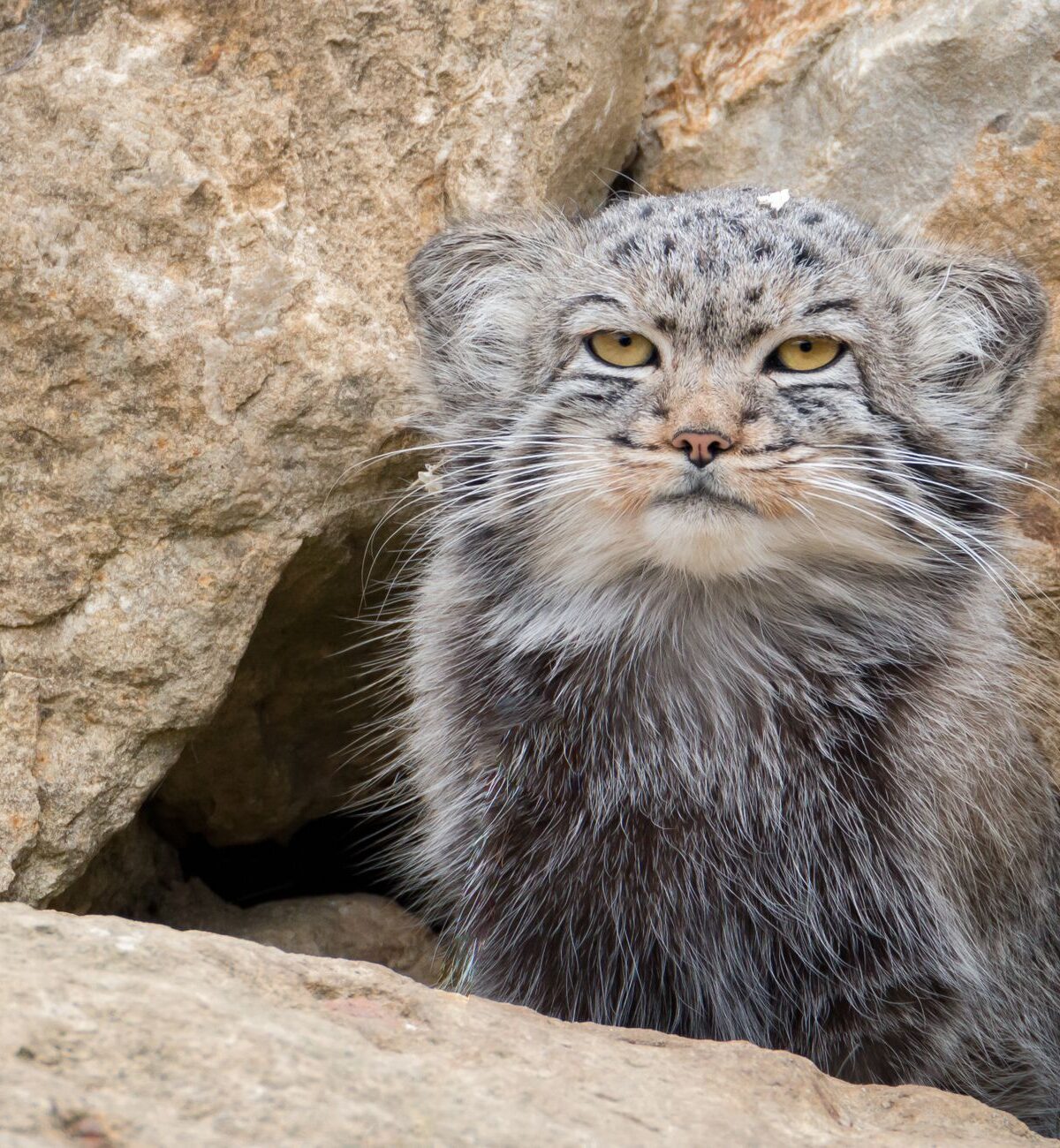
MANUL
DESCRIPTION
Also called Pallas's cat, the Manul is a small wild cat native to Central Asia. It has a distinctive appearance with a stocky build, short legs, and a long, thick fur coat that helps it survive in harsh climates. Manuls are known for their unique facial features, including a flat face and large, round eyes, which give them a somewhat owl-like appearance.
FUN FACTS
- Manuls have a unique hunting technique where they use their keen eyesight to spot prey from a distance and then stalk it quietly
- They are also known for their distinctive vocalizations, which include a variety of sounds such as growls and purrs, making them quite expressive.|Despite their small size, Manuls are incredibly resilient and can survive in some of the harshest climates on Earth, including extreme cold and high altitudes
- Their thick fur not only keeps them warm but also helps them blend into their rocky surroundings, making them effective hunters
QUICK INFO
Lifespan10-12 years in the wild, up to 15 years in captivi
Average Weight2.5-4.5 kg
Average Length46-65 cm
Diet TypeCarnivore
Social Structuresolitary
Activity PatternCrepuscular
Breeding SeasonLate winter to early spring
- Habitat
- Manuls inhabit rocky steppes, grasslands, and mountainous regions, often preferring areas with sparse vegetation. They are well-adapted to cold environments and can be found at elevations up to 5,000 meters.
- Biomes
- Grassland, Mountain
- Native Range
- The native range of the Manul includes parts of Central Asia, particularly in countries like Mongolia, Kazakhstan, and northern India.
- Continent
- Asia
- Countries
- Mongolia, Kazakhstan, China, India, Russia
- Diet
- Manuls primarily feed on small mammals, birds, and insects. They are skilled hunters, using their stealth and agility to catch prey in their rugged habitats.
- Diet Type
- Carnivore
- Favorite Food
- small mammals
- Social Structure
- solitary
- Activity Pattern
- Crepuscular
- Group Size
- 1
- Territorial
- 1
 LC
LC
 LC
LC
2.5-4.5 kg
Weight
46-65 cm
Length
- Coloration
- The fur of the Manul is typically grayish or yellowish with dark spots and stripes, providing excellent camouflage in their natural habitat.
- Sexual Dimorphism
- Males are generally larger than females.
- Lifespan
- 10-12 years in the wild, up to 15 years in captivi
- Gestation Period
- 66-75 days
- Offspring per Birth
- 2-6
- Sexual Maturity
- 1 year
- Breeding Season
- Late winter to early spring
VU
Vulnerable
IUCN Red List Status
- Population Status
- The population of Manuls is currently considered to be decreasing due to habitat loss and hunting.
- Wild Population Estimate
- Unknown, but believed to be declining
- Population Trend
- Decreasing
- Endangered
- 1
- Threats
- Main threats to the Manul include habitat destruction due to agriculture and livestock grazing, as well as hunting for their fur. These factors have contributed to their declining population.
- Predators
- Eagles, wolves, and larger carnivores may prey on Manuls, especially when they are young or vulnerable.
- Defense Mechanisms
- Manuls rely on their camouflage and solitary behavior to avoid detection by predators.
- Found in Zoos
- Uncommon