


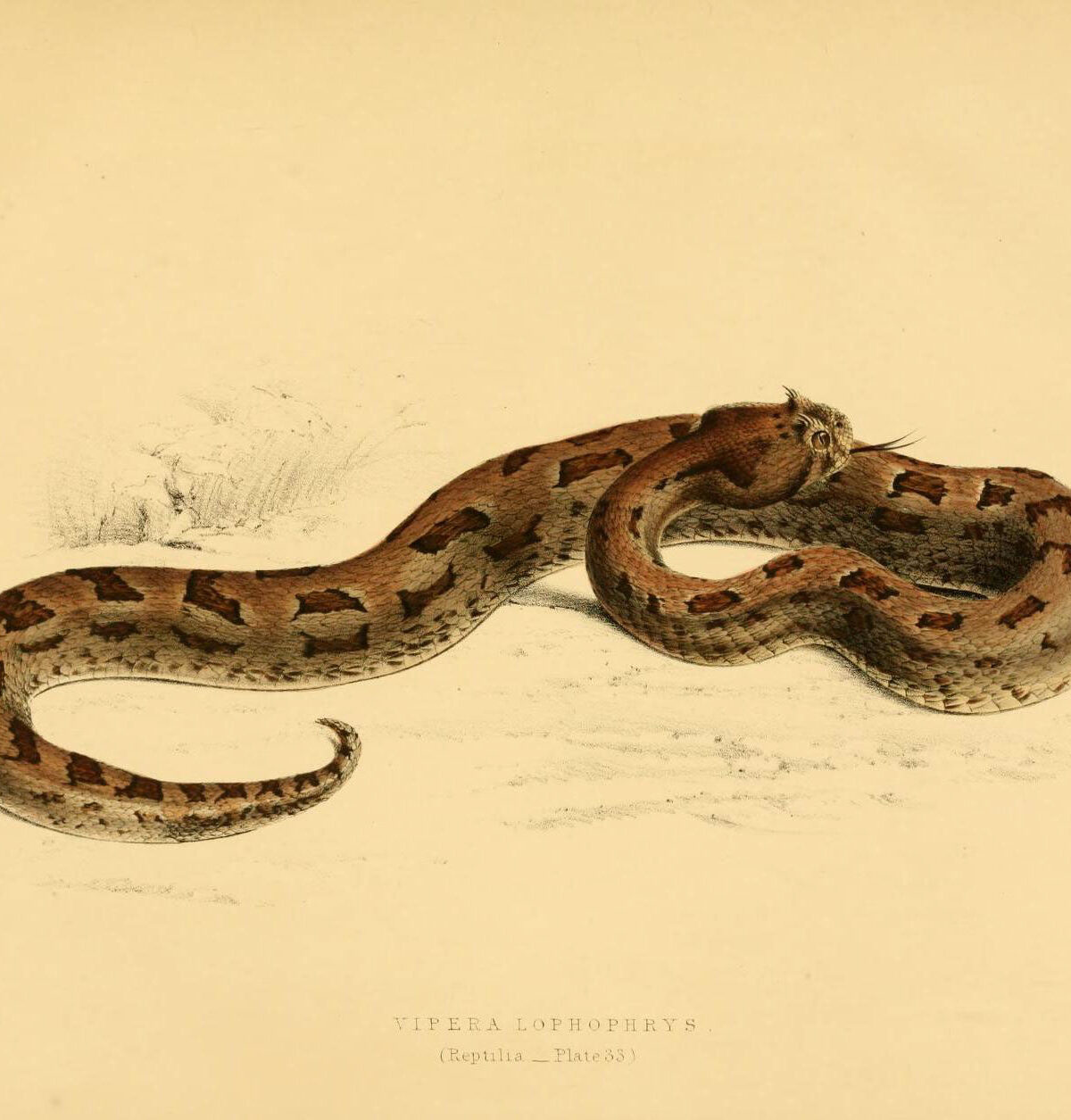
MANY-HORNED ADDER
Bitis cornuta
DESCRIPTION
The Many-Horned Adder, or Bitis cornuta, is a distinctive venomous snake known for its unique horn-like scales above its eyes. This species exhibits a robust body with a coloration that typically ranges from brown to gray, often featuring intricate patterns that provide excellent camouflage in its natural habitat. Behaviorally, it is primarily terrestrial and is known for its ambush hunting strategy, lying in wait for unsuspecting prey to pass by.
FUN FACTS
- The Many-Horned Adder is named for the distinctive horns above its eyes, which are not true horns but rather modified scales that help in camouflage
- These adaptations allow it to blend seamlessly into its rocky surroundings, making it a master of ambush hunting
- | Despite its fearsome reputation, the Many-Horned Adder is not aggressive and will often try to escape rather than confront a threat
- Its venom is potent, but it typically only bites in self-defense, preferring to rely on its excellent camouflage to avoid detection
QUICK INFO
Lifespan10-15 years in the wild
Average Weight0.5-1.5 kg
Average Length0.6-1.2 m
Diet TypeCarnivore
Social Structuresolitary
Activity PatternNocturnal
Breeding SeasonSpring (March-May)
- Habitat
- This species is commonly found in rocky, arid environments, often preferring areas with sparse vegetation. It can also inhabit grasslands and savannas, where it can easily blend into the surroundings.
- Biomes
- Savanna, Grassland, Desert
- Native Range
- The Many-Horned Adder is native to parts of sub-Saharan Africa, particularly in regions of Cameroon, Nigeria, and the Central African Republic.
- Continent
- Africa
- Countries
- Cameroon, Nigeria, Central African Republic
- Diet
- The Many-Horned Adder primarily feeds on small mammals, birds, and occasionally reptiles. It uses its potent venom to immobilize its prey before consumption.
- Diet Type
- Carnivore
- Favorite Food
- small mammals, birds
- Social Structure
- solitary
- Activity Pattern
- Nocturnal
- Group Size
- 1
- Territorial
- 0
 VU
VU
0.5-1.5 kg
Weight
0.6-1.2 m
Length
- Coloration
- brown to gray with intricate patterns
- Sexual Dimorphism
- males are generally smaller than females
- Lifespan
- 10-15 years in the wild
- Offspring per Birth
- 5-15
- Sexual Maturity
- 2-3 years
- Breeding Season
- Spring (March-May)
LC
Least Concern
IUCN Red List Status
- Population Status
- The population status is currently stable, but habitat destruction poses a potential threat.
- Wild Population Estimate
- unknown
- Population Trend
- Stable
- Endangered
- 0
- Threats
- Main threats include habitat loss due to agricultural expansion and human encroachment. Additionally, they are sometimes killed out of fear or misunderstanding.
- Predators
- birds of prey, larger snakes, mammals such as mongooses
- Defense Mechanisms
- The Many-Horned Adder relies on its cryptic coloration for camouflage and can deliver a painful bite if threatened.
- Found in Zoos
- Uncommon