


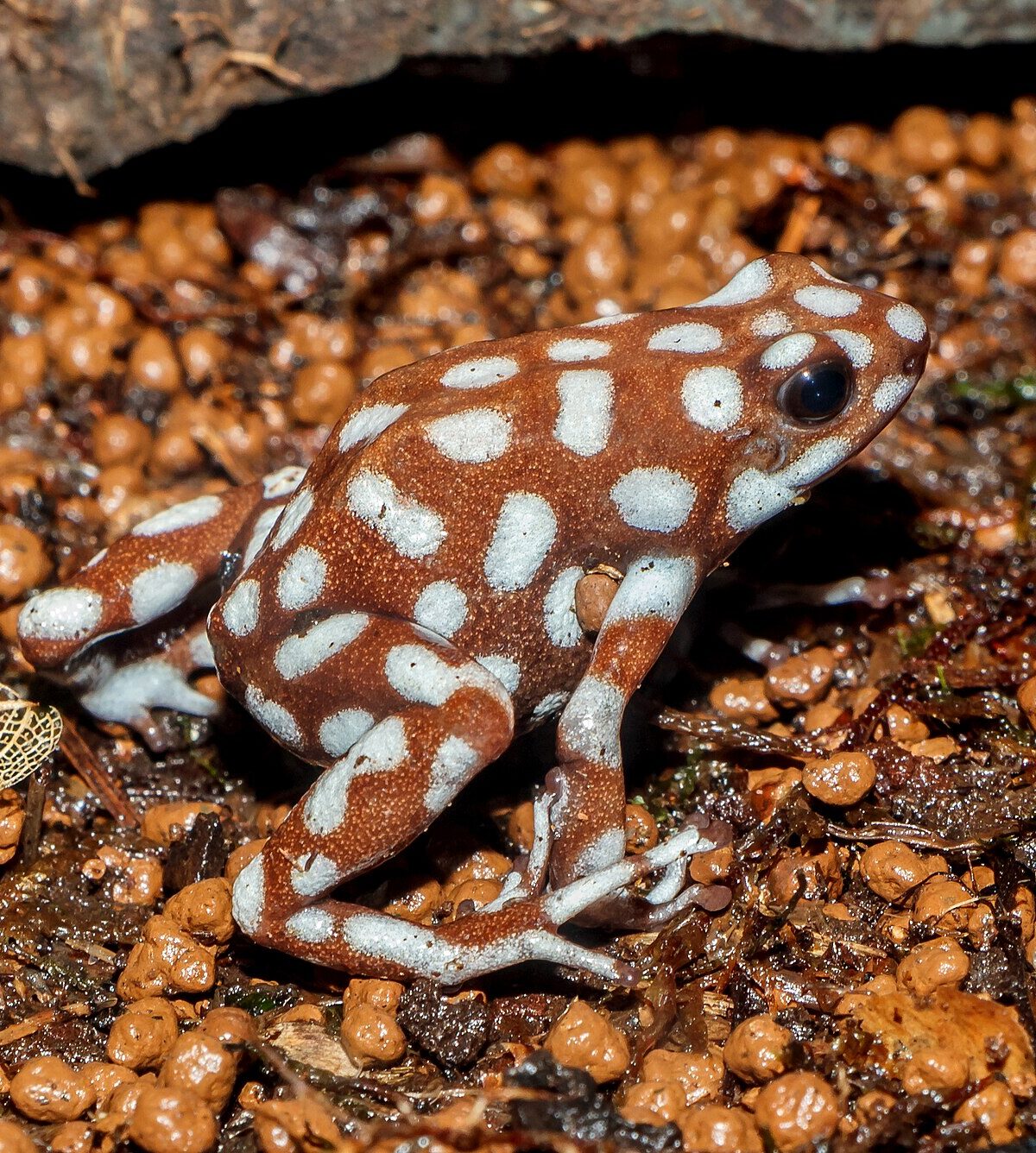
MARANON POISON FROG
Excidobates mysteriosus
DESCRIPTION
Maranon Poison Frog (Excidobates mysteriosus) is a small, brightly colored amphibian native to the Amazon rainforest. It exhibits a striking coloration that serves as a warning to potential predators about its toxicity. This species is primarily found in leaf litter and is known for its secretive behavior, often hiding among the foliage during the day.
FUN FACTS
- Maranon Poison Frogs are known for their vibrant colors, which serve as a warning to predators about their toxicity
- Interestingly, the toxicity of these frogs is derived from their diet, specifically the ants and other small invertebrates they consume, which contain alkaloids
- | These frogs have a unique reproductive strategy where the female lays eggs in moist leaf litter, and the male guards the eggs until they hatch
- Once the tadpoles emerge, the male often transports them to water sources, showcasing a level of parental care not commonly seen in amphibians
QUICK INFO
Average Length2.5-3.5 cm
Diet TypeInsectivore
Social Structuresolitary, occasionally found in pairs during breeding
Activity PatternDiurnal
Breeding SeasonRainy season (typically November to March)
- Habitat
- These frogs inhabit tropical rainforests, often in areas with dense vegetation and abundant leaf litter. They thrive in humid environments that provide ample cover and moisture.
- Biomes
- Tropical Rainforest
- Native Range
- The Maranon Poison Frog is endemic to the Marañón River basin in Peru.
- Continent
- South America
- Countries
- Peru
- Diet
- Maranon Poison Frogs primarily feed on small invertebrates, particularly ants and termites. Their diet contributes to their toxicity, as they acquire alkaloids from the insects they consume.
- Diet Type
- Insectivore
- Favorite Food
- ants, termites
- Social Structure
- solitary, occasionally found in pairs during breeding
- Activity Pattern
- Diurnal
- Group Size
- 1-2
- Territorial
- 0
 VU
VU
 LC
LC
2.5-3.5 cm
Length
- Coloration
- brightly colored with a combination of yellow, black, and orange patterns
- Offspring per Birth
- 3-10
- Sexual Maturity
- 1-2 years
- Breeding Season
- Rainy season (typically November to March)
EN
Endangered
IUCN Red List Status
- Population Status
- The population status of Maranon Poison Frog is not well-documented, but habitat loss poses a significant threat.
- Population Trend
- Decreasing
- Endangered
- 1
- Threats
- Main threats include habitat destruction due to deforestation and agricultural expansion. Climate change also poses a risk to their habitat and food sources.
- Predators
- Birds, snakes, and other larger amphibians are known to prey on Maranon Poison Frogs.
- Defense Mechanisms
- They possess toxic skin secretions that deter predators.
- Found in Zoos
- Rare