


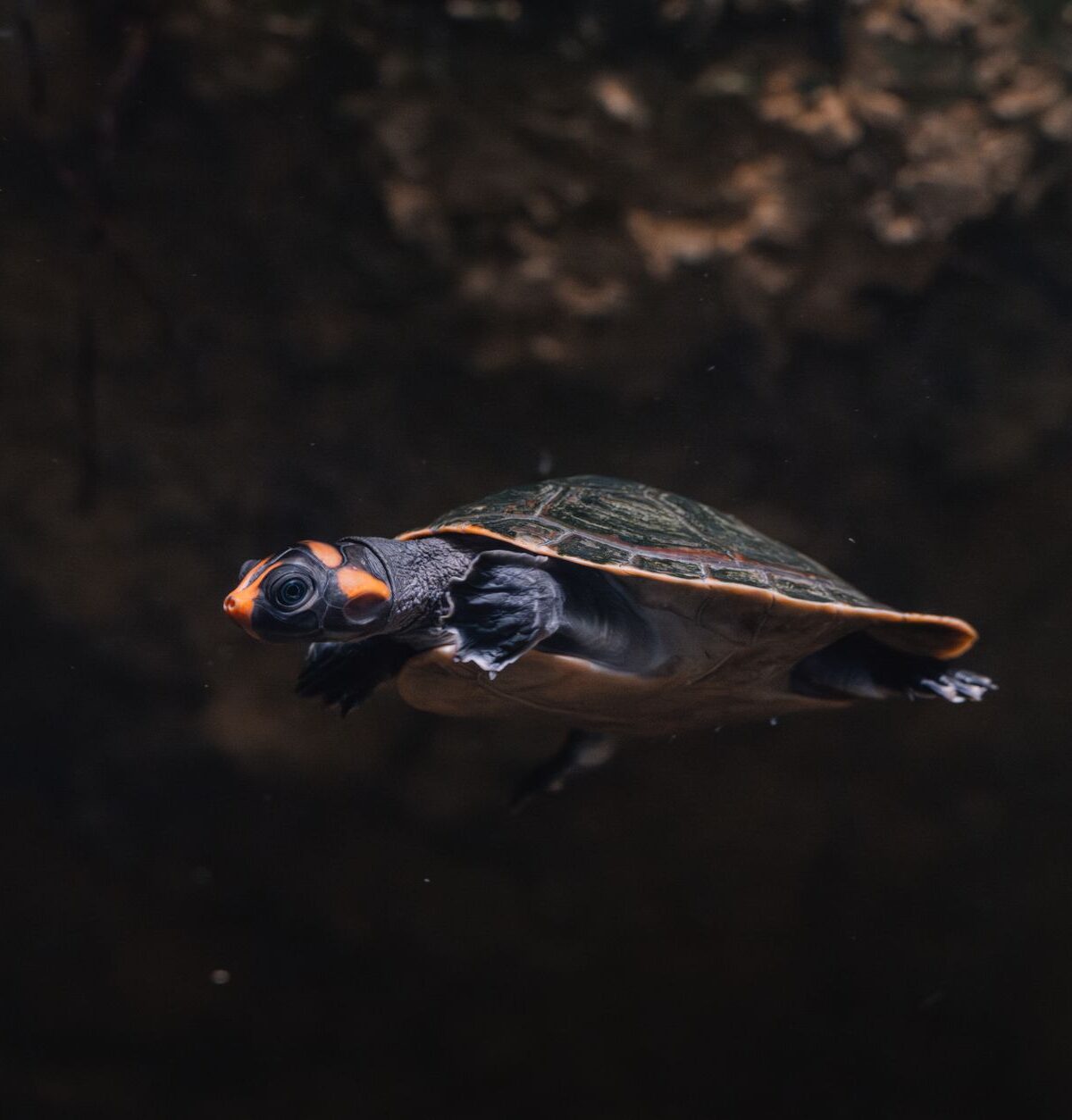
MARY RIVER TURTLE
Elusor macrurus
DESCRIPTION
Mary River Turtle (Elusor macrurus) is a unique freshwater turtle native to Australia, particularly found in the Mary River in Queensland. It is characterized by its distinctive long, slender neck and a shell that can reach up to 30 cm in length, often adorned with algae that provide camouflage. This species is known for its aquatic lifestyle, spending much of its time submerged and foraging for food in the riverbed.
FUN FACTS
- Mary River Turtles are known for their unique ability to breathe through their cloaca, allowing them to stay submerged for extended periods
- This adaptation is particularly useful in their natural habitat, where they can remain hidden from predators while still obtaining oxygen
- | The species is also notable for its long lifespan, with some individuals living up to 50 years in captivity, making them one of the longer-lived turtle species
- Their longevity is a testament to their resilience and adaptability in changing environments
QUICK INFO
Lifespanup to 50 years in captivity
Average Weight2-3 kg
Average Length25-30 cm
Diet TypeHerbivore
Social Structuresolitary
Activity PatternDiurnal
Breeding SeasonSpring to early summer
- Habitat
- These turtles inhabit slow-moving rivers and streams with abundant aquatic vegetation. They prefer areas with sandy or muddy bottoms where they can easily forage for food.
- Biomes
- Freshwater, Temperate Forest
- Native Range
- The Mary River Turtle is endemic to the Mary River system in Queensland, Australia.
- Continent
- Australia
- Countries
- Australia
- Diet
- Mary River Turtles primarily feed on aquatic vegetation, including algae and water plants, as well as some invertebrates. Their diet reflects their herbivorous nature, relying heavily on the availability of plant matter in their habitat.
- Diet Type
- Herbivore
- Favorite Food
- aquatic plants, algae
- Social Structure
- solitary
- Activity Pattern
- Diurnal
- Group Size
- 1-5
- Territorial
- 0
 VU
VU

2-3 kg
Weight
25-30 cm
Length
- Coloration
- The shell is typically dark brown to olive green, often covered with green algae, which helps in camouflage.
- Sexual Dimorphism
- Males are generally smaller than females and have longer tails.
- Lifespan
- up to 50 years in captivity
- Offspring per Birth
- 1-20
- Sexual Maturity
- 5-7 years
- Breeding Season
- Spring to early summer
EN
Endangered
IUCN Red List Status
- Population Status
- The population of Mary River Turtles is currently declining due to habitat loss and other threats.
- Wild Population Estimate
- unknown
- Population Trend
- Decreasing
- Endangered
- 1
- Threats
- Main threats include habitat destruction due to agricultural development, pollution, and predation by introduced species. These factors have significantly impacted their natural habitat and population numbers.
- Conservation Program
- Conservation efforts are underway to protect their habitat and raise awareness about their plight.
- Predators
- Birds of prey, foxes, and feral pigs are known to prey on the eggs and young turtles.
- Defense Mechanisms
- Mary River Turtles can retract their heads and limbs into their shells for protection against predators.
- Found in Zoos
- Uncommon