


MASKED LOVEBIRD
Agapornis personatus
DESCRIPTION
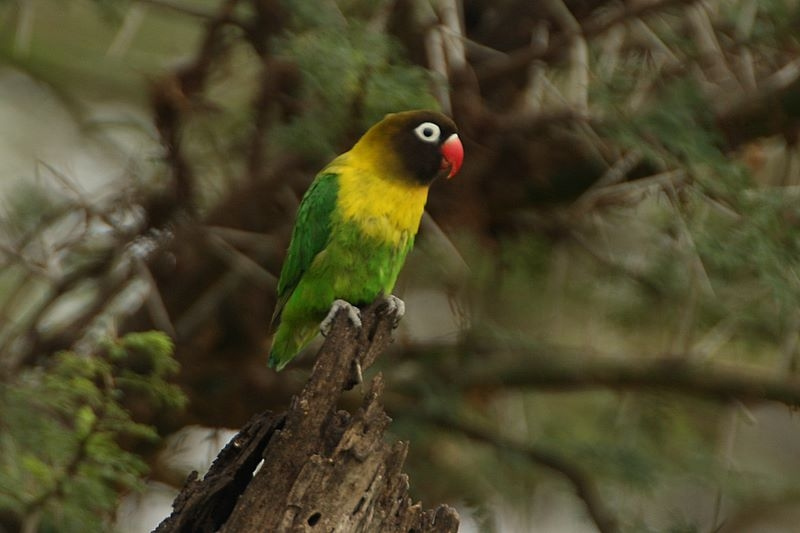
Masked Lovebird (Agapornis personatus) is also known as the Personatus Lovebird. This small parrot species is characterized by its vibrant green body, a distinctive black mask around its face, and a bright yellow chest. They are social birds that exhibit playful behavior and are often seen engaging in mutual preening and vocalizations, which strengthens their bonds within flocks.
FUN FACTS
- Masked Lovebirds are known for their affectionate behavior, often seen cuddling and preening each other, which strengthens their pair bonds
- They are also quite vocal and can mimic sounds, making them entertaining companions for bird enthusiasts
QUICK INFO
Lifespan10-15 years in the wild, up to 20 years in captivi
Average Weight50-70 g
Average Length13-15 cm
Diet TypeHerbivore
Social Structuregroup — they are very social and often live in flocks, forming strong pair bonds.
Activity PatternDiurnal
Breeding SeasonSpring to early summer
- Habitat
- These birds inhabit woodlands, savannas, and scrublands. They prefer areas with abundant vegetation that provides both food and nesting sites.
- Biomes
- Savanna, Tropical Rainforest
- Native Range
- Masked Lovebirds are native to the grasslands and woodlands of Tanzania.
- Continent
- Africa
- Countries
- Tanzania
- Diet
- Masked Lovebirds primarily feed on seeds, fruits, and vegetables. They enjoy a varied diet that provides essential nutrients for their health.
- Diet Type
- Herbivore
- Favorite Food
- seeds, fruits, vegetables
- Social Structure
- group — they are very social and often live in flocks, forming strong pair bonds.
- Activity Pattern
- Diurnal
- Group Size
- 5-20
- Territorial
- 0
 LC
LC
 VU
VU
50-70 g
Weight
13-15 cm
Length
- Coloration
- vibrant green body with a black face mask and yellow chest
- Sexual Dimorphism
- males and females are similar in appearance, making it difficult to distinguish between them without genetic testing.
- Lifespan
- 10-15 years in the wild, up to 20 years in captivi
- Offspring per Birth
- 3-6
- Sexual Maturity
- 6 months to 1 year
- Breeding Season
- Spring to early summer
LC
Least Concern
IUCN Red List Status
- Population Status
- The population is currently stable, but habitat loss poses a potential threat.
- Wild Population Estimate
- unknown
- Population Trend
- Stable
- Endangered
- 0
- Threats
- Main threats include habitat destruction due to agriculture and logging. Additionally, they are sometimes captured for the pet trade.
- Predators
- snakes, birds of prey, and larger mammals
- Defense Mechanisms
- Masked Lovebirds often rely on their social structure and flocking behavior to evade predators, using alarm calls to warn others.
- Compatible Animals
- other lovebirds, small parrots
- Found in Zoos
- Common