


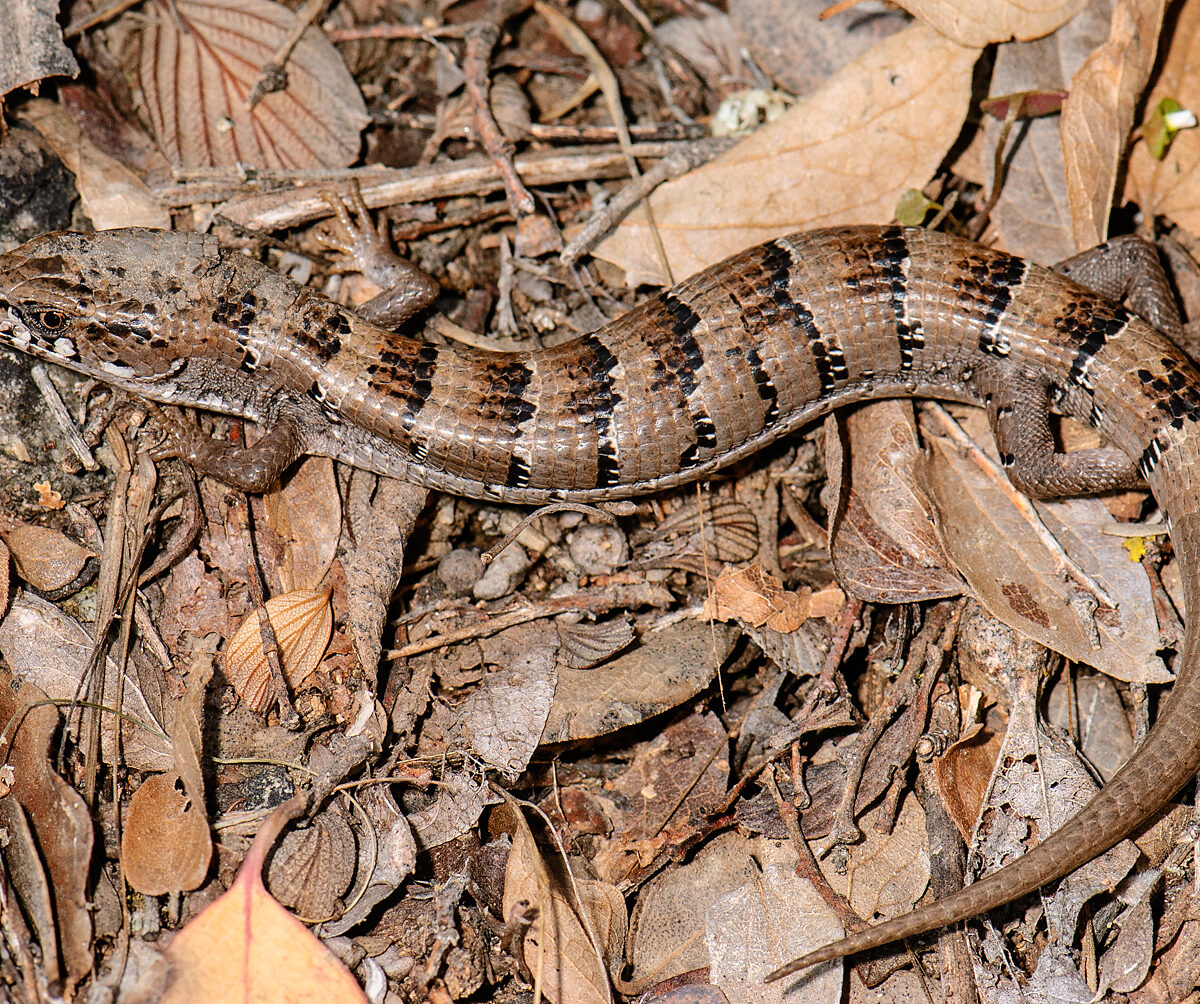
MEXICAN ALLIGATOR LIZARD
Elgaria kingii
DESCRIPTION
Mexican Alligator Lizard (Elgaria kingii) is commonly known as King's Alligator Lizard. This species is characterized by its elongated body, robust limbs, and a distinctive pattern of dark and light bands across its skin, which can vary in color from brown to greenish. They are primarily terrestrial and are known for their secretive behavior, often hiding under rocks or in leaf litter, making them less visible in their natural habitat.
FUN FACTS
- Mexican Alligator Lizards are known for their ability to regenerate their tails if lost, a fascinating trait that helps them escape predators
- Additionally, they have a unique method of locomotion, often using their limbs to climb and navigate rocky terrains with agility
QUICK INFO
Lifespan5-10 years in the wild
Average Length20-30 cm
Diet TypeInsectivore
Social Structuresolitary, occasionally seen in pairs during mating season
Activity PatternDiurnal
Breeding SeasonSpring (April-June)
- Habitat
- These lizards inhabit a variety of environments, including rocky hillsides, grasslands, and scrublands. They prefer areas with ample cover for hiding and hunting.
- Biomes
- Temperate Forest, Grassland, Scrubland
- Native Range
- The native range of the Mexican Alligator Lizard includes parts of Mexico, particularly in the western regions.
- Continent
- North America
- Countries
- Mexico
- Diet
- Mexican Alligator Lizards primarily feed on insects and other small invertebrates, occasionally consuming small vertebrates. Their diet reflects their role as predators in their ecosystem.
- Diet Type
- Insectivore
- Favorite Food
- insects, small invertebrates
- Social Structure
- solitary, occasionally seen in pairs during mating season
- Activity Pattern
- Diurnal
- Group Size
- 1-2
- Territorial
- 1
 VU
VU
 LC
LC
 LC
LC
20-30 cm
Length
- Coloration
- dark brown to greenish with lighter bands
- Sexual Dimorphism
- males tend to be larger than females
- Lifespan
- 5-10 years in the wild
- Offspring per Birth
- 3-10
- Sexual Maturity
- 2-3 years
- Breeding Season
- Spring (April-June)
LC
Least Concern
IUCN Red List Status
- Population Status
- The population status of the Mexican Alligator Lizard is currently stable, though habitat loss poses a potential threat.
- Wild Population Estimate
- unknown
- Population Trend
- Stable
- Endangered
- 0
- Threats
- Main threats include habitat destruction due to urban development and agriculture. Additionally, they may be affected by climate change and predation by domestic animals.
- Predators
- birds of prey, snakes, domestic cats
- Defense Mechanisms
- They can exhibit defensive behaviors such as hiding and remaining motionless to avoid detection.
- Found in Zoos
- Uncommon