


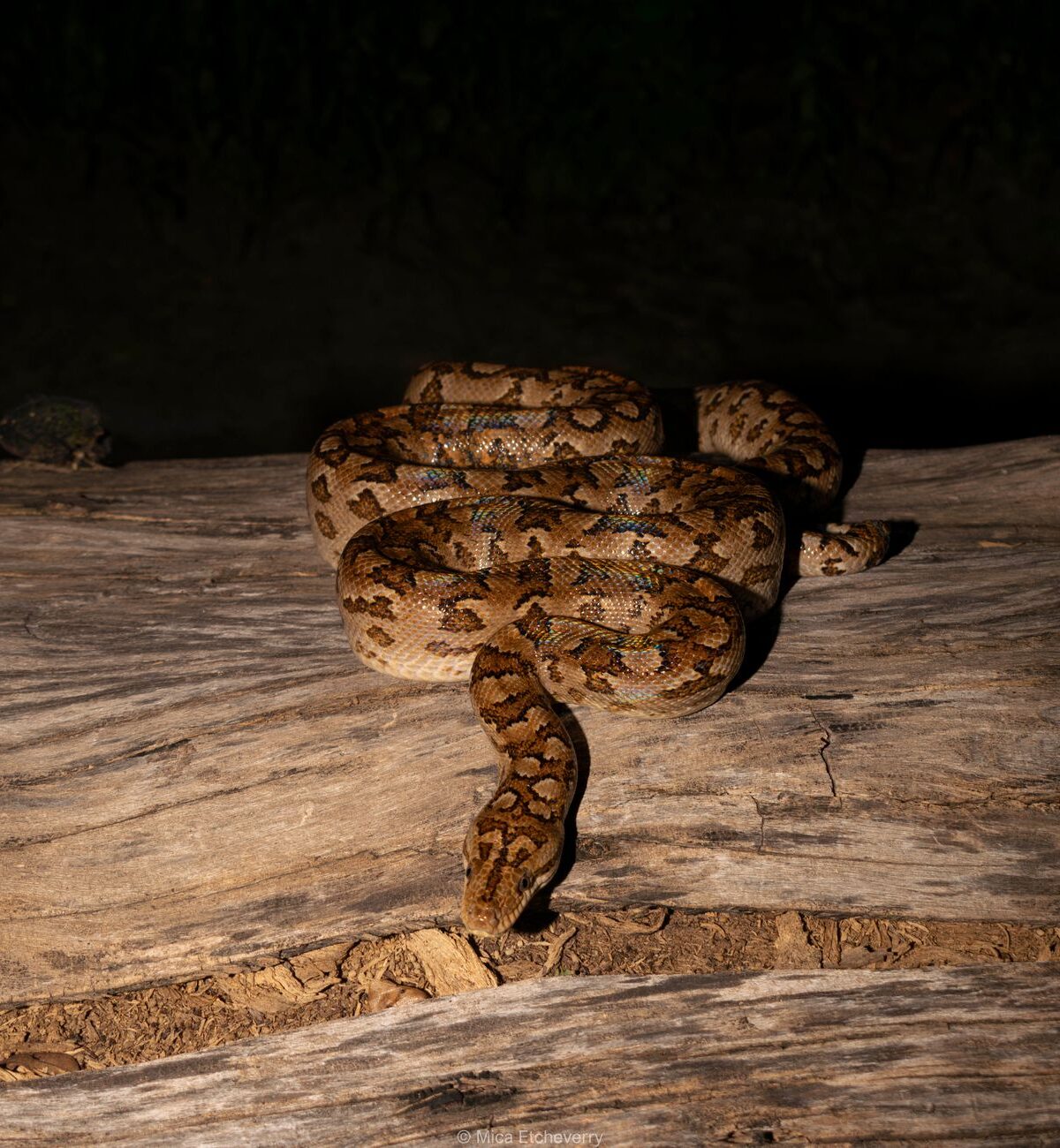
MEXICAN BURROWING PYTHON
Lichanura trivirgata
DESCRIPTION
Also called the Rosy Boa, the Mexican Burrowing Python (Lichanura trivirgata) is a small, non-venomous snake known for its distinctive coloration and docile nature. It typically exhibits a pattern of light and dark bands, which helps it blend into its arid desert surroundings. This species is primarily terrestrial and is known for its burrowing behavior, often seeking refuge in crevices and under rocks.
FUN FACTS
- Mexican Burrowing Pythons are known for their unique ability to tolerate a wide range of temperatures, allowing them to thrive in harsh desert environments
- They are also popular in the pet trade due to their manageable size and docile nature, making them suitable for both novice and experienced snake keepers
QUICK INFO
Lifespan15-20 years in the wild, up to 30 in captivity
Average Weight1-2 kg
Average Length1.2-1.5 m
Diet TypeCarnivore
Social Structuresolitary, typically found alone except during mating season
Activity PatternNocturnal
Breeding SeasonSpring (March-May)
- Habitat
- This species inhabits arid and semi-arid regions, often favoring rocky outcrops and desert scrub. It is well-adapted to burrowing into the ground to escape extreme temperatures.
- Biomes
- Desert, Scrubland
- Native Range
- The Mexican Burrowing Python is native to the southwestern United States and northern Mexico.
- Continent
- North America
- Countries
- United States, Mexico
- Diet
- The Mexican Burrowing Python primarily feeds on small mammals and birds. It uses constriction to subdue its prey before consumption.
- Diet Type
- Carnivore
- Favorite Food
- small mammals, birds
- Social Structure
- solitary, typically found alone except during mating season
- Activity Pattern
- Nocturnal
- Group Size
- 1
- Territorial
- 0
 VU
VU
1-2 kg
Weight
1.2-1.5 m
Length
- Coloration
- Typically features a pattern of light brown or gray with darker bands, providing excellent camouflage.
- Sexual Dimorphism
- Females are generally larger than males.
- Lifespan
- 15-20 years in the wild, up to 30 in captivity
- Gestation Period
- 60-70 days
- Offspring per Birth
- 2-10
- Sexual Maturity
- 2-3 years
- Breeding Season
- Spring (March-May)
LC
Least Concern
IUCN Red List Status
- Population Status
- The population is currently stable, but habitat loss poses a potential threat.
- Wild Population Estimate
- Unknown
- Population Trend
- Stable
- Endangered
- 0
- Threats
- Main threats include habitat destruction due to urban development and agriculture. Additionally, they are sometimes collected for the pet trade.
- Predators
- Birds of prey, larger snakes, and mammals such as coyotes may prey on juvenile Mexican Burrowing Pythons.
- Defense Mechanisms
- When threatened, they may burrow into the ground or remain motionless to avoid detection.
- Found in Zoos
- Uncommon