


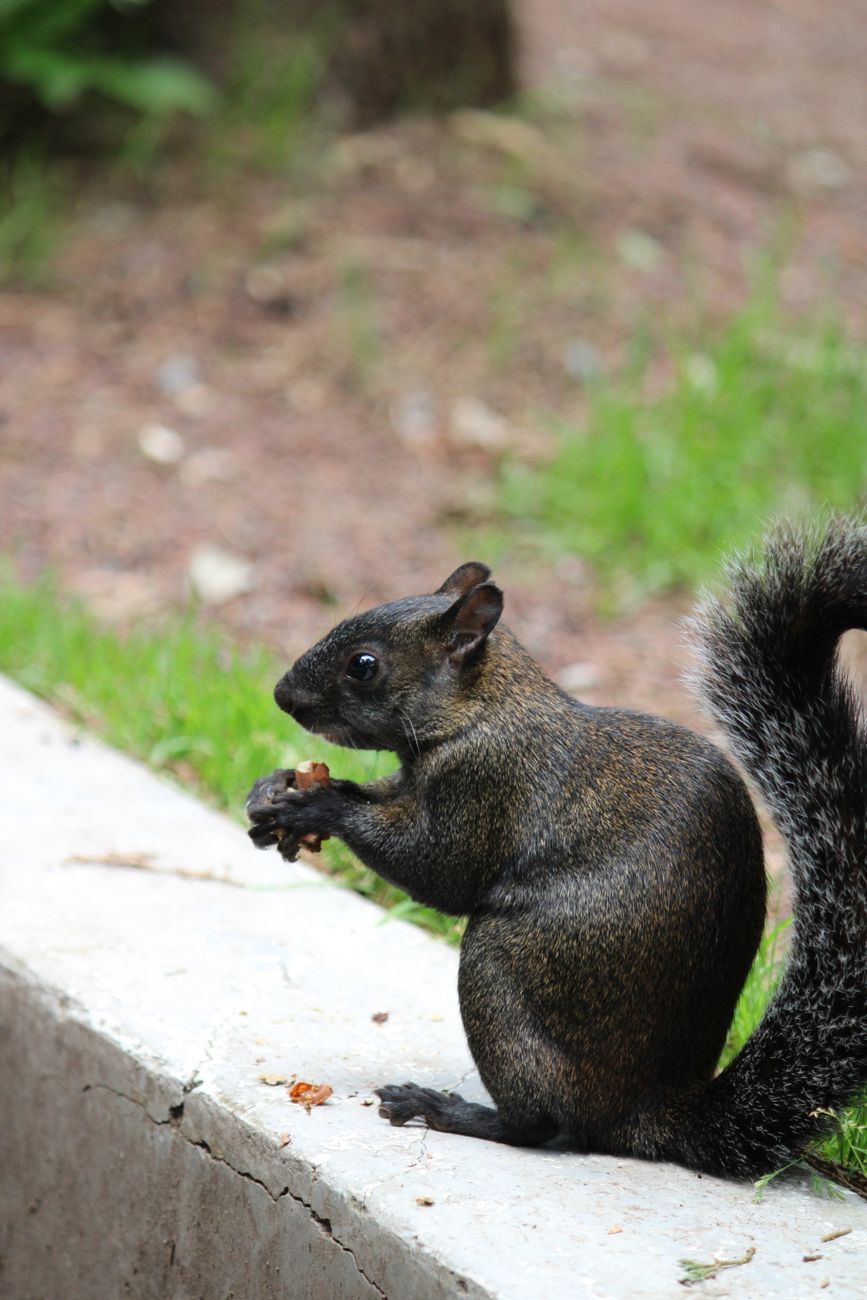
MEXICAN GRAY SQUIRREL
Sciurus aureogaster
DESCRIPTION
Mexican Gray Squirrel (Sciurus aureogaster) is a medium-sized rodent characterized by its grayish-brown fur, which often has a slightly golden hue. This species exhibits a bushy tail and large, expressive eyes, which aid in its arboreal lifestyle. They are primarily found in forested areas and are known for their agility and acrobatic skills as they navigate through trees in search of food.
FUN FACTS
- Mexican Gray Squirrels are known for their impressive climbing abilities, often leaping from branch to branch with ease
- They have a unique way of communicating with each other through a series of chirps and tail movements, which helps them maintain social interactions and alert others to potential threats.| These squirrels play a vital role in their ecosystem by helping to disperse seeds and nuts, which contributes to forest regeneration
- Their caching behavior not only aids their survival but also supports the growth of new plants, making them important for maintaining biodiversity
QUICK INFO
Lifespan5-10 years in the wild, up to 15 in captivity
Average Weight300-500 g
Average Length25-30 cm
Diet TypeOmnivore
Social Structuresolitary, though they may be seen in pairs during the breeding season.
Activity PatternDiurnal
Breeding SeasonSpring (March-May)
- Habitat
- These squirrels inhabit mixed forests, particularly in mountainous regions where they can find ample food sources and nesting sites. They prefer areas with a dense canopy that provides cover from predators.
- Biomes
- Temperate Forest, Montane Forest
- Native Range
- The native range of the Mexican Gray Squirrel includes parts of Mexico, particularly in the Sierra Madre Oriental and Sierra Madre Occidental.
- Continent
- North America
- Countries
- Mexico
- Diet
- Mexican Gray Squirrels primarily feed on nuts, seeds, fruits, and occasionally insects. They are known to cache food for later consumption, which plays a crucial role in forest regeneration.
- Diet Type
- Omnivore
- Favorite Food
- nuts and seeds
- Social Structure
- solitary, though they may be seen in pairs during the breeding season.
- Activity Pattern
- Diurnal
- Group Size
- 1-2
- Territorial
- 1
 CR
CR
 LC
LC
 LC
LC
300-500 g
Weight
25-30 cm
Length
- Coloration
- grayish-brown fur with a golden hue
- Lifespan
- 5-10 years in the wild, up to 15 in captivity
- Gestation Period
- 44 days
- Offspring per Birth
- 2-4
- Sexual Maturity
- 10-12 months
- Breeding Season
- Spring (March-May)
LC
Least Concern
IUCN Red List Status
- Population Status
- The population of Mexican Gray Squirrels is currently stable, but habitat loss poses a potential threat.
- Wild Population Estimate
- unknown
- Population Trend
- Stable
- Endangered
- 0
- Threats
- Main threats include habitat destruction due to urbanization and deforestation. Additionally, competition with invasive species can impact their populations.
- Predators
- hawks, owls, snakes, and domestic cats
- Defense Mechanisms
- They use their agility to escape predators and can also emit alarm calls to warn other squirrels of danger.
- Found in Zoos
- Uncommon