


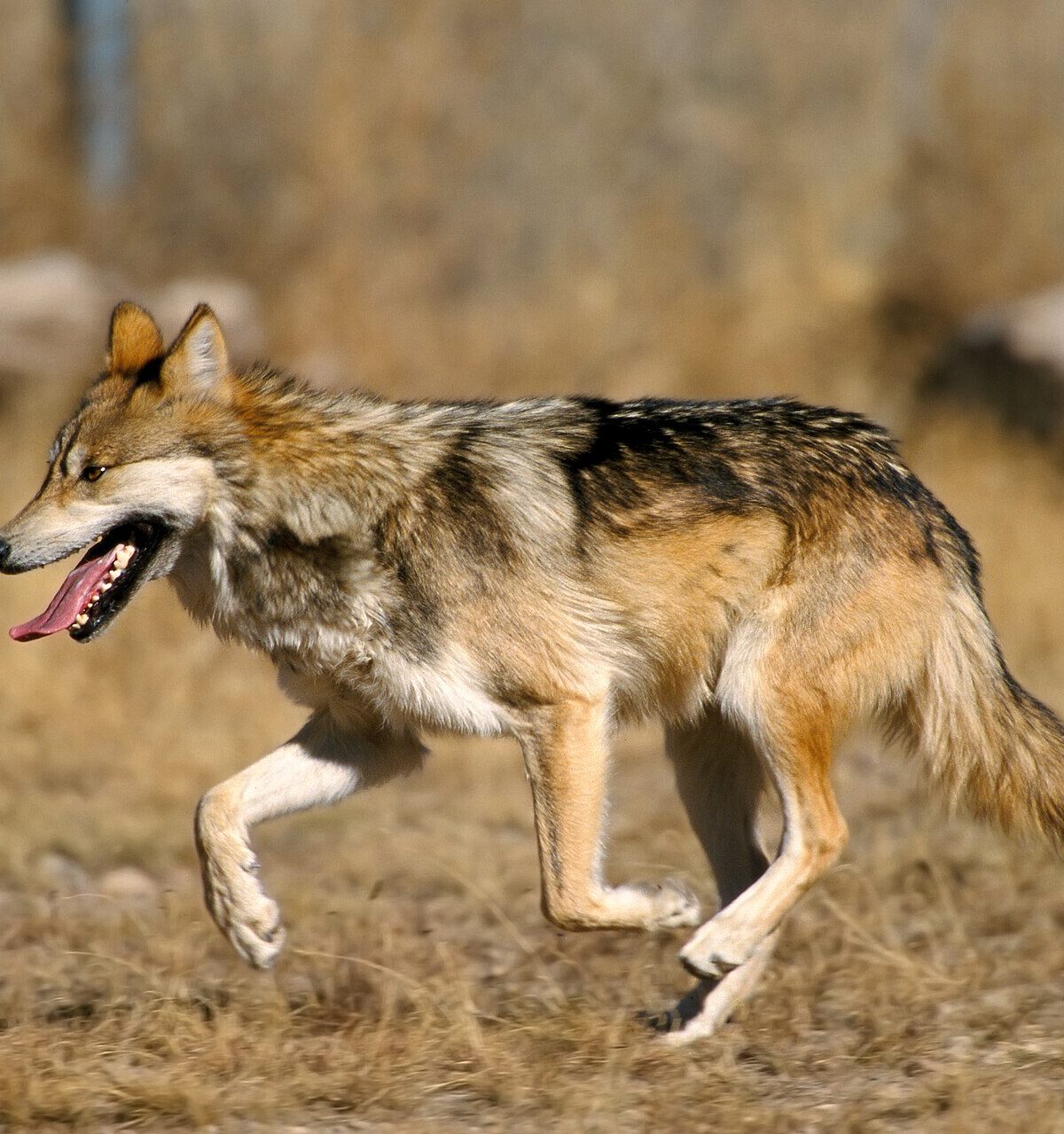
MEXICAN GREY WOLF
Canis lupus baileyi
DESCRIPTION
Mexican Grey Wolf (Canis lupus baileyi) is a subspecies of the grey wolf that is native to the southwestern United States and Mexico. It is smaller than its northern relatives, with a more slender build and a distinctive coat that can range from gray to reddish-brown. These wolves are known for their complex social structures and vocalizations, which include howls, barks, and growls, playing a crucial role in their communication and pack dynamics.
FUN FACTS
- Mexican Grey Wolves are the smallest subspecies of grey wolves, which allows them to be more agile and efficient hunters in their specific habitats
- They play a crucial role in their ecosystem by helping to control the populations of their prey species, which in turn supports the health of the vegetation in their environment
- | The recovery of the Mexican Grey Wolf is a significant conservation success story, as they were once declared extinct in the wild in the 1970s
- Through captive breeding and reintroduction programs, their numbers have slowly increased, showcasing the importance of conservation efforts in preserving endangered species
QUICK INFO
Lifespan6-8 years in the wild, up to 13 years in captivity
Average Weight25-45 kg
Average Length1.2-1.5 m
Diet TypeCarnivore
Social StructurePack, typically consisting of a breeding pair and their young, which may include several generations living together.
Activity PatternCrepuscular
Breeding SeasonWinter (January-March)
- Habitat
- They inhabit a variety of environments, including forests, grasslands, and mountainous regions. Their habitat is often characterized by a mix of open spaces and dense cover for hunting and denning.
- Biomes
- Temperate Forest, Grassland, Mountain
- Native Range
- Historically, their range extended across the southwestern United States and into Mexico, but it has been significantly reduced due to habitat loss and persecution.
- Continent
- North America
- Countries
- United States, Mexico
- Diet
- Mexican Grey Wolves primarily hunt for large ungulates, but they also consume smaller mammals and carrion when necessary. Their hunting strategies often involve teamwork and coordination within the pack.
- Diet Type
- Carnivore
- Favorite Food
- deer, elk, small mammals
- Social Structure
- Pack, typically consisting of a breeding pair and their young, which may include several generations living together.
- Activity Pattern
- Crepuscular
- Group Size
- 2-10
- Territorial
- 1
 LC
LC
25-45 kg
Weight
1.2-1.5 m
Length
0.6-0.8 m at shoulder
Height (Shoulder)
- Coloration
- Their fur is generally a mix of gray, brown, and white, with some individuals displaying reddish hues.
- Sexual Dimorphism
- Males are generally larger than females.
- Lifespan
- 6-8 years in the wild, up to 13 years in captivity
- Gestation Period
- 63 days
- Offspring per Birth
- 4-6
- Sexual Maturity
- 2-3 years
- Breeding Season
- Winter (January-March)
CR
Critically Endangered
IUCN Red List Status
- Population Status
- The population of Mexican Grey Wolves is critically low, with ongoing conservation efforts to increase their numbers.
- Wild Population Estimate
- 300-400
- Population Trend
- Increasing
- Endangered
- 1
- Threats
- Main threats include habitat loss, human-wildlife conflict, and genetic bottlenecking due to historical persecution. Conservation efforts are ongoing to mitigate these threats and restore their populations.
- Conservation Program
- Recovery programs in the United States and Mexico focus on habitat protection and breeding in captivity.
- Predators
- Humans are the primary threat, but young wolves may be vulnerable to mountain lions and bears.
- Defense Mechanisms
- They rely on pack behavior for defense, using vocalizations and coordinated movements to deter threats.
- Found in Zoos
- Uncommon