


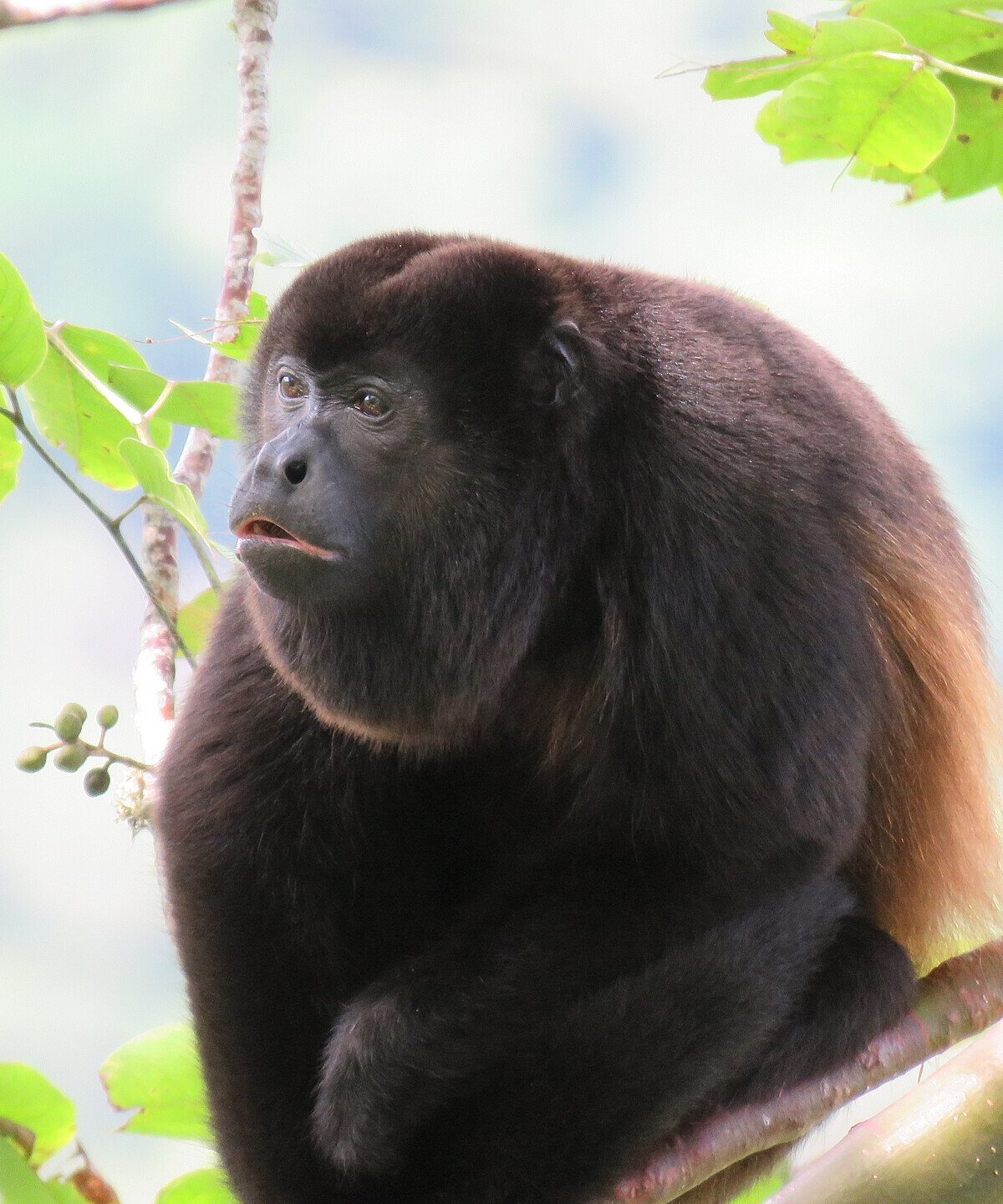
MEXICAN HOWLER MONKEY
Alouatta palliata
DESCRIPTION
Mexican Howler Monkey (Alouatta palliata) is commonly known as the Central American Howler Monkey. This species is characterized by its robust body, long limbs, and a distinctive prehensile tail that aids in climbing. They are known for their loud howling calls, which can be heard over long distances, serving as a means of communication and territory marking.
FUN FACTS
- Mexican Howler Monkeys are known for their impressive vocalizations, which can be heard up to three miles away in dense forests
- Their howls serve not only to communicate with other group members but also to establish territory and deter rivals
- | These monkeys have a unique adaptation in their throat that allows them to produce deep, resonant sounds, making them one of the loudest land animals
- Their vocalizations are often a part of their social interactions, especially during dawn and dusk
QUICK INFO
Lifespan15-20 years in the wild, up to 25 in captivity
Average Weight6-10 kg
Average Length50-70 cm
Diet TypeHerbivore
Social Structuregroup — they typically live in small to medium-sized groups consisting of several females and one or more males.
Activity PatternDiurnal
Breeding SeasonYear-round, with peaks depending on local conditions
- Habitat
- Mexican Howler Monkeys inhabit tropical and subtropical forests, often found in both evergreen and deciduous forests. They prefer areas with abundant foliage for foraging and nesting.
- Biomes
- Tropical Rainforest, Subtropical Forest
- Native Range
- They are native to the Pacific lowlands of Mexico, extending down through Central America to parts of Honduras.
- Continent
- North America, Central America
- Countries
- Mexico, Guatemala, Honduras
- Diet
- They primarily consume leaves, fruits, and flowers, with a preference for young leaves due to their higher nutritional value. This folivorous diet is supplemented with fruits when available.
- Diet Type
- Herbivore
- Favorite Food
- leaves, fruits, flowers
- Social Structure
- group — they typically live in small to medium-sized groups consisting of several females and one or more males.
- Activity Pattern
- Diurnal
- Group Size
- 5-15
- Territorial
- 1
 VU
VU
 NT
NT
6-10 kg
Weight
50-70 cm
Length
- Coloration
- They have a thick coat of fur that can vary in color from black to brown, often with lighter underparts.
- Sexual Dimorphism
- Males are generally larger than females and have larger throat sacs used for vocalizations.
- Lifespan
- 15-20 years in the wild, up to 25 in captivity
- Gestation Period
- 180 days
- Offspring per Birth
- 1
- Sexual Maturity
- 3-4 years
- Breeding Season
- Year-round, with peaks depending on local conditions
LC
Least Concern
IUCN Red List Status
- Population Status
- The population is currently stable but faces threats from habitat loss.
- Wild Population Estimate
- 20,000-30,000
- Population Trend
- Stable
- Endangered
- 0
- Threats
- Main threats include habitat destruction due to deforestation and fragmentation, as well as hunting in some areas. These factors have led to localized declines in their populations.
- Predators
- Large birds of prey, jaguars, and other large carnivores may prey on young or vulnerable individuals.
- Defense Mechanisms
- They use loud vocalizations to warn off potential threats and can also display aggressive behaviors if threatened.
- Compatible Animals
- Other primates, such as capuchins and spider monkeys, in zoo settings
- Found in Zoos
- Common