


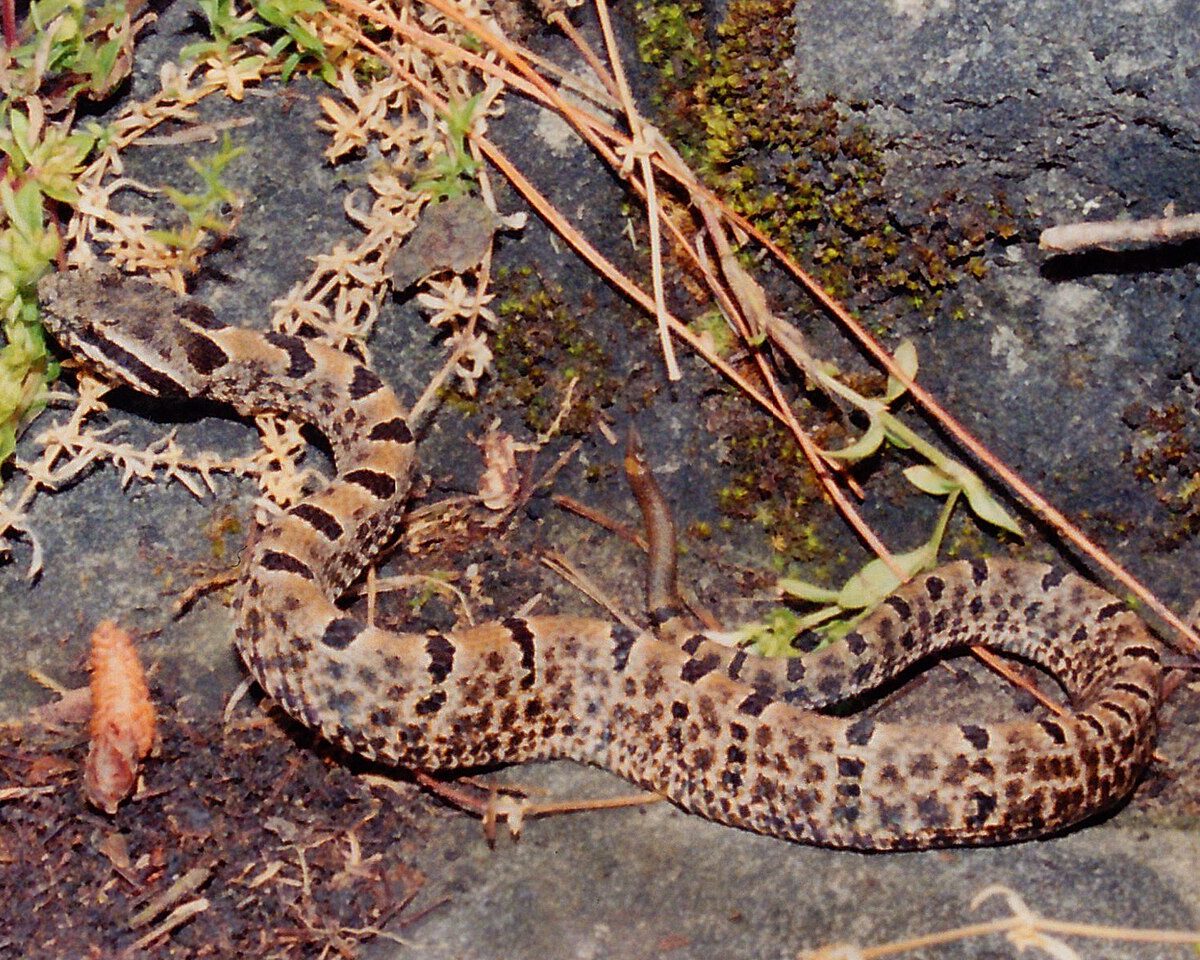
MEXICAN LANCE-HEADED RATTLESNAKE
Crotalus morulus
DESCRIPTION
Mexican Lance-headed Rattlesnake (Crotalus morulus) is a strikingly patterned snake known for its distinctive lance-shaped head and vibrant coloration, which can range from light brown to gray with darker bands. This species is primarily found in rocky and arid environments, where it exhibits a behavior of ambush predation, often remaining motionless until prey approaches. Its ecological role is significant as both a predator and prey, contributing to the balance of its habitat's ecosystem.
FUN FACTS
- The Mexican Lance-headed Rattlesnake is known for its unique ability to blend into its environment, making it a master of camouflage
- This adaptation not only helps it ambush prey but also protects it from larger predators
- | Interestingly, the rattle of this snake is not just a warning; it can also serve as a form of communication with other rattlesnakes, signaling their presence and intentions
QUICK INFO
Lifespan10-20 years in the wild, up to 25 years in captivi
Average Weight1-2 kg
Average Length1.2-1.5 m
Diet TypeCarnivore
Social Structuresolitary
Activity PatternNocturnal
Breeding SeasonSpring (April-June)
- Habitat
- The Mexican Lance-headed Rattlesnake inhabits rocky hillsides, scrublands, and arid regions. It prefers areas with ample cover for ambushing prey and hiding from predators.
- Biomes
- Desert, Scrubland
- Native Range
- This species is native to Mexico, particularly in the central and northern regions.
- Continent
- North America
- Countries
- Mexico
- Diet
- It primarily feeds on small mammals, birds, and occasionally reptiles. The snake uses its venom to immobilize prey before consumption.
- Diet Type
- Carnivore
- Favorite Food
- small mammals, birds
- Social Structure
- solitary
- Activity Pattern
- Nocturnal
- Group Size
- 1
- Territorial
- 1
 VU
VU
1-2 kg
Weight
1.2-1.5 m
Length
- Coloration
- Typically features a pattern of light and dark bands, providing excellent camouflage against rocky backgrounds.
- Sexual Dimorphism
- Males are generally smaller than females.
- Lifespan
- 10-20 years in the wild, up to 25 years in captivi
- Gestation Period
- 90-100 days
- Offspring per Birth
- 5-15
- Sexual Maturity
- 2-3 years
- Breeding Season
- Spring (April-June)
LC
Least Concern
IUCN Red List Status
- Population Status
- The population is currently stable, but habitat loss poses a potential threat.
- Wild Population Estimate
- unknown
- Population Trend
- Stable
- Endangered
- 0
- Threats
- Main threats include habitat destruction due to urbanization and agriculture, as well as persecution by humans due to fear of venomous snakes.
- Predators
- Birds of prey, larger snakes, and mammals such as coyotes may prey on juvenile Mexican Lance-headed Rattlesnakes.
- Defense Mechanisms
- The snake uses its rattle as a warning signal to deter potential threats, and its venom is a powerful defense against predators.
- Found in Zoos
- Uncommon