


MEXICAN OCELOT
Leopardus pardalis
DESCRIPTION
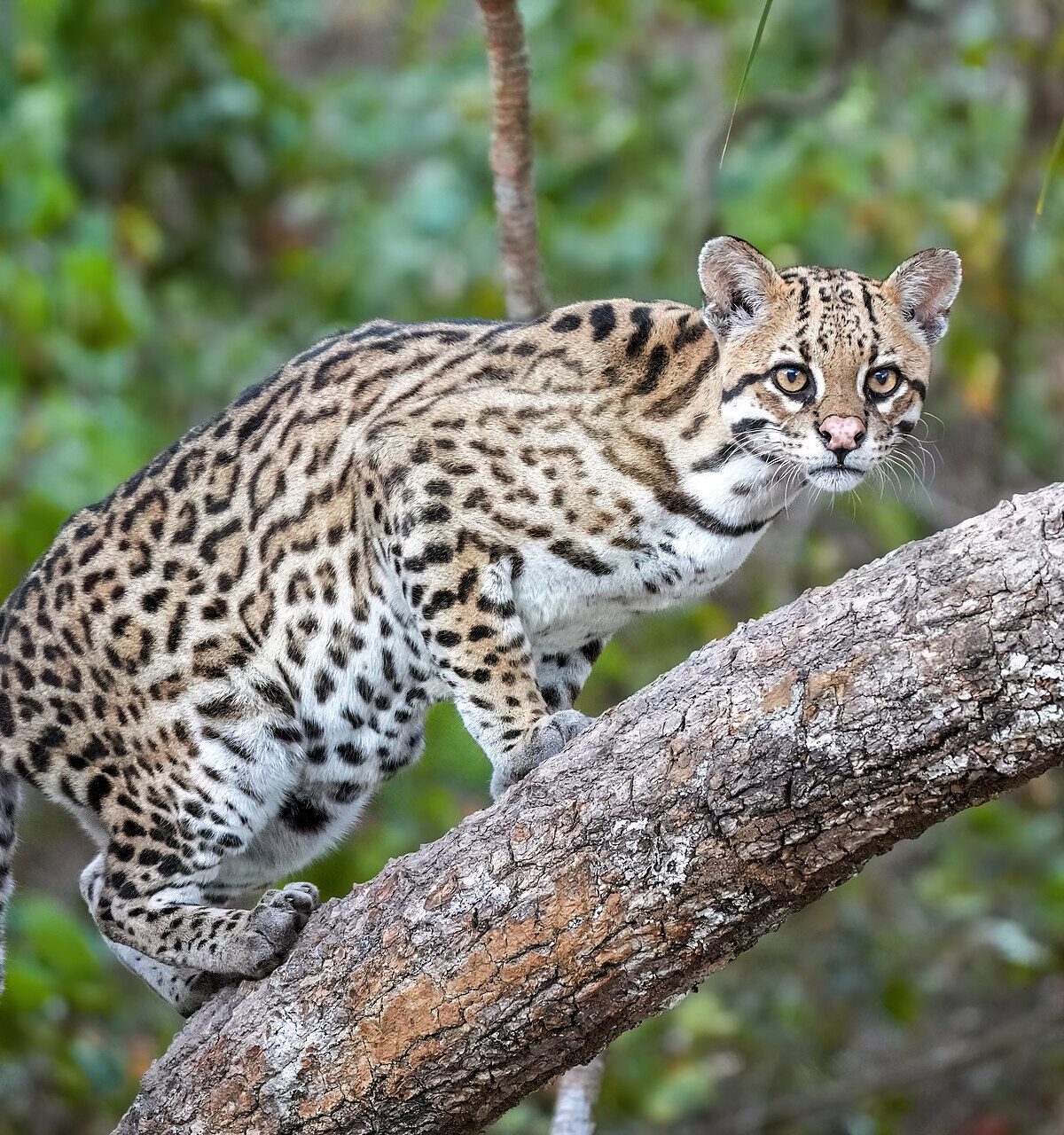
The Mexican Ocelot, scientifically known as Leopardus pardalis, is a medium-sized wild cat characterized by its striking coat of fur, which features a pattern of dark rosettes and stripes on a tawny background. This species is primarily nocturnal and is known for its elusive nature, often preferring to remain hidden in dense vegetation. Ocelots are skilled climbers and swimmers, which allows them to adapt to various environments, making them effective hunters in both terrestrial and arboreal habitats.
FUN FACTS
- Ocelots have a unique ability to adapt to different environments, which allows them to thrive in both forested and open areas
- They are also known for their vocalizations, which include a variety of sounds such as growls, meows, and purrs, used for communication with other ocelots
- | The ocelot's fur is highly prized, leading to significant hunting pressure in the past
- Conservation efforts have helped stabilize some populations, but illegal hunting still poses a threat in certain areas
QUICK INFO
Lifespan7-10 years in the wild, up to 20 years in captivit
Average Weight8-18 kg
Average Length0.75-1.1 m
Diet TypeCarnivore
Social StructureSolitary, with individuals marking and defending their territories.
Activity PatternNocturnal
Breeding SeasonYear-round, with peaks depending on the region
- Habitat
- Mexican Ocelots inhabit a variety of environments, including tropical rainforests, scrublands, and grasslands. They prefer areas with dense cover for stalking prey and for shelter.
- Biomes
- Tropical Rainforest, Savanna, Grassland
- Native Range
- The native range of the Mexican Ocelot extends from the southern United States through Central America to northern South America.
- Continent
- North America, Central America, South America
- Countries
- United States, Mexico, Guatemala, Honduras, Nicaragua, Costa Rica, Panama, Colombia, Venezuela, Ecuador, Brazil
- Diet
- Mexican Ocelots are carnivorous and primarily feed on small to medium-sized mammals, birds, and reptiles. They are opportunistic hunters and will also consume insects and fish when available.
- Diet Type
- Carnivore
- Favorite Food
- Rodents, birds, and small mammals
- Social Structure
- Solitary, with individuals marking and defending their territories.
- Activity Pattern
- Nocturnal
- Group Size
- 1
- Territorial
- 1
 VU
VU
8-18 kg
Weight
0.75-1.1 m
Length
- Coloration
- Tawny coat with dark rosettes and stripes.
- Sexual Dimorphism
- Males are generally larger than females.
- Lifespan
- 7-10 years in the wild, up to 20 years in captivit
- Gestation Period
- 79-85 days
- Offspring per Birth
- 1-4
- Sexual Maturity
- 1-2 years
- Breeding Season
- Year-round, with peaks depending on the region
NT
Near Threatened
IUCN Red List Status
- Population Status
- The population of Mexican Ocelots is currently considered to be decreasing due to habitat loss and poaching.
- Wild Population Estimate
- Less than 50,000
- Population Trend
- Decreasing
- Endangered
- 1
- Threats
- The main threats to the Mexican Ocelot include habitat destruction due to agriculture and urban development, as well as poaching for their beautiful fur. Additionally, road mortality poses a significant risk to their populations.
- Conservation Program
- Various conservation programs are in place, including habitat protection and restoration efforts.
- Predators
- Humans are the primary threat, but young ocelots may be vulnerable to larger predators such as jaguars and large birds of prey.
- Defense Mechanisms
- Mexican Ocelots rely on their camouflage and stealth to avoid detection by predators and humans.
- Found in Zoos
- Uncommon