


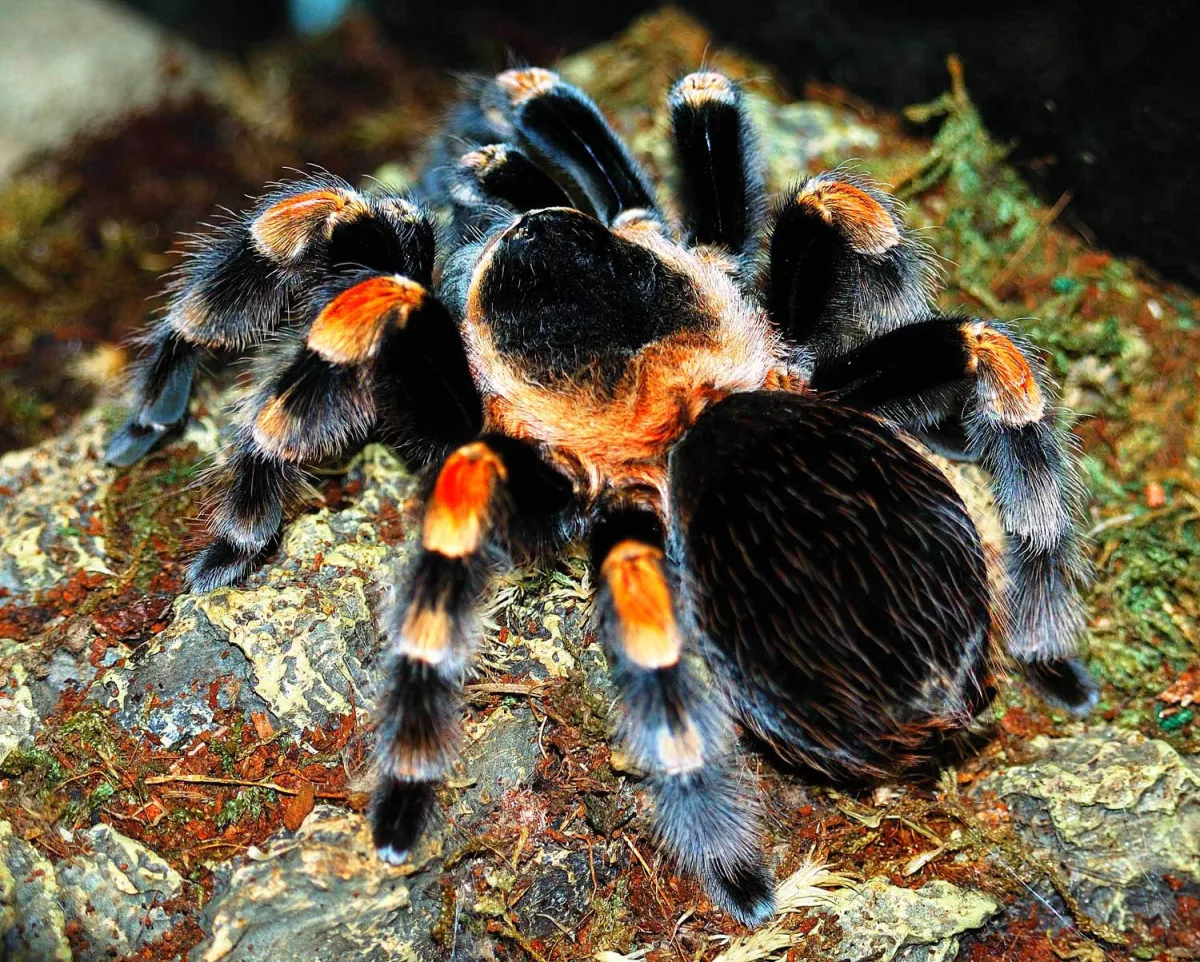
MEXICAN RED KNEE TARANTULA
DESCRIPTION
Also called the Red-knee tarantula, the Mexican Red Knee Tarantula is known for its striking appearance, featuring a dark brown to black body with bright orange or red markings on its knees. This species is primarily terrestrial and is often found in burrows, which it digs in the ground. They are generally docile and are known for their calm demeanor, making them popular in the pet trade.
FUN FACTS
- Mexican Red Knee Tarantulas are known for their long lifespan, often living up to 30 years in captivity, which is quite remarkable for arachnids
- They are also popular in the pet trade due to their docile nature and striking appearance, making them a favorite among tarantula enthusiasts.|These tarantulas can be quite large, with a leg span that can reach up to 20 cm, making them one of the larger species of tarantulas
- Despite their intimidating size, they are generally not aggressive and can be handled safely by experienced keepers
QUICK INFO
Lifespan15-20 years in wild, up to 30 in captivity
Average Weight60-100 g
Average Length15-20 cm
Diet TypeCarnivore
Social Structuresolitary
Activity PatternNocturnal
Breeding SeasonSpring (March-May)
- Habitat
- This tarantula typically inhabits dry, arid regions, often found in scrublands and grasslands. They prefer sandy or loose soil where they can easily dig burrows.
- Biomes
- Desert, Grassland
- Native Range
- The species is native to the arid regions of Mexico, particularly in the states of Jalisco and Colima.
- Continent
- North America
- Countries
- Mexico
- Diet
- The Mexican Red Knee Tarantula primarily feeds on insects and other small invertebrates. They are opportunistic hunters, using their silk to create webs to capture prey.
- Diet Type
- Carnivore
- Favorite Food
- crickets, mealworms
- Social Structure
- solitary
- Activity Pattern
- Nocturnal
- Group Size
- 1
- Territorial
- 0
 VU
VU

60-100 g
Weight
15-20 cm
Length
- Coloration
- dark brown to black body with bright orange or red markings on the legs
- Sexual Dimorphism
- Males are generally smaller and have longer legs compared to females.
- Lifespan
- 15-20 years in wild, up to 30 in captivity
- Offspring per Birth
- 100-200
- Sexual Maturity
- 3-4 years
- Breeding Season
- Spring (March-May)
LC
Least Concern
IUCN Red List Status
- Population Status
- The population is currently stable, but habitat loss poses a potential threat.
- Wild Population Estimate
- Unknown
- Population Trend
- Stable
- Endangered
- 0
- Threats
- Main threats include habitat destruction due to urbanization and agriculture. Additionally, they are sometimes collected for the pet trade, which can impact local populations.
- Predators
- Birds, small mammals, and larger reptiles are known to prey on Mexican Red Knee Tarantulas.
- Defense Mechanisms
- They can use urticating hairs to deter predators, which can cause irritation to the skin of potential threats.
- Found in Zoos
- Common