


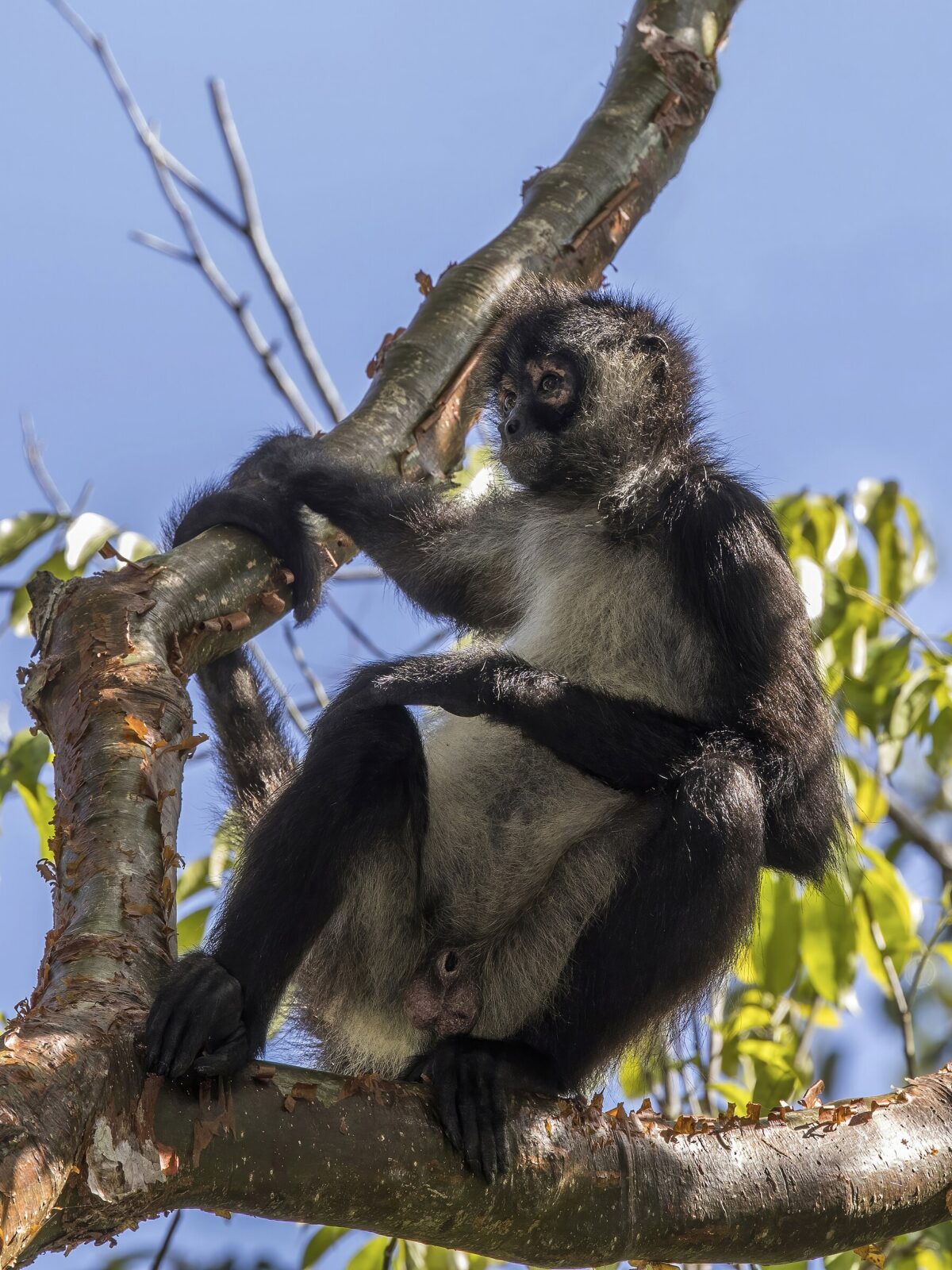
MEXICAN SPIDER MONKEY
Ateles geoffroyi
DESCRIPTION
Mexican Spider Monkey (Ateles geoffroyi) is also known as Geoffroy's Spider Monkey, characterized by its long limbs and prehensile tail, which is often used for grasping branches as it moves through the trees. This species has a slender body covered in black or dark brown fur, with a distinctive face that features a light-colored muzzle and expressive eyes. They are highly social animals, often found in groups, and are known for their acrobatic abilities and vocalizations, which play a crucial role in their communication and social interactions.
FUN FACTS
- Mexican Spider Monkeys are known for their remarkable agility and can swing from branch to branch with ease, using their long limbs and prehensile tails to navigate the treetops
- They are also highly social animals, often forming strong bonds within their groups, and they communicate through a variety of vocalizations, including screams and howls, which can be heard over long distances.|These monkeys play a crucial role in their ecosystem as seed dispersers, helping to maintain the health of their forest habitats
- Their diet primarily consists of fruits, which they consume and then excrete, allowing for the growth of new plants and trees
QUICK INFO
Lifespan20-25 years in the wild, up to 30 years in captivi
Average Weight15-19 kg
Average Length50-70 cm
Diet TypeHerbivore
Social StructureThey live in groups, typically consisting of 10-30 individuals, which are matriarchal in structure.
Activity PatternDiurnal
Breeding SeasonYear-round, with peaks depending on food availability
- Habitat
- Mexican Spider Monkeys inhabit tropical and subtropical forests, often favoring areas with abundant fruiting trees. They are arboreal, spending most of their time in the canopy layer of the forest.
- Biomes
- Tropical Rainforest, Subtropical Forest
- Native Range
- They are native to the tropical forests of Central America, particularly in Mexico, Guatemala, and Honduras.
- Continent
- North America, Central America
- Countries
- Mexico, Guatemala, Honduras
- Diet
- They primarily consume fruits, leaves, and flowers, with a preference for ripe fruits when available.
- Diet Type
- Herbivore
- Favorite Food
- fruits, leaves
- Social Structure
- They live in groups, typically consisting of 10-30 individuals, which are matriarchal in structure.
- Activity Pattern
- Diurnal
- Group Size
- 10-30
- Territorial
- 1
 VU
VU
 NT
NT
15-19 kg
Weight
50-70 cm
Length
- Coloration
- They have a dark brown to black coloration with lighter facial features.
- Sexual Dimorphism
- Males are generally larger than females.
- Lifespan
- 20-25 years in the wild, up to 30 years in captivi
- Gestation Period
- 230-240 days
- Offspring per Birth
- 1
- Sexual Maturity
- 3-4 years
- Breeding Season
- Year-round, with peaks depending on food availability
EN
Endangered
IUCN Red List Status
- Population Status
- The population is currently declining due to habitat loss and hunting.
- Wild Population Estimate
- 20,000-30,000
- Population Trend
- Decreasing
- Endangered
- 1
- Threats
- The main threats to the Mexican Spider Monkey include deforestation, habitat fragmentation, and hunting. These factors have significantly impacted their populations and continue to pose risks to their survival.
- Conservation Program
- Various conservation programs are in place to protect their habitats and promote awareness.
- Predators
- Large birds of prey, jaguars, and humans are known predators of the Mexican Spider Monkey.
- Defense Mechanisms
- They use vocalizations to alert others of danger and can also flee quickly through the trees.
- Found in Zoos
- Uncommon