


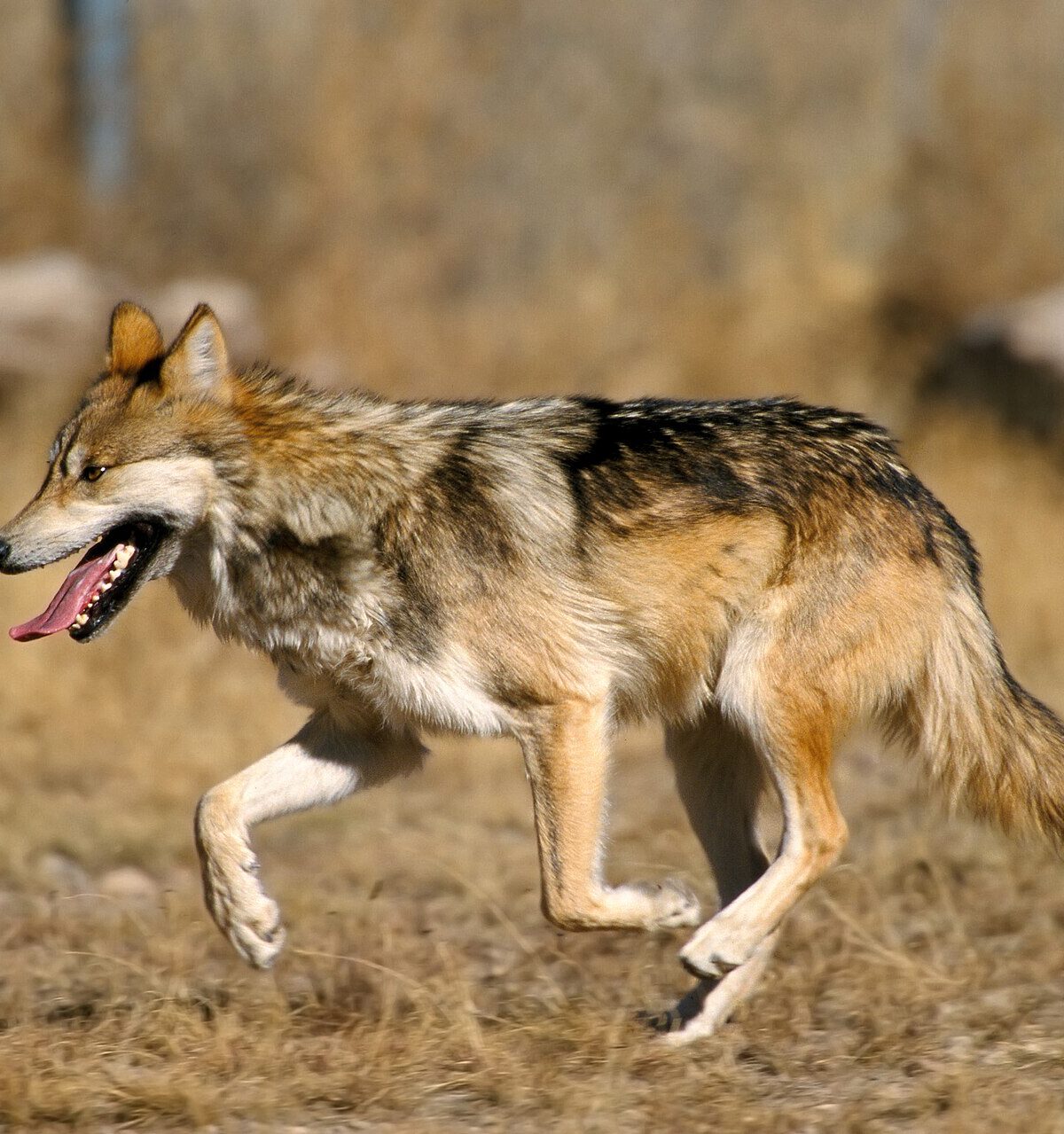
MEXICAN WOLF
DESCRIPTION
Also called Lobo and Tequila Wolf, the Mexican Wolf is a subspecies of the gray wolf and is characterized by its smaller size and distinct coloration. They typically have a mix of gray, brown, and black fur, with lighter underparts and a more slender build compared to other wolves. Mexican Wolves are social animals that live in packs, exhibiting complex social behaviors and strong family bonds, which are essential for their hunting strategies and survival in the wild.
FUN FACTS
- Mexican Wolves are the most endangered subspecies of gray wolf, with a population that was once reduced to just a few individuals in the wild
- Conservation programs have successfully bred them in captivity and reintroduced them into their natural habitat, helping to increase their numbers
- | Unlike many other wolf species, Mexican Wolves have a unique vocalization that includes a high-pitched howl, which is used to communicate with pack members over long distances
- This vocalization is essential for maintaining social bonds and coordinating hunting efforts
QUICK INFO
Lifespan10-15 years in the wild, up to 16 years in captivi
Average Weight27-45 kg
Average Length1.2-1.5 m
Diet TypeCarnivore
Social StructurePack, typically consisting of a breeding pair and their offspring.
Activity PatternCrepuscular
Breeding SeasonWinter (January-March)
- Habitat
- They inhabit mountainous and forested regions, often preferring areas with dense vegetation for cover. Their habitat is crucial for hunting and raising their young.
- Biomes
- Temperate Forest, Grassland
- Native Range
- Historically found throughout the southwestern United States and Mexico, their current range is limited to specific areas in the southwestern U.S. and northern Mexico.
- Continent
- North America
- Countries
- United States, Mexico
- Diet
- Mexican Wolves primarily hunt large ungulates, but they also consume smaller mammals and carrion when necessary.
- Diet Type
- Carnivore
- Favorite Food
- deer, elk, and smaller mammals
- Social Structure
- Pack, typically consisting of a breeding pair and their offspring.
- Activity Pattern
- Crepuscular
- Group Size
- 2-10
- Territorial
- 1
 LC
LC
27-45 kg
Weight
1.2-1.5 m
Length
0.6 m at shoulder
Height (Shoulder)
- Coloration
- A mix of gray, brown, and black with lighter underparts.
- Sexual Dimorphism
- Males are generally larger than females.
- Lifespan
- 10-15 years in the wild, up to 16 years in captivi
- Gestation Period
- 63 days
- Offspring per Birth
- 4-6
- Sexual Maturity
- 2-3 years
- Breeding Season
- Winter (January-March)
EN
Endangered
IUCN Red List Status
- Population Status
- The population of Mexican Wolves is critically low, with ongoing conservation efforts to increase their numbers.
- Wild Population Estimate
- 300-400
- Population Trend
- Increasing
- Endangered
- 1
- Threats
- Main threats include habitat loss, human-wildlife conflict, and genetic bottlenecks due to historical overhunting. Conservation efforts are ongoing to mitigate these threats.
- Conservation Program
- Mexican Wolf Recovery Program
- Predators
- Humans are the primary threat, but adult wolves have few natural predators. Young wolves may be vulnerable to mountain lions and bears.
- Defense Mechanisms
- They rely on pack strength and vocalizations to defend their territory and deter threats.
- Found in Zoos
- Uncommon