


MEYER'S PARROT
Poicephalus meyeri
DESCRIPTION
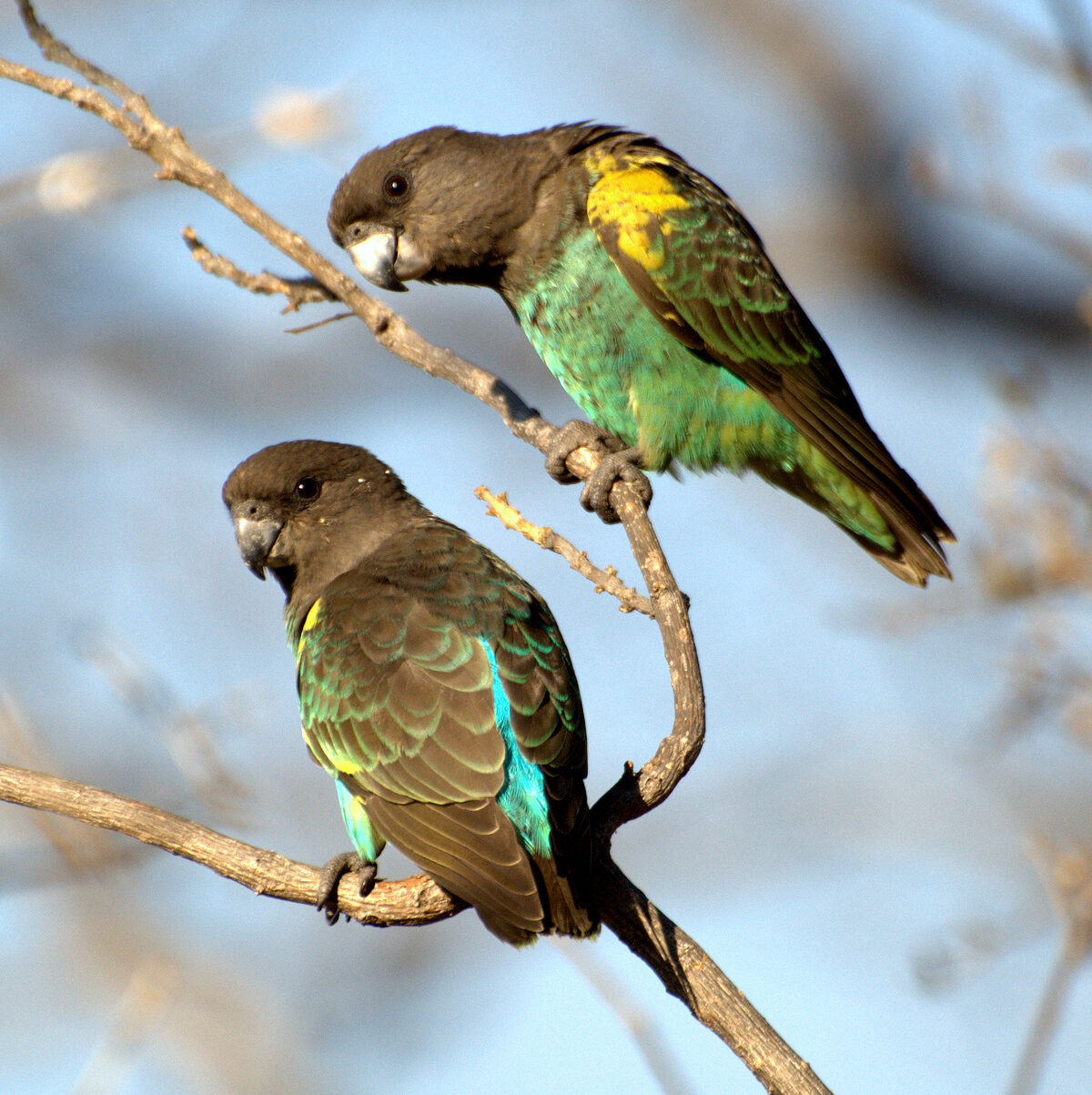
Meyer's Parrot (Poicephalus meyeri) is a small to medium-sized parrot known for its vibrant green plumage and distinctive yellow and blue markings on the wings. This species exhibits a playful and curious nature, often engaging in social interactions with its flock members. In the wild, they are typically found in pairs or small groups, foraging for food and nesting in tree cavities.
FUN FACTS
- Meyer's Parrots are known for their playful personalities and can develop strong bonds with their human caretakers, often displaying affectionate behaviors
- They are also capable of mimicking human speech and other sounds, making them popular pets among bird enthusiasts
QUICK INFO
Lifespan15-20 years in the wild, up to 30 in captivity
Average Weight120-150 g
Average Length23-25 cm
Diet TypeHerbivore
Social StructureMeyer's Parrots are typically found in pairs or small groups, showcasing a social structure that allows for strong pair bonds and communal foraging.
Activity PatternDiurnal
Breeding SeasonSpring (September-November)
- Habitat
- Meyer's Parrots inhabit woodlands, savannas, and forest edges, often favoring areas with abundant trees for nesting and foraging. They are adaptable birds that can thrive in both natural and modified habitats.
- Biomes
- Savanna, Tropical Rainforest
- Native Range
- Meyer's Parrot is native to the central and southern regions of Africa, particularly in countries like Botswana, Namibia, and parts of South Africa.
- Continent
- Africa
- Countries
- Botswana, Namibia, South Africa, Zimbabwe
- Diet
- Meyer's Parrots primarily feed on seeds, fruits, and nuts, often foraging in the canopy of trees. They are known to enjoy a variety of plant materials, which contributes to their diverse diet.
- Diet Type
- Herbivore
- Favorite Food
- seeds, fruits, nuts
- Social Structure
- Meyer's Parrots are typically found in pairs or small groups, showcasing a social structure that allows for strong pair bonds and communal foraging.
- Activity Pattern
- Diurnal
- Group Size
- 2-10
- Territorial
- 0
 LC
LC
 VU
VU
120-150 g
Weight
23-25 cm
Length
- Coloration
- Predominantly green with yellow and blue accents on the wings and a distinctive dark mask around the eyes.
- Sexual Dimorphism
- Males and females are similar in appearance, making it difficult to distinguish between the sexes without genetic testing.
- Lifespan
- 15-20 years in the wild, up to 30 in captivity
- Offspring per Birth
- 2-4
- Sexual Maturity
- 2-3 years
- Breeding Season
- Spring (September-November)
LC
Least Concern
IUCN Red List Status
- Population Status
- The population of Meyer's Parrot is currently stable, although habitat loss poses a potential threat.
- Wild Population Estimate
- 50,000-100,000
- Population Trend
- Stable
- Endangered
- 0
- Threats
- Main threats include habitat destruction due to deforestation and agricultural expansion. Additionally, trapping for the pet trade can impact local populations.
- Predators
- Snakes, birds of prey, and larger mammals may prey on Meyer's Parrots, particularly their eggs and young.
- Defense Mechanisms
- Meyer's Parrots often rely on their ability to blend into their surroundings and their agility to escape predators.
- Compatible Animals
- other small parrots, finches
- Found in Zoos
- Common