


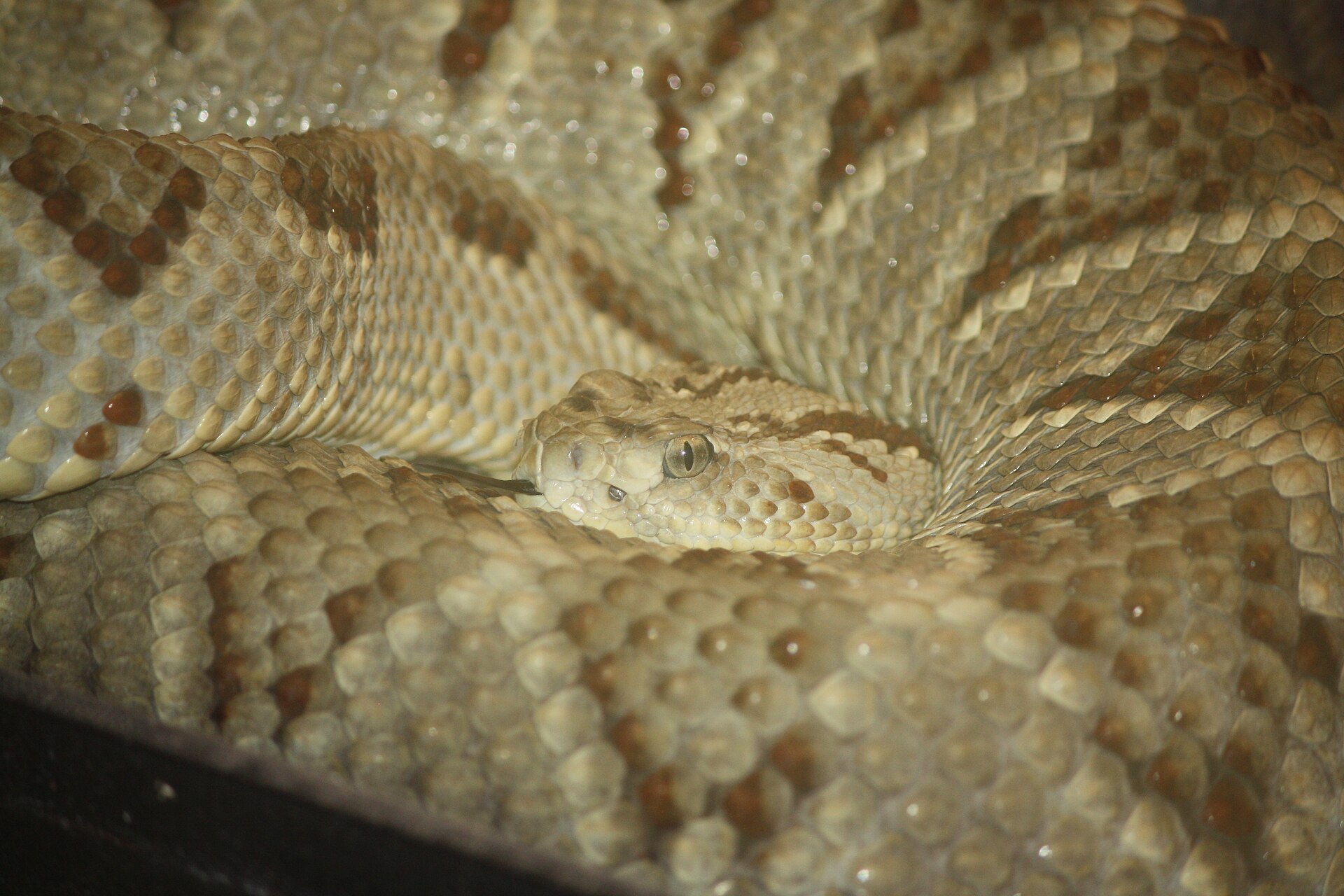
MIDDLE AMERICAN RATTLESNAKE
Crotalus simus
DESCRIPTION
Middle American Rattlesnake (Crotalus simus) is commonly known as the Central American Rattlesnake. This species is characterized by its robust body, distinctive rattle, and a color pattern that typically includes shades of brown, gray, and cream, which helps it blend into its natural surroundings. It is primarily found in rocky and arid environments, where it exhibits a behavior of ambush predation, waiting for unsuspecting prey to come close before striking.
FUN FACTS
- The rattle of the Middle American Rattlesnake is made of keratin, the same material as human nails, and it grows with each shedding of the skin, making it a unique indicator of age
- Additionally, these snakes have a fascinating method of thermoregulation, allowing them to detect the body heat of their prey even in complete darkness, which is crucial for their hunting strategy
QUICK INFO
Lifespan10-20 years in the wild, up to 25 years in captivi
Average Weight1-2 kg
Average Length1.2-1.8 m
Diet TypeCarnivore
Social Structuresolitary, typically found alone except during mating season
Activity PatternNocturnal
Breeding SeasonSpring (April-June)
- Habitat
- Middle American Rattlesnakes inhabit dry forests, scrublands, and rocky hillsides. They prefer areas with ample cover for ambushing prey.
- Biomes
- Tropical Dry Forest, Scrubland
- Native Range
- This species is native to Central America, specifically found in countries such as Mexico, Guatemala, and Honduras.
- Continent
- North America, Central America
- Countries
- Mexico, Guatemala, Honduras
- Diet
- It primarily feeds on small mammals, birds, and occasionally reptiles. The snake uses its heat-sensing pits to detect warm-blooded prey.
- Diet Type
- Carnivore
- Favorite Food
- small mammals
- Social Structure
- solitary, typically found alone except during mating season
- Activity Pattern
- Nocturnal
- Group Size
- 1
- Territorial
- 1
 VU
VU
1-2 kg
Weight
1.2-1.8 m
Length
- Coloration
- Typically brown or gray with darker bands and a lighter underside.
- Sexual Dimorphism
- Males are generally smaller than females.
- Lifespan
- 10-20 years in the wild, up to 25 years in captivi
- Gestation Period
- 6-7 months
- Offspring per Birth
- 5-15
- Sexual Maturity
- 2-3 years
- Breeding Season
- Spring (April-June)
LC
Least Concern
IUCN Red List Status
- Population Status
- The population is currently stable, but habitat loss poses a potential threat.
- Wild Population Estimate
- Unknown
- Population Trend
- Stable
- Endangered
- 0
- Threats
- Main threats include habitat destruction due to agriculture and urbanization. Additionally, they are often killed out of fear or misunderstanding.
- Predators
- Birds of prey, larger snakes, and mammals such as coyotes may prey on juvenile Middle American Rattlesnakes.
- Defense Mechanisms
- They use their rattle as a warning signal to deter potential threats and will strike if provoked.
- Found in Zoos
- Uncommon