


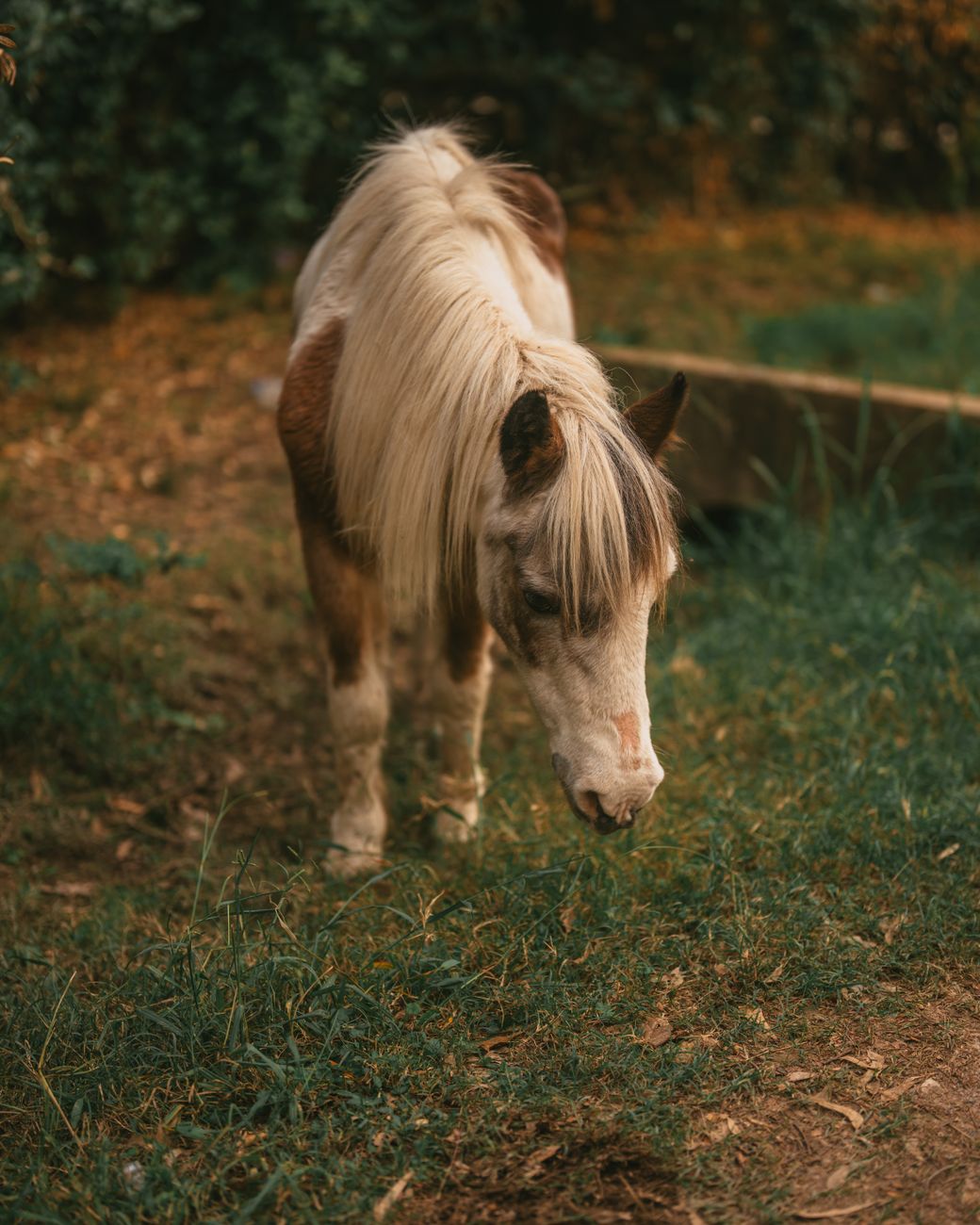
MINIATURE HORSE
Equus caballus
DESCRIPTION
Also called Miniature Pony and Mini Horse, the Miniature Horse is a small breed of horse that stands no taller than 34-38 inches at the withers. They are known for their friendly disposition and intelligence, making them popular as companion animals. Miniature Horses are often used in therapeutic settings due to their gentle nature and are also showcased in various equestrian events.
FUN FACTS
- Miniature Horses are not dwarfs; they are a distinct breed with specific breeding standards
- They are often used in therapy programs for children and adults with disabilities, providing emotional support and companionship.|Despite their small size, Miniature Horses can perform many of the same tasks as full-sized horses, including pulling carts and participating in shows
- Their gentle nature makes them ideal for educational programs and petting zoos
QUICK INFO
Lifespan25-35 years
Average Weight45-90 kg
Average Length1.2-1.5 m
Diet TypeHerbivore
Social Structuregroup — they are often kept in pairs or small herds to satisfy their social needs.
Activity PatternDiurnal
Breeding SeasonSpring (April-June)
- Habitat
- Miniature Horses are domesticated animals and are typically found in human-managed environments such as farms, stables, and backyards. They require shelter and space to roam and graze.
- Biomes
- Temperate Forest, Grassland
- Native Range
- Originally bred in Europe, Miniature Horses are now found worldwide due to their popularity as pets and show animals.
- Continent
- North America, Europe, Asia, Australia
- Countries
- United States, United Kingdom, Australia, Canada
- Diet
- Miniature Horses are herbivores, primarily grazing on grass and hay. They may also consume grains and specialized horse feeds in moderation.
- Diet Type
- Herbivore
- Favorite Food
- grass, hay
- Social Structure
- group — they are often kept in pairs or small herds to satisfy their social needs.
- Activity Pattern
- Diurnal
- Group Size
- 2-10
- Territorial
- 0
45-90 kg
Weight
1.2-1.5 m
Length
34-38 inches at the withers
Height (Shoulder)
- Coloration
- varies widely, including solid colors, pinto, and appaloosa patterns
- Sexual Dimorphism
- males are typically larger than females
- Lifespan
- 25-35 years
- Gestation Period
- 11 months
- Offspring per Birth
- 1
- Sexual Maturity
- 1-2 years
- Breeding Season
- Spring (April-June)
LC
Least Concern
IUCN Red List Status
- Population Status
- The population of Miniature Horses is stable due to their popularity as pets and show animals.
- Population Trend
- Stable
- Endangered
- 0
- Threats
- Main threats include neglect and abandonment, as well as health issues related to overfeeding and lack of proper care. They are also at risk of being bred irresponsibly, leading to genetic health problems.
- Defense Mechanisms
- Miniature Horses rely on their speed and agility to escape potential threats, as they do not have natural defenses like larger horses.
- Compatible Animals
- dogs, cats, other small equines
- Found in Zoos
- Uncommon