


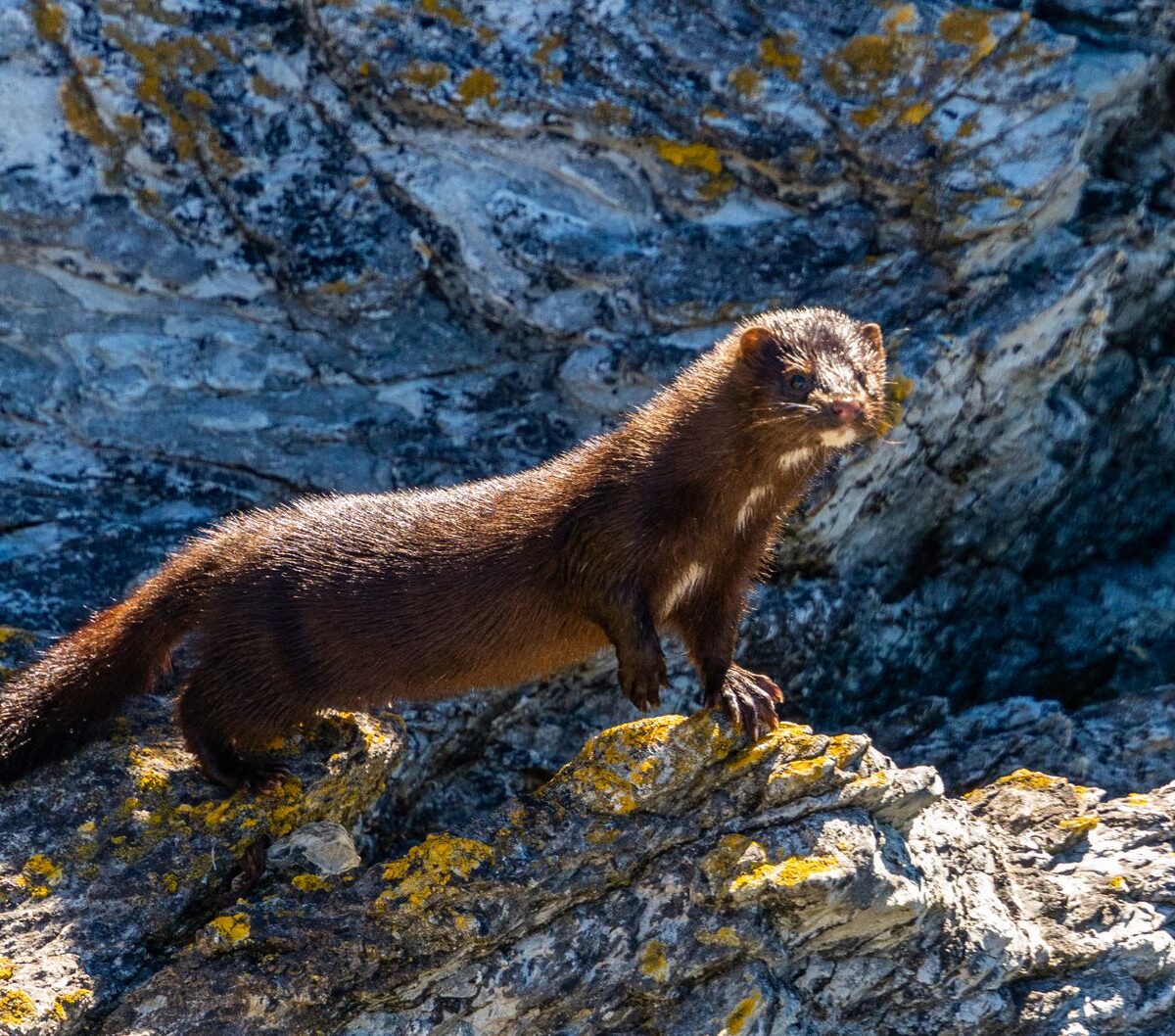
MINK
DESCRIPTION
Mink is commonly known as the European Mink and American Mink, both of which are members of the Mustelidae family. These semi-aquatic mammals have elongated bodies, short legs, and a thick, luxurious fur that varies in color from dark brown to black, often with lighter underbellies. Mink are known for their playful and curious behavior, often seen swimming and diving in search of prey, showcasing their agility and adaptability in various environments.
FUN FACTS
- Mink are excellent swimmers and can hold their breath underwater for up to 30 seconds while hunting for fish or other prey
- | The fur of Mink is highly valued in the fashion industry, leading to extensive farming and trapping, which has raised concerns about their conservation status in some areas
QUICK INFO
Lifespan3-5 years in the wild, up to 10 years in captivity
Average Weight0.7-1.5 kg
Average Length50-70 cm
Diet TypeCarnivore
Social Structuresolitary, with occasional pair bonding during the breeding season
Activity PatternNocturnal
Breeding SeasonLate winter to early spring
- Habitat
- Mink inhabit a variety of environments, including wetlands, rivers, and coastal areas, where they can easily access water. They prefer areas with dense vegetation for cover and hunting.
- Biomes
- Wetlands, Temperate Forests, Grasslands
- Native Range
- Mink are native to North America and Europe, with the American Mink found across the United States and Canada, while the European Mink is primarily found in Eastern Europe.
- Continent
- North America, Europe
- Countries
- United States, Canada, Russia, Poland, Ukraine
- Diet
- Mink primarily feed on small mammals, birds, fish, and amphibians, showcasing their opportunistic feeding habits. They are skilled hunters and often hunt alone, using their keen sense of smell and sharp eyesight.
- Diet Type
- Carnivore
- Favorite Food
- fish, small mammals
- Social Structure
- solitary, with occasional pair bonding during the breeding season
- Activity Pattern
- Nocturnal
- Group Size
- 1-2
- Territorial
- 1
 LC
LC

0.7-1.5 kg
Weight
50-70 cm
Length
- Coloration
- dark brown to black with lighter underbellies
- Sexual Dimorphism
- females are generally smaller than males
- Lifespan
- 3-5 years in the wild, up to 10 years in captivity
- Gestation Period
- 40-75 days
- Offspring per Birth
- 2-6
- Sexual Maturity
- 10-12 months
- Breeding Season
- Late winter to early spring
LC
Least Concern
IUCN Red List Status
- Population Status
- The population of Mink varies by region, with some areas experiencing declines due to habitat loss and hunting.
- Wild Population Estimate
- Unknown
- Population Trend
- Decreasing
- Endangered
- 0
- Threats
- Main threats to Mink include habitat destruction, pollution, and hunting for their fur. In some regions, competition with invasive species also poses a risk to their populations.
- Predators
- eagles, foxes, coyotes, larger carnivores
- Defense Mechanisms
- Mink use their agility and swimming ability to escape predators, often diving into water to evade capture.
- Found in Zoos
- Common