


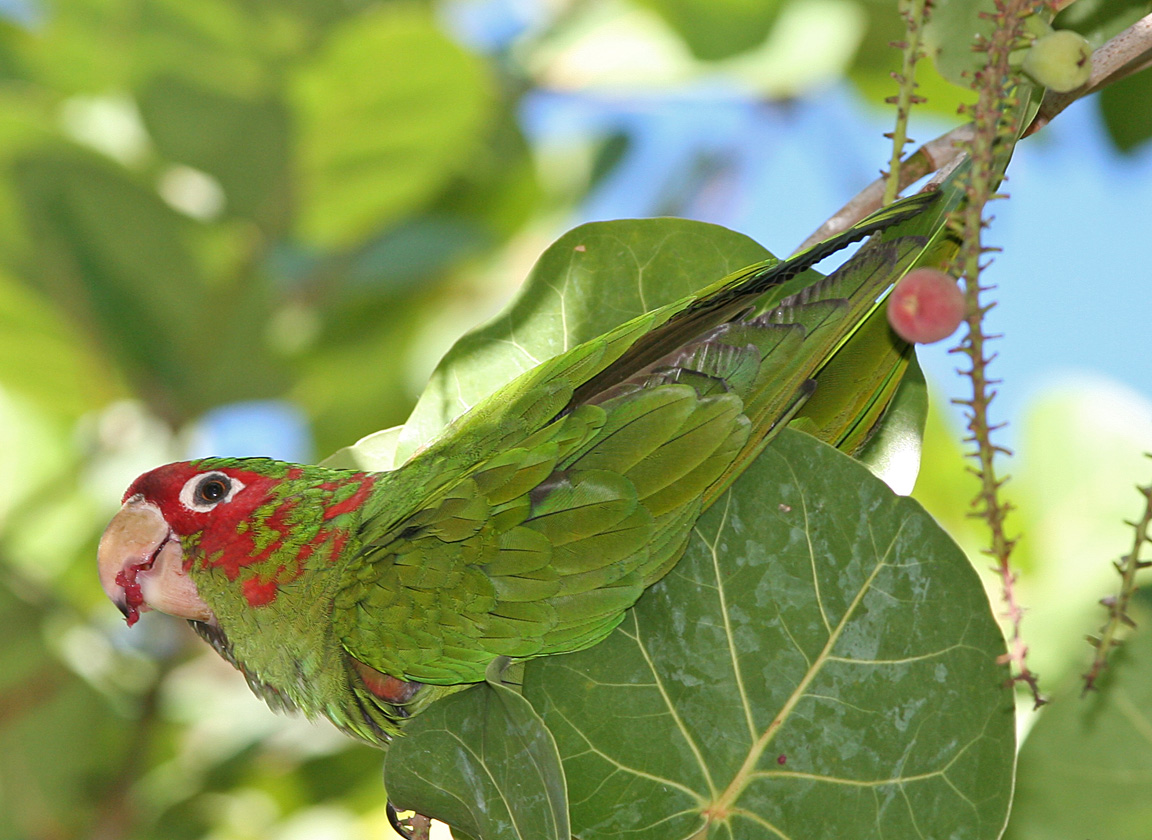
MITRED CONURE
Psittacara mitratus
DESCRIPTION
Mitred Conure (Psittacara mitratus) is commonly known as the Mitered Parakeet and is characterized by its vibrant green plumage, accented with a distinctive red forehead and a yellowish-orange patch on the wings. These birds are social and intelligent, often seen in flocks, engaging in playful behavior and vocalizations that can be quite loud. In the wild, they inhabit a variety of environments, including forests and woodlands, where they can often be found foraging for food among the trees.
FUN FACTS
- Mitred Conures are known for their playful and curious nature, often engaging in acrobatic displays and vocal mimicry
- They can learn to mimic human speech and sounds, making them popular pets among bird enthusiasts
- | These birds are highly social and thrive on interaction, both with their flock and with human companions
- In captivity, they require plenty of mental stimulation and socialization to remain happy and healthy
QUICK INFO
Lifespan20-30 years in captivity
Average Weight120-150 g
Average Length25-30 cm
Diet TypeHerbivore
Social Structuregroup — they are typically found in flocks that can range from a few individuals to several dozen.
Activity PatternDiurnal
Breeding SeasonSpring (March-May)
- Habitat
- These birds thrive in subtropical and tropical forests, often near water sources. They prefer areas with abundant trees for nesting and foraging.
- Biomes
- Tropical Rainforest, Subtropical Forest
- Native Range
- Mitred Conures are native to the western slopes of the Andes in South America, particularly in countries like Peru and Ecuador.
- Continent
- South America
- Countries
- Peru, Ecuador
- Diet
- Mitred Conures primarily feed on seeds, fruits, and nuts, showing a preference for a variety of plant materials. They are known to forage in trees and on the ground for their food.
- Diet Type
- Herbivore
- Favorite Food
- seeds, fruits, nuts
- Social Structure
- group — they are typically found in flocks that can range from a few individuals to several dozen.
- Activity Pattern
- Diurnal
- Group Size
- 5-30
- Territorial
- 0
 CR
CR
 LC
LC
120-150 g
Weight
25-30 cm
Length
- Coloration
- primarily green with a red forehead and yellowish-orange wing patches
- Sexual Dimorphism
- males and females are similar in appearance, making it difficult to distinguish between the sexes.
- Lifespan
- 20-30 years in captivity
- Offspring per Birth
- 3-5
- Sexual Maturity
- 2-3 years
- Breeding Season
- Spring (March-May)
LC
Least Concern
IUCN Red List Status
- Population Status
- The population of Mitred Conures is currently stable, but they face threats from habitat loss.
- Wild Population Estimate
- unknown
- Population Trend
- Stable
- Endangered
- 0
- Threats
- The main threats to Mitred Conures include habitat destruction due to deforestation and the illegal pet trade. These factors can significantly impact their populations in the wild.
- Predators
- hawks, snakes, and larger birds of prey
- Defense Mechanisms
- Mitred Conures often rely on their ability to fly quickly and their social behavior to evade predators.
- Compatible Animals
- other conures, parrots
- Found in Zoos
- Common