


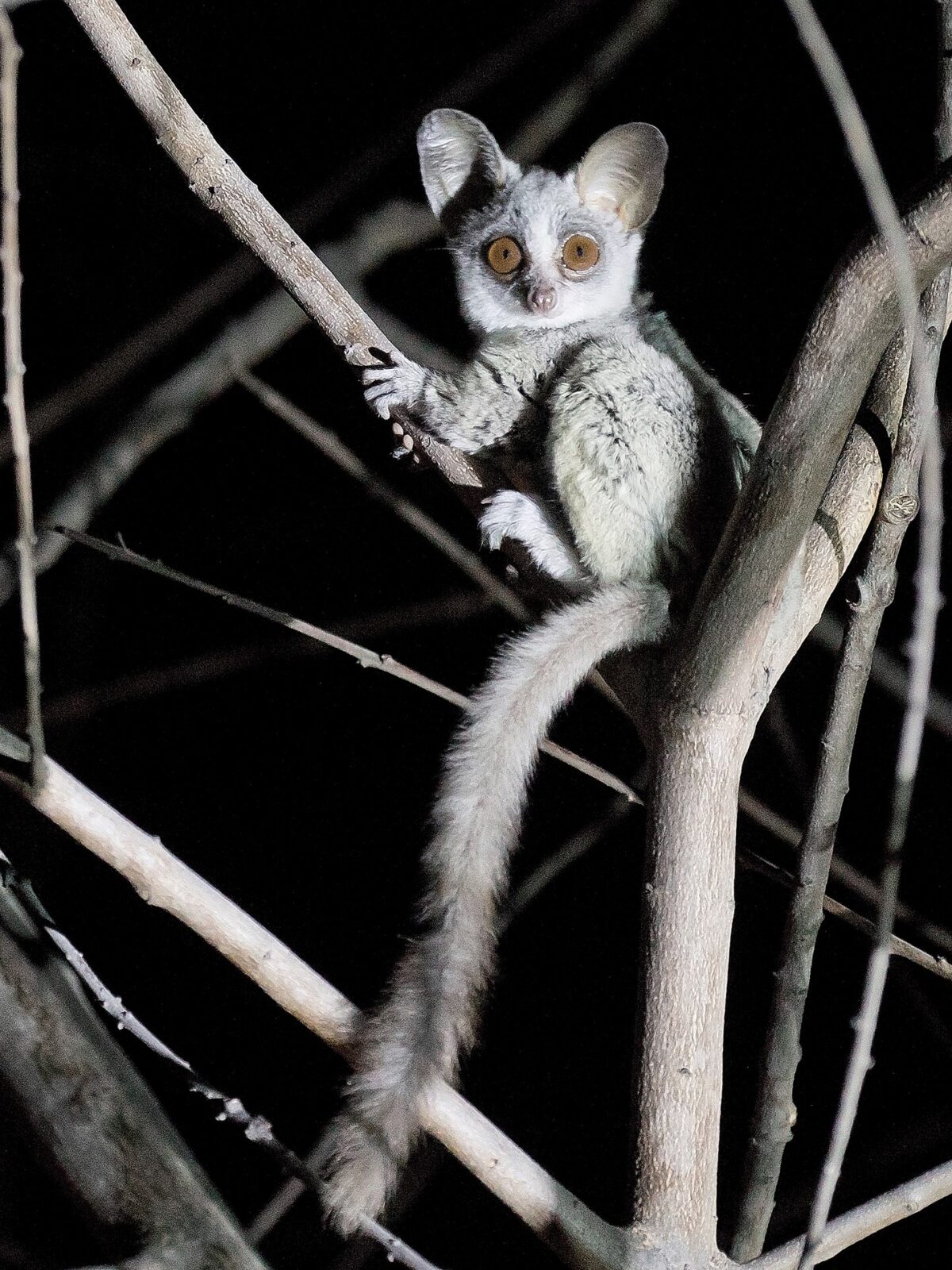
MOHOLI BUSHBABY
DESCRIPTION
Also called the Southern Bushbaby, the Moholi Bushbaby is a small primate known for its large eyes and ears, which are adaptations for its nocturnal lifestyle. It has a soft, grayish-brown fur with a lighter underbelly, and its long tail aids in balance as it leaps between branches. This species is highly social and communicates through a variety of vocalizations, including barks and screams, which are essential for maintaining group cohesion in their forest habitats.
FUN FACTS
- Moholi Bushbabies have remarkable night vision, allowing them to navigate and hunt in complete darkness
- Their large eyes are a defining feature, providing them with excellent depth perception and the ability to spot predators from afar
- | These primates are known for their unique vocalizations, which can include a range of sounds from barks to screams
- This vocal communication is crucial for maintaining social bonds and alerting group members to potential dangers
QUICK INFO
Lifespan10-15 years in the wild, up to 20 years in captivi
Average Weight0.5-1 kg
Average Length25-35 cm
Diet TypeOmnivore
Social StructureThey typically live in small groups, often consisting of a few individuals that maintain strong social bonds.
Activity PatternNocturnal
Breeding SeasonYear-round, with peaks depending on local conditions
- Habitat
- The Moholi Bushbaby inhabits a range of forested environments, including tropical and subtropical forests. It prefers areas with dense foliage that provide ample cover and food sources.
- Biomes
- Tropical Rainforest, Subtropical Forest
- Native Range
- The Moholi Bushbaby is native to southeastern Africa, particularly found in countries like South Africa, Mozambique, and Zimbabwe.
- Continent
- Africa
- Countries
- South Africa, Mozambique, Zimbabwe
- Diet
- The Moholi Bushbaby primarily feeds on fruits, insects, and small vertebrates. Its diet is diverse, allowing it to adapt to different food availability in its environment.
- Diet Type
- Omnivore
- Favorite Food
- fruits, insects
- Social Structure
- They typically live in small groups, often consisting of a few individuals that maintain strong social bonds.
- Activity Pattern
- Nocturnal
- Group Size
- 2-6
- Territorial
- 1
 LC
LC
 VU
VU
0.5-1 kg
Weight
25-35 cm
Length
- Coloration
- Grayish-brown fur with a lighter underbelly
- Sexual Dimorphism
- Males are generally larger than females.
- Lifespan
- 10-15 years in the wild, up to 20 years in captivi
- Gestation Period
- 120 days
- Offspring per Birth
- 1-2
- Sexual Maturity
- 1-2 years
- Breeding Season
- Year-round, with peaks depending on local conditions
LC
Least Concern
IUCN Red List Status
- Population Status
- The population is currently stable, but habitat loss poses a potential threat.
- Wild Population Estimate
- Unknown
- Population Trend
- Stable
- Endangered
- 0
- Threats
- Main threats include habitat destruction due to deforestation and human encroachment. Additionally, they face risks from hunting and the pet trade in some areas.
- Predators
- Snakes, birds of prey, and larger mammals may prey on Moholi Bushbabies.
- Defense Mechanisms
- They rely on their agility and ability to leap between branches to escape predators.
- Found in Zoos
- Uncommon