


MONARCH BUTTERFLY
DESCRIPTION
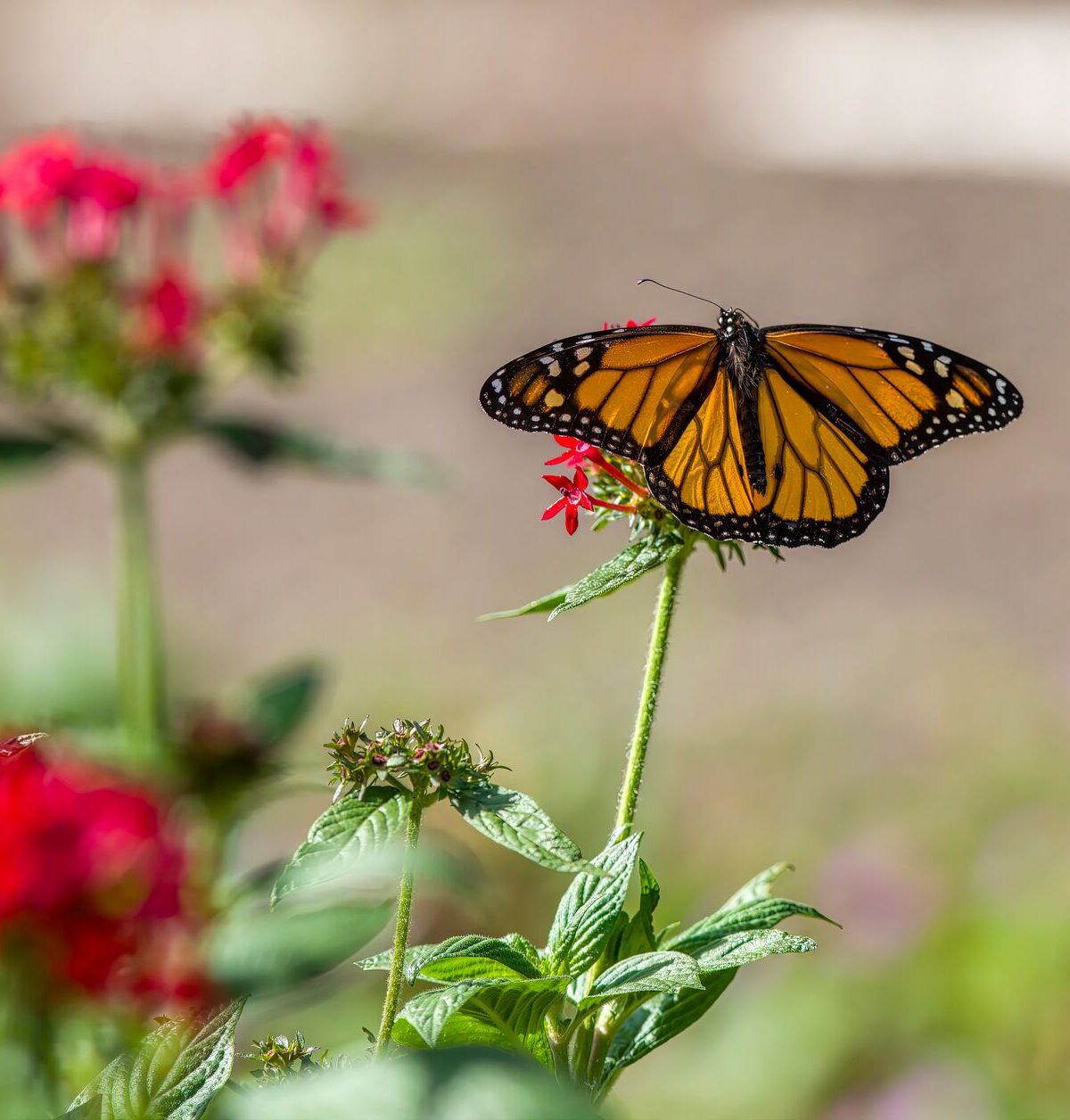
Monarch Butterfly is commonly known as the Milkweed Butterfly due to its reliance on milkweed plants for larval development. This species is easily recognizable by its striking orange and black coloration, with black lines and spots on its wings. Monarchs are known for their remarkable migratory behavior, traveling thousands of miles between their breeding grounds in North America and wintering sites in Mexico.
FUN FACTS
- Monarch Butterflies are famous for their incredible migration journey, which can span over 3,000 miles from North America to central Mexico
- During this migration, they can fly at altitudes of up to 12,000 feet and can travel up to 100 miles in a single day
- | The caterpillars of Monarch Butterflies are known for their striking appearance, featuring bright green bodies with black and yellow stripes
- This coloration not only makes them visually appealing but also serves as a warning to potential predators about their toxicity
QUICK INFO
Lifespan8-9 months for migratory individuals, 2-5 weeks fo
Average Weight0.5-1.0 g
Average Length8.9-10.2 cm
Diet TypeHerbivore
Social Structuresolitary, though they may gather in groups during migration or in areas with abundant food sources
Activity PatternDiurnal
Breeding SeasonSpring to early summer (March-July)
- Habitat
- Monarch Butterflies inhabit a variety of environments, including meadows, fields, and gardens, where milkweed is abundant. They are often found in areas with plenty of flowering plants for nectar.
- Biomes
- Temperate Forest, Grassland
- Native Range
- Monarch Butterflies are native to North America, with populations found throughout the United States, Canada, and Mexico.
- Continent
- North America
- Countries
- United States, Canada, Mexico
- Diet
- Monarch Butterflies primarily feed on nectar from various flowering plants as adults, while the larvae feed exclusively on milkweed leaves. This diet is crucial for their development and helps them accumulate toxins that deter predators.
- Diet Type
- Herbivore
- Favorite Food
- nectar from flowers
- Social Structure
- solitary, though they may gather in groups during migration or in areas with abundant food sources
- Activity Pattern
- Diurnal
- Group Size
- 1-100
- Territorial
- 0
 VU
VU
 EN
EN
0.5-1.0 g
Weight
8.9-10.2 cm
Length
- Coloration
- bright orange wings with black borders and white spots
- Sexual Dimorphism
- females are generally larger and have thicker black lines on their wings compared to males
- Lifespan
- 8-9 months for migratory individuals, 2-5 weeks fo
- Offspring per Birth
- up to 300 eggs
- Sexual Maturity
- 10 days
- Breeding Season
- Spring to early summer (March-July)
NT
Near Threatened
IUCN Red List Status
- Population Status
- The population of Monarch Butterflies has been declining in recent years due to habitat loss and climate change.
- Wild Population Estimate
- 29 million in 2020
- Population Trend
- Decreasing
- Endangered
- 1
- Threats
- Main threats include habitat destruction due to agricultural practices, climate change, and pesticide use. These factors have significantly impacted their breeding and migratory habitats.
- Conservation Program
- Monarch Joint Venture, various local and national initiatives to restore milkweed habitats
- Predators
- Birds, spiders, and other insects such as wasps and ants prey on Monarch Butterflies. Their toxic nature, acquired from milkweed, helps deter some predators.
- Defense Mechanisms
- Monarchs utilize their toxic chemicals to deter predators, and their bright coloration serves as a warning signal.
- Found in Zoos
- Uncommon