


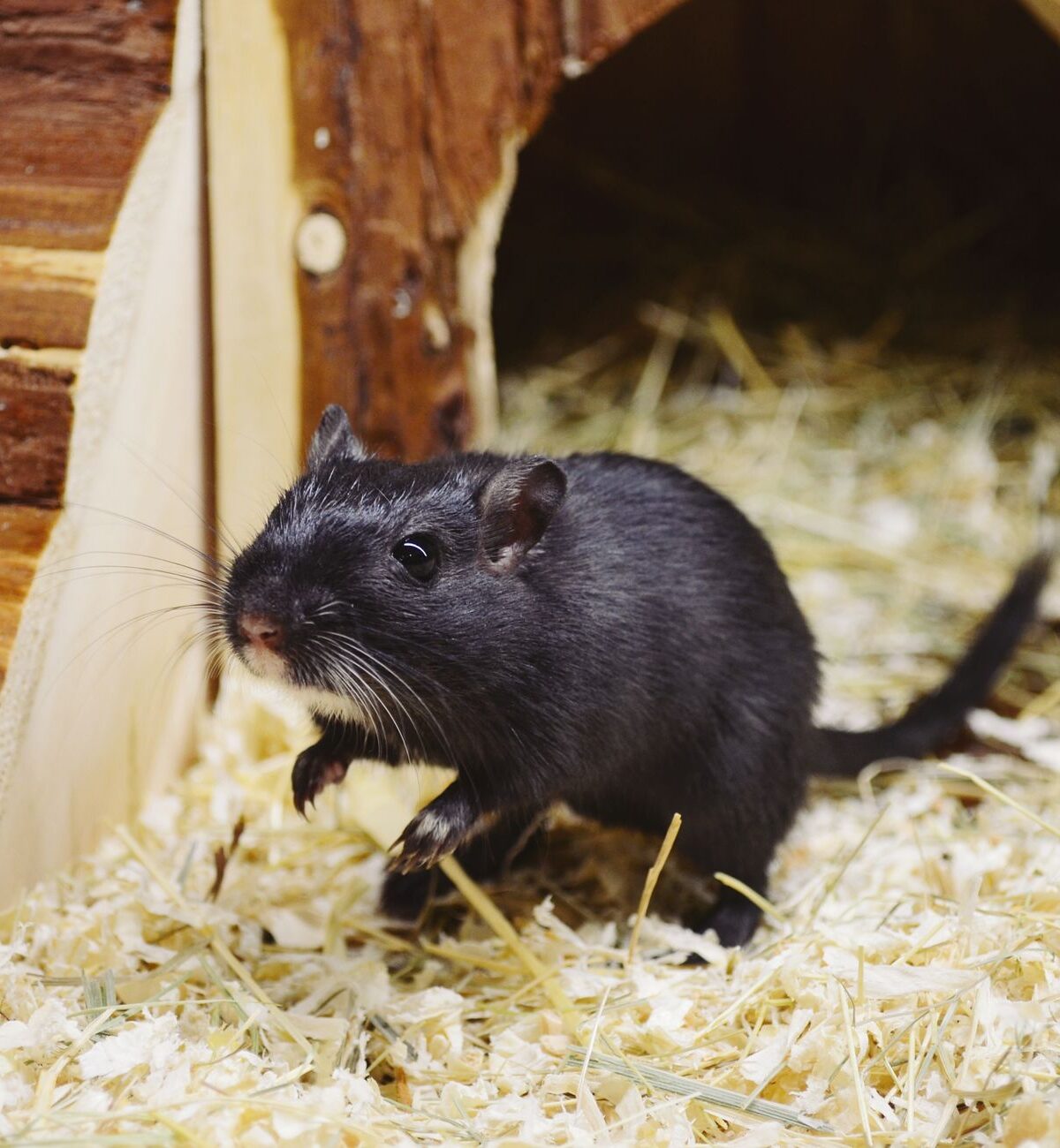
MONGOLIAN GERBIL
Meriones unguiculatus
DESCRIPTION
Mongolian Gerbil (Meriones unguiculatus) is commonly known as the gerbil. This small rodent typically has a slender body, long tail, and large eyes, with fur that ranges from sandy to light brown, providing excellent camouflage in its natural habitat. They are social animals that exhibit burrowing behavior, creating extensive tunnel systems in the wild, which helps them escape from predators and regulate their body temperature.
FUN FACTS
- Mongolian Gerbils are often kept as pets due to their friendly nature and low maintenance needs
- They are also used in scientific research, particularly in studies related to behavior and genetics, due to their adaptability and ease of care.|These gerbils have a unique ability to survive in harsh environments, as they can go long periods without drinking water, relying on the moisture content of their food
- Their burrowing behavior not only provides shelter but also helps aerate the soil, benefiting the ecosystem
QUICK INFO
Lifespan2-4 years in the wild, up to 4-5 years in captivit
Average Weight70-120 g
Average Length10-12 cm
Diet TypeHerbivore
Social StructureThey are typically social animals that live in small groups, often consisting of a few individuals that share a burrow system.
Activity PatternDiurnal
Breeding SeasonYear-round in captivity, typically spring in the wild
- Habitat
- These gerbils inhabit arid and semi-arid regions, often found in grasslands and deserts. They create complex burrows that provide shelter from extreme temperatures and predators.
- Biomes
- Desert, Grassland
- Native Range
- Mongolian Gerbils are native to the steppes and deserts of Mongolia and northern China.
- Continent
- Asia
- Countries
- Mongolia, China
- Diet
- Mongolian Gerbils primarily feed on seeds, grains, and plant material, foraging for food in their arid environments. They have adapted to survive on limited water sources, obtaining moisture from their food.
- Diet Type
- Herbivore
- Favorite Food
- seeds and grains
- Social Structure
- They are typically social animals that live in small groups, often consisting of a few individuals that share a burrow system.
- Activity Pattern
- Diurnal
- Group Size
- 2-10
- Territorial
- 0
 VU
VU
 LC
LC
70-120 g
Weight
10-12 cm
Length
- Coloration
- sandy to light brown fur with a white underbelly
- Sexual Dimorphism
- males are slightly larger than females
- Lifespan
- 2-4 years in the wild, up to 4-5 years in captivit
- Gestation Period
- 24-26 days
- Offspring per Birth
- 3-7
- Sexual Maturity
- 2-3 months
- Breeding Season
- Year-round in captivity, typically spring in the wild
LC
Least Concern
IUCN Red List Status
- Population Status
- The population of Mongolian Gerbils is currently stable, with no immediate threats to their survival.
- Wild Population Estimate
- Unknown
- Population Trend
- Stable
- Endangered
- 0
- Threats
- Main threats include habitat loss due to agricultural expansion and climate change. However, they are not currently facing significant threats that would endanger their population.
- Predators
- Common predators include foxes, birds of prey, and snakes.
- Defense Mechanisms
- Mongolian Gerbils use their burrowing skills to escape predators and can also exhibit rapid movements to evade capture.
- Compatible Animals
- none
- Found in Zoos
- Common