


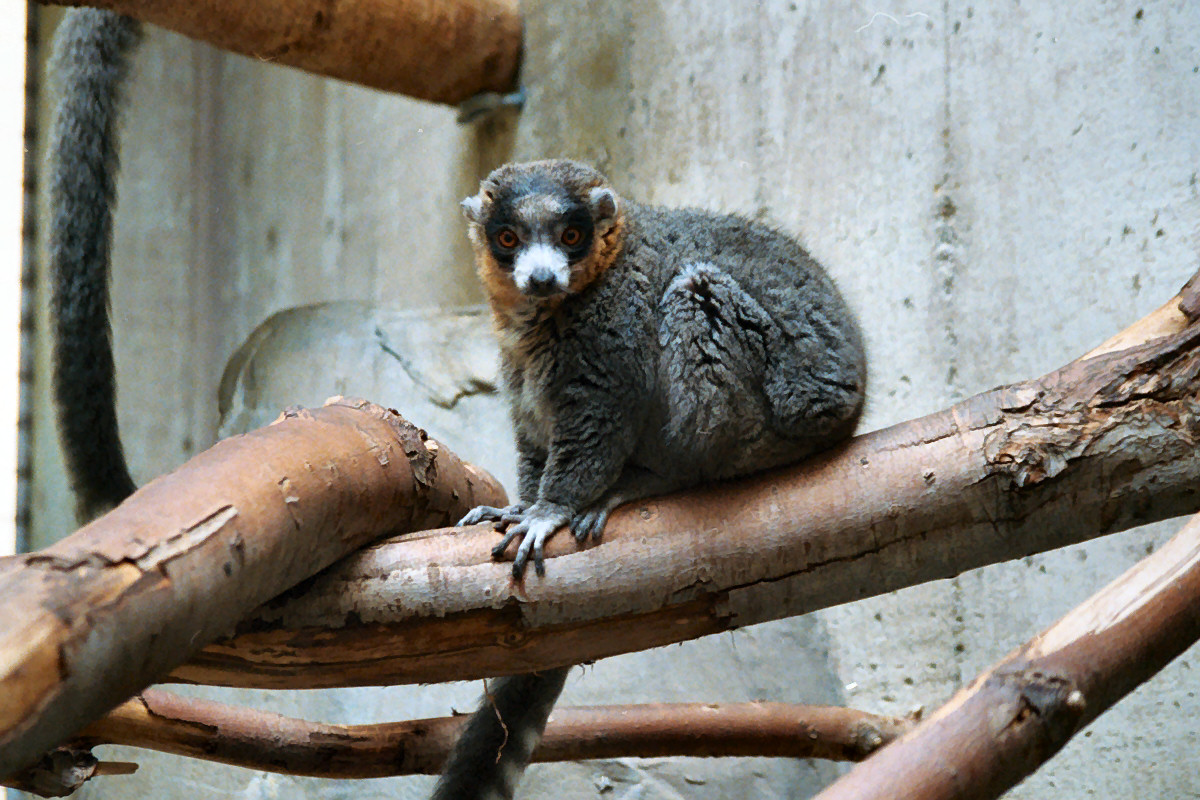
MONGOOSE LEMUR
DESCRIPTION
Mongoose Lemur is a medium-sized primate native to Madagascar, characterized by its distinctive grayish-brown fur and striking orange facial markings. This species exhibits a unique blend of behaviors, often seen foraging in trees and on the ground, showcasing its adaptability to various environments. Mongoose Lemurs are social animals, typically found in small groups, and they play a crucial role in their ecosystem as seed dispersers.
FUN FACTS
- Mongoose Lemurs are unique among lemurs for their ability to adapt to both arboreal and terrestrial lifestyles, allowing them to forage effectively in various environments
- Additionally, they have a fascinating reproductive strategy where females may mate with multiple males, leading to a diverse genetic pool within their populations
QUICK INFO
Lifespan15-20 years in the wild, up to 25 years in captivi
Average Weight1.5-2.5 kg
Average Length40-50 cm
Diet TypeOmnivore
Social StructureThey typically live in small groups, often consisting of a few females and their offspring, with males sometimes joining during the breeding season.
Activity PatternDiurnal
Breeding SeasonLate spring to early summer (October to December)
- Habitat
- Mongoose Lemurs inhabit a range of environments, including dry deciduous forests and humid rainforests. They are often found in areas with abundant fruiting trees, which are essential for their diet.
- Biomes
- Tropical Rainforest, Dry Forest
- Native Range
- Endemic to Madagascar, specifically found in the northern and western regions of the island.
- Continent
- Africa
- Countries
- Madagascar
- Diet
- Mongoose Lemurs primarily consume fruits, leaves, and flowers, but they may also eat insects and small vertebrates. Their diet varies seasonally based on food availability.
- Diet Type
- Omnivore
- Favorite Food
- fruits, leaves
- Social Structure
- They typically live in small groups, often consisting of a few females and their offspring, with males sometimes joining during the breeding season.
- Activity Pattern
- Diurnal
- Group Size
- 3-10
- Territorial
- 1
 VU
VU
 LC
LC
1.5-2.5 kg
Weight
40-50 cm
Length
- Coloration
- Grayish-brown fur with orange facial markings and a lighter underbelly.
- Sexual Dimorphism
- Males are generally slightly larger than females.
- Lifespan
- 15-20 years in the wild, up to 25 years in captivi
- Gestation Period
- 120 days
- Offspring per Birth
- 1-2
- Sexual Maturity
- 2-3 years
- Breeding Season
- Late spring to early summer (October to December)
EN
Endangered
IUCN Red List Status
- Population Status
- The population is currently declining due to habitat loss and hunting.
- Wild Population Estimate
- 10,000-20,000
- Population Trend
- Decreasing
- Endangered
- 1
- Threats
- The main threats to Mongoose Lemurs include habitat destruction due to deforestation and hunting for bushmeat. These pressures have significantly impacted their populations in the wild.
- Conservation Program
- Conservation efforts include habitat protection and community education programs.
- Predators
- Birds of prey, snakes, and domestic dogs are known predators of Mongoose Lemurs.
- Defense Mechanisms
- They rely on their agility and ability to climb trees to escape from predators.
- Found in Zoos
- Uncommon