


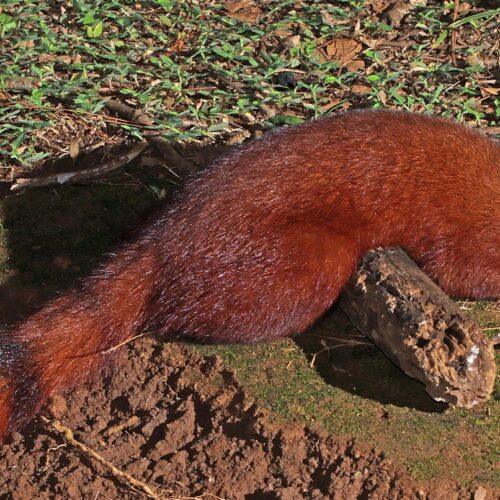
MONGOOSE
DESCRIPTION
Mongooses are small to medium-sized carnivorous mammals known for their agility and intelligence. They are often recognized for their long bodies, short legs, and pointed snouts.
FUN FACTS
- Mongooses are known for their ability to fight and kill snakes | They have a unique social structure with cooperative breeding | Some species can run at speeds of up to 20 km/h
QUICK INFO
Lifespan5-10 years in the wild, up to 15 in captivity
Average Weight0.5-5 kg
Average Length25-70 cm
Diet TypeCarnivore
Social Structuregroup — they often live in family groups or packs, which can enhance their hunting success.
Activity PatternDiurnal
Breeding SeasonVaries by species, often linked to seasonal food availability.
- Habitat
- Mongooses inhabit a variety of environments, including grasslands, forests, and deserts. They often prefer areas with ample cover for hunting and burrowing.
- Biomes
- Savanna, Grassland, Forest, Desert
- Native Range
- Mongooses are native to Africa, with some species found in parts of Asia and Europe.
- Continent
- Africa, Asia
- Countries
- India, South Africa, Madagascar, Egypt
- Diet
- Mongooses primarily feed on insects, small mammals, and reptiles. They are known for their ability to hunt and kill venomous snakes.
- Diet Type
- Carnivore
- Favorite Food
- insects, small rodents, reptiles
- Social Structure
- group — they often live in family groups or packs, which can enhance their hunting success.
- Activity Pattern
- Diurnal
- Group Size
- 5-30
- Territorial
- 1
 LC
LC
0.5-5 kg
Weight
25-70 cm
Length
- Coloration
- Typically brown or gray with a lighter underbelly, some species have distinctive markings.
- Lifespan
- 5-10 years in the wild, up to 15 in captivity
- Gestation Period
- 60-70 days
- Offspring per Birth
- 2-4
- Sexual Maturity
- 1-2 years
- Breeding Season
- Varies by species, often linked to seasonal food availability.
LC
Least Concern
IUCN Red List Status
- Population Status
- Some species are common, while others are threatened due to habitat loss.
- Wild Population Estimate
- Unknown
- Population Trend
- Stable
- Endangered
- 0
- Threats
- Habitat destruction and human-wildlife conflict are significant threats to some mongoose species.
- Predators
- Larger birds of prey, snakes, and carnivorous mammals.
- Defense Mechanisms
- Mongooses often work together to fend off predators and can be quite aggressive when threatened.
- Found in Zoos
- Common