


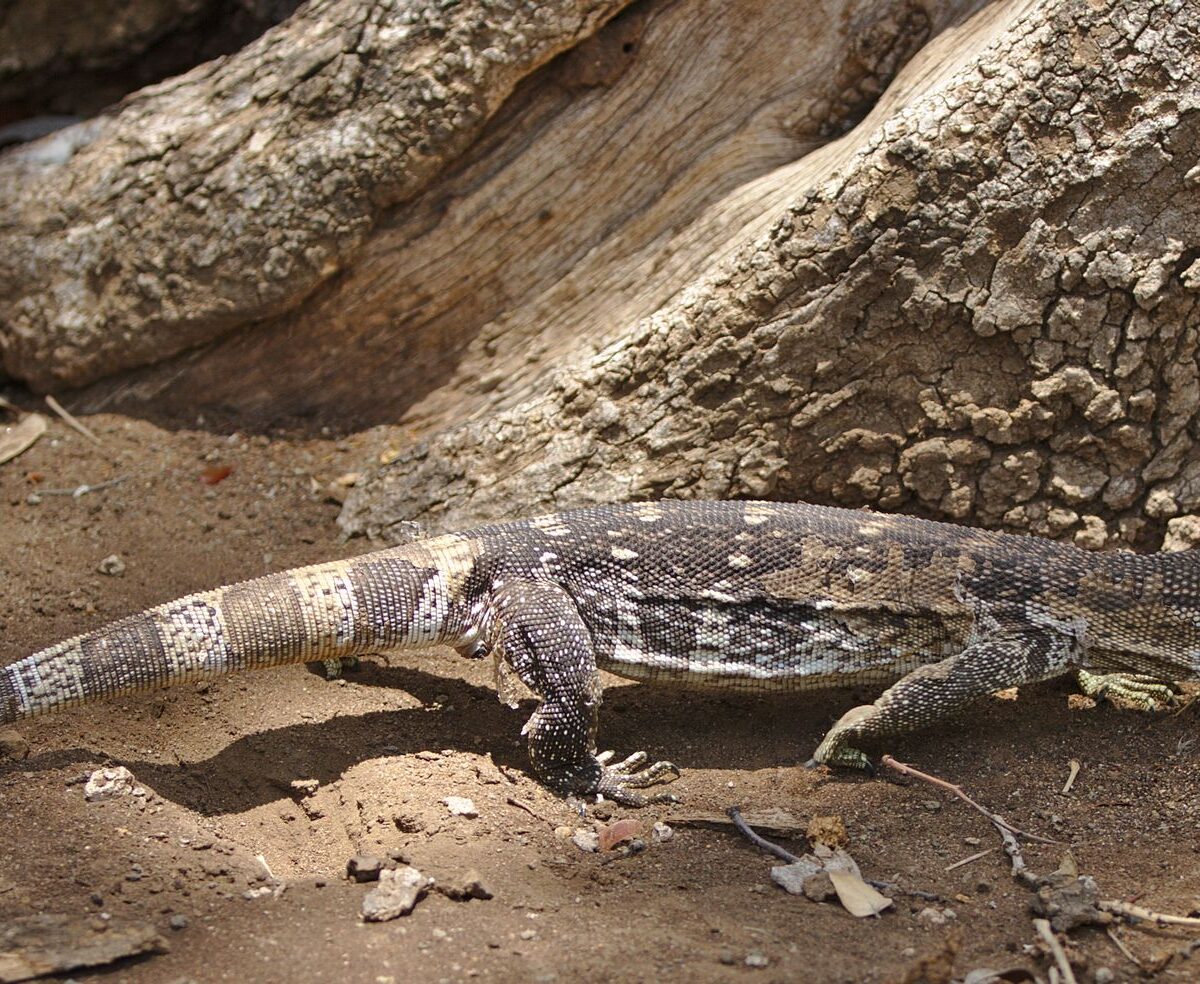
MONITOR LIZARD
DESCRIPTION
Monitor Lizard is commonly known as the Goanna in Australia and the Water Monitor in Southeast Asia. These reptiles are characterized by their elongated bodies, strong limbs, and long tails, which can be quite powerful. They are highly adaptable and can be found in a variety of habitats, showcasing a range of colors and patterns that help them blend into their environments.
FUN FACTS
- Monitor Lizards are known for their impressive size, with the Komodo Dragon being the largest lizard species in the world, reaching lengths of up to 3 meters
- They have a unique hunting strategy, using their keen sense of smell to track prey from several kilometers away, and their saliva contains bacteria that can help subdue their victims
QUICK INFO
Lifespan10-20 years in the wild, up to 30 years in captivi
Average Weight10-70 kg
Average Length1-3 m
Diet TypeCarnivore
Social Structuresolitary, occasionally seen in pairs or small groups
Activity PatternDiurnal
Breeding SeasonSpring to early summer
- Habitat
- Monitor Lizards inhabit diverse environments, including forests, savannas, and wetlands. They are often found near water sources, as many species are excellent swimmers.
- Biomes
- Savanna, Tropical Rainforest, Wetlands
- Native Range
- Monitor Lizards are native to Africa, Asia, and Australia, with a wide distribution across these continents.
- Continent
- Africa, Asia, Australia
- Countries
- Australia, Indonesia, India, Thailand, Philippines
- Diet
- Monitor Lizards are primarily carnivorous, feeding on a variety of prey including insects, small mammals, birds, and even other reptiles. Some species may also consume eggs and carrion.
- Diet Type
- Carnivore
- Favorite Food
- small mammals, birds, insects
- Social Structure
- solitary, occasionally seen in pairs or small groups
- Activity Pattern
- Diurnal
- Group Size
- 1-3
- Territorial
- 1
 VU
VU
 VU
VU
10-70 kg
Weight
1-3 m
Length
- Coloration
- varies widely; often patterned with spots or stripes in shades of brown, green, or gray
- Sexual Dimorphism
- males are generally larger than females
- Lifespan
- 10-20 years in the wild, up to 30 years in captivi
- Offspring per Birth
- 10-30 eggs
- Sexual Maturity
- 3-5 years
- Breeding Season
- Spring to early summer
VU
Vulnerable
IUCN Red List Status
- Population Status
- Some species are common, while others are threatened due to habitat loss and hunting.
- Wild Population Estimate
- unknown
- Population Trend
- Decreasing
- Endangered
- 1
- Threats
- Main threats include habitat destruction, hunting for their skin, and the pet trade. Some species are also affected by climate change and pollution.
- Predators
- large birds of prey, crocodiles, and larger carnivorous mammals can pose threats to juvenile Monitor Lizards.
- Defense Mechanisms
- Monitor Lizards can use their strong tails to whip at predators and may also hiss or bite when threatened.
- Found in Zoos
- Common