


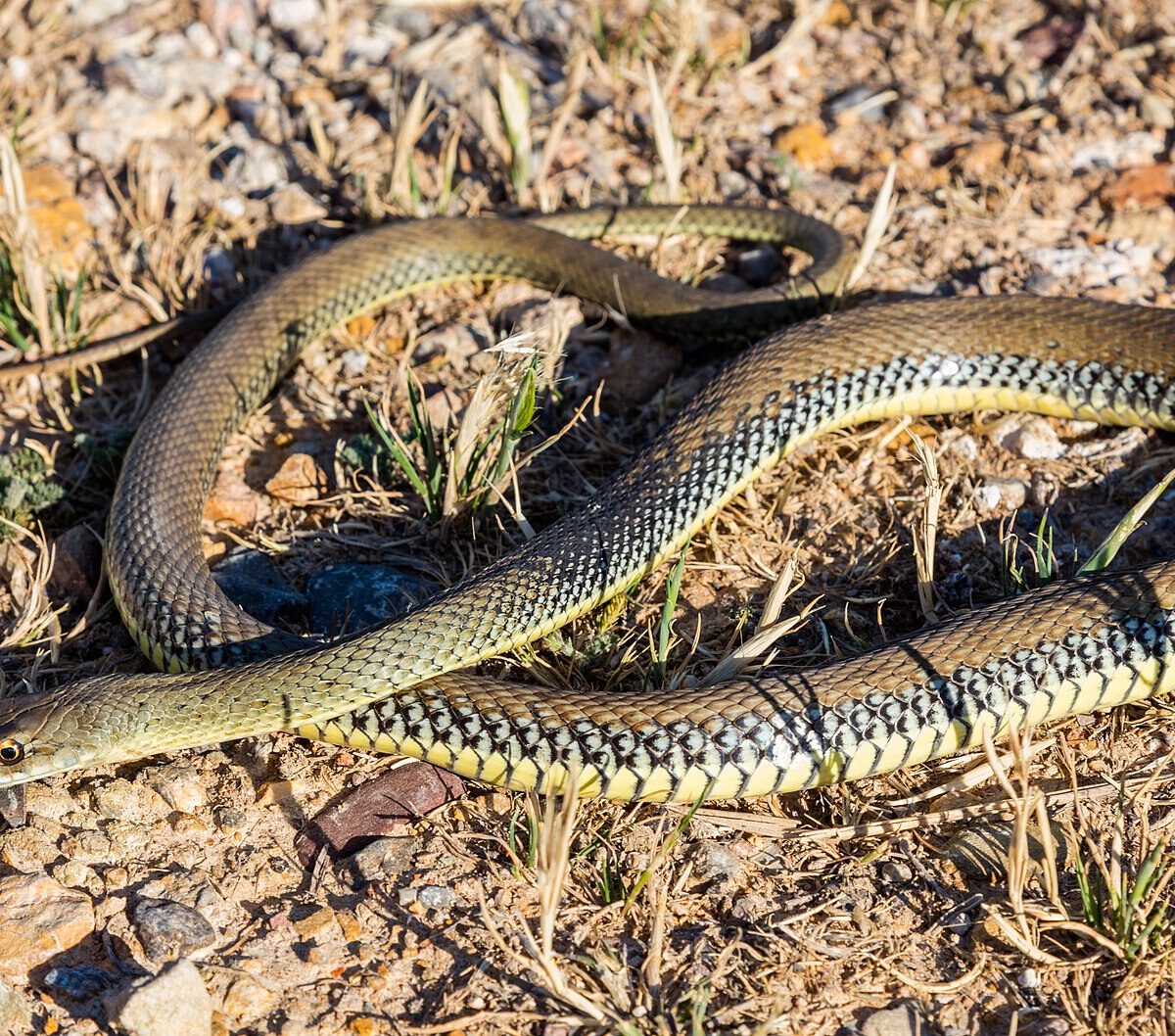
MONTPELLIER SNAKE
Malpolon monspessulanus
DESCRIPTION
Montpellier Snake (Malpolon monspessulanus) is a non-venomous colubrid snake known for its slender body and distinctive coloration, which typically features a mix of brown, gray, and yellow hues. This species is primarily found in southern Europe and parts of North Africa, where it inhabits a variety of environments, including rocky hillsides and open woodlands. Montpellier Snakes are known for their agility and speed, often seen basking in the sun or quickly retreating into crevices when threatened.
FUN FACTS
- Montpellier Snakes are known for their impressive speed and agility, making them one of the fastest snakes in their region
- They can often be seen basking in the sun, which helps them regulate their body temperature and prepare for hunting
- | Interestingly, Montpellier Snakes have a unique method of hunting; they often use their keen eyesight to spot prey from a distance and then rely on their speed to close the gap quickly
- This hunting strategy allows them to catch agile lizards and small mammals effectively
QUICK INFO
Lifespan10-15 years in the wild, up to 20 years in captivi
Average Weight0.5-1.5 kg
Average Length1.2-1.8 m
Diet TypeCarnivore
Social Structuresolitary, typically found alone except during mating season
Activity PatternDiurnal
Breeding SeasonSpring (April-June)
- Habitat
- Montpellier Snakes thrive in a range of habitats, including dry, rocky areas and open forests. They prefer regions with ample cover for hunting and hiding from predators.
- Biomes
- Mediterranean, Temperate Forest
- Native Range
- This species is native to southern Europe, particularly in countries bordering the Mediterranean Sea, and extends into parts of North Africa.
- Continent
- Europe, Africa
- Countries
- France, Spain, Italy, Portugal, Morocco, Algeria, Tunisia
- Diet
- Montpellier Snakes primarily feed on small mammals, lizards, and occasionally birds. They are known to be opportunistic hunters, using their speed and stealth to capture prey.
- Diet Type
- Carnivore
- Favorite Food
- small mammals, lizards
- Social Structure
- solitary, typically found alone except during mating season
- Activity Pattern
- Diurnal
- Group Size
- 1
- Territorial
- 0
 VU
VU
0.5-1.5 kg
Weight
1.2-1.8 m
Length
- Coloration
- Typically brown or gray with lighter underbellies and dark markings.
- Sexual Dimorphism
- Males are generally smaller than females and may have slightly more vibrant coloration.
- Lifespan
- 10-15 years in the wild, up to 20 years in captivi
- Gestation Period
- 60-70 days
- Offspring per Birth
- 5-15
- Sexual Maturity
- 2-3 years
- Breeding Season
- Spring (April-June)
LC
Least Concern
IUCN Red List Status
- Population Status
- The population is currently stable, but local declines may occur due to habitat loss.
- Wild Population Estimate
- Unknown
- Population Trend
- Stable
- Endangered
- 0
- Threats
- Main threats include habitat destruction due to urbanization and agriculture, as well as road mortality. These factors can lead to localized declines in certain areas.
- Predators
- Birds of prey, larger snakes, and mammals such as foxes may prey on Montpellier Snakes.
- Defense Mechanisms
- When threatened, Montpellier Snakes may hiss loudly and flatten their bodies to appear larger, or they may quickly flee to safety.
- Found in Zoos
- Uncommon