


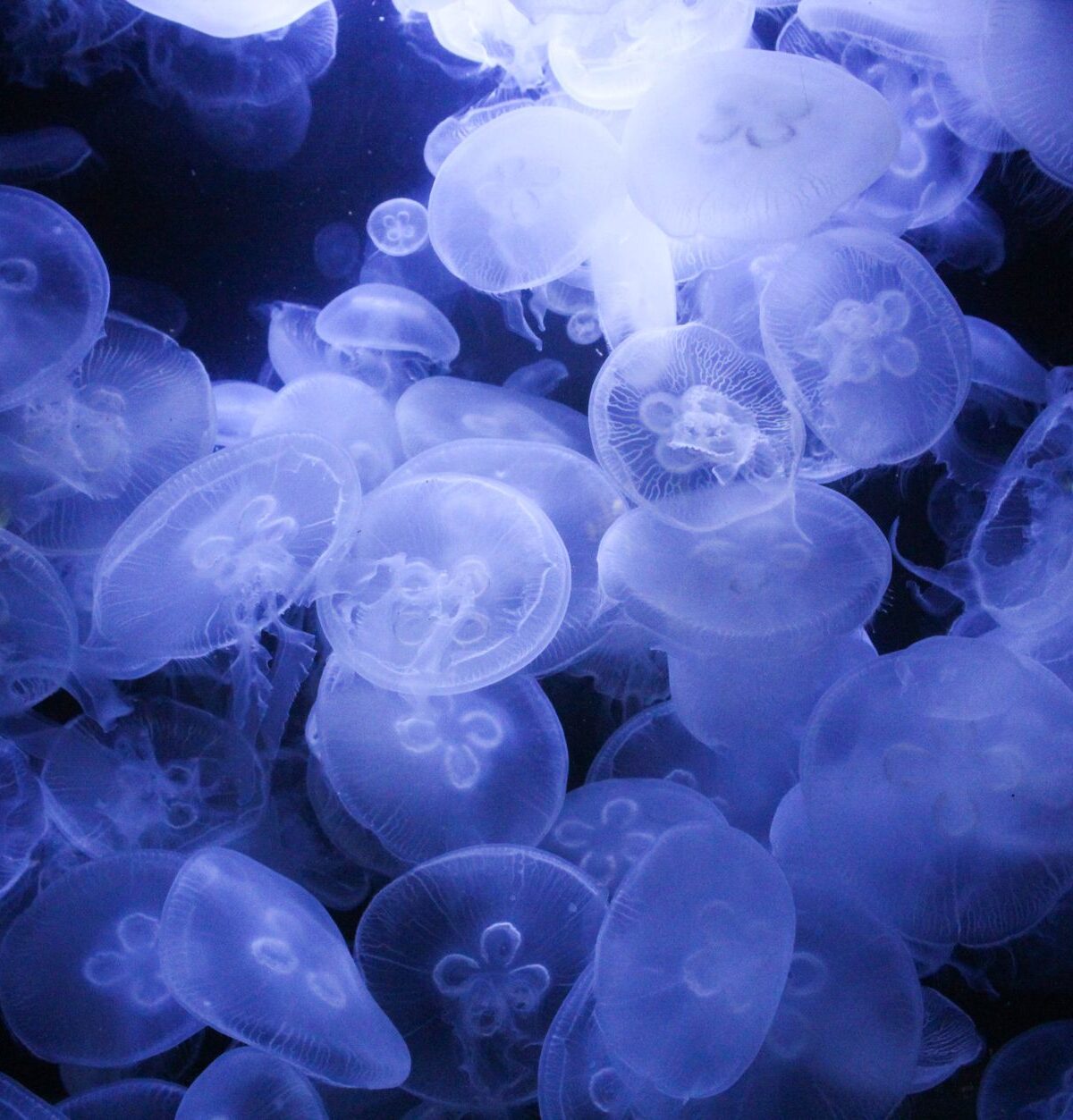
MOON JELLYFISH
DESCRIPTION
Also called Aurelia, the Moon Jellyfish is a gelatinous marine animal known for its distinctive bell-shaped, translucent body that can reach up to 40 cm in diameter. Its body is often adorned with four distinct, horse-shoe shaped gonads that are visible through the bell, giving it a unique appearance. Moon Jellyfish are typically found drifting in coastal waters and are known for their gentle, pulsating movements as they propel themselves through the water using rhythmic contractions.
FUN FACTS
- Moon Jellyfish have been around for over 500 million years, making them one of the oldest living creatures on Earth
- They are also bioluminescent, meaning they can produce light, which can be seen when they are disturbed in the water.|Despite their delicate appearance, Moon Jellyfish can survive in a wide range of salinity levels and temperatures, allowing them to thrive in various marine environments
QUICK INFO
Lifespan1-3 years in the wild
Average Weight0.5-1 kg
Average Length25-40 cm
Diet TypeCarnivore
Social Structuregroup — they are often found in large swarms or blooms.
Activity PatternDiurnal
Breeding SeasonSpring to early summer
- Habitat
- Moon Jellyfish inhabit a variety of marine environments, including coastal waters, estuaries, and open oceans. They are often found in areas with abundant plankton, which serves as their primary food source.
- Biomes
- Marine
- Native Range
- Moon Jellyfish are found in oceans worldwide, particularly in temperate and tropical regions.
- Continent
- North America, Europe, Asia, Australia, Africa
- Countries
- United States, Canada, United Kingdom, Japan, Australia
- Diet
- Moon Jellyfish primarily feed on small plankton, including zooplankton and tiny fish larvae. They capture their prey using their tentacles, which are equipped with specialized cells called cnidocytes that release stinging cells.
- Diet Type
- Carnivore
- Favorite Food
- zooplankton, fish larvae
- Social Structure
- group — they are often found in large swarms or blooms.
- Activity Pattern
- Diurnal
- Group Size
- hundreds to thousands
- Territorial
- 0

 LC
LC
0.5-1 kg
Weight
25-40 cm
Length
- Coloration
- translucent with a bluish or pinkish tint
- Lifespan
- 1-3 years in the wild
- Offspring per Birth
- up to 1000
- Sexual Maturity
- 1 year
- Breeding Season
- Spring to early summer
LC
Least Concern
IUCN Red List Status
- Population Status
- Moon Jellyfish populations can fluctuate significantly, often experiencing blooms that can impact local ecosystems.
- Wild Population Estimate
- unknown
- Population Trend
- Increasing
- Endangered
- 0
- Threats
- Main threats include habitat degradation and climate change, which can affect their food supply and breeding grounds. Additionally, they can be impacted by pollution and changes in ocean temperature.
- Predators
- sea turtles, sunfish, certain species of fish, and larger jellyfish.
- Defense Mechanisms
- Moon Jellyfish possess stinging cells in their tentacles that can deter potential predators, although they are not harmful to humans.
- Compatible Animals
- none
- Found in Zoos
- Common