


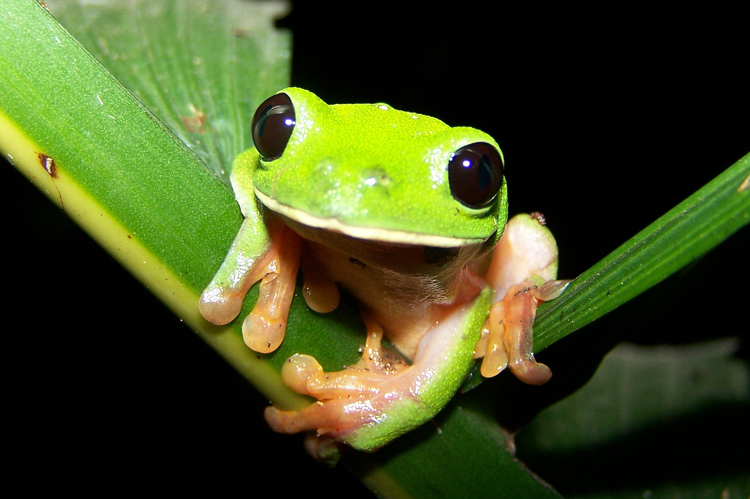
MORELET'S TREE FROG
Agalychnis moreletii
DESCRIPTION
Morelet's Tree Frog (Agalychnis moreletii) is a vibrant amphibian known for its striking green coloration and distinctive yellow or orange markings on its limbs and sides. This species is primarily found in the tropical rainforests of Central America, where it thrives in humid environments. Morelet's Tree Frog is an agile climber, often seen perched on leaves or branches, and is known for its vocalizations during the breeding season, which attract mates.
FUN FACTS
- Morelet's Tree Frog is named after the French naturalist Pierre Morelet, who studied the fauna of Central America in the 19th century
- This species is also known for its unique mating calls, which can vary significantly between populations, making them an interesting subject for studies on amphibian communication.|These frogs are excellent climbers, using their long, sticky toes to grip onto leaves and branches
- They are often found high in the canopy, where they can easily hunt for insects and avoid ground-based predators
QUICK INFO
Lifespan5-10 years in the wild
Average Weight10-30 g
Average Length5-7 cm
Diet TypeInsectivore
Social Structuresolitary, typically found alone or in pairs during the breeding season
Activity PatternNocturnal
Breeding SeasonSpring to early summer
- Habitat
- This species inhabits tropical rainforests, often near water sources such as ponds and streams. It prefers areas with dense vegetation that provide ample cover and hunting opportunities.
- Biomes
- Tropical Rainforest
- Native Range
- Morelet's Tree Frog is native to the lowland rainforests of Belize, Guatemala, and Mexico.
- Continent
- North America, Central America
- Countries
- Belize, Guatemala, Mexico
- Diet
- Morelet's Tree Frog primarily feeds on insects and other small invertebrates. Its diet consists mainly of crickets, moths, and various other arthropods.
- Diet Type
- Insectivore
- Favorite Food
- crickets, moths
- Social Structure
- solitary, typically found alone or in pairs during the breeding season
- Activity Pattern
- Nocturnal
- Group Size
- 1-2
- Territorial
- 0
 LC
LC
 VU
VU
10-30 g
Weight
5-7 cm
Length
- Coloration
- vibrant green with yellow or orange markings
- Sexual Dimorphism
- males are generally smaller than females and have more pronounced vocal sacs
- Lifespan
- 5-10 years in the wild
- Offspring per Birth
- 100-200 eggs
- Sexual Maturity
- 1-2 years
- Breeding Season
- Spring to early summer
LC
Least Concern
IUCN Red List Status
- Population Status
- The population of Morelet's Tree Frog is currently stable, but habitat loss poses a potential threat.
- Wild Population Estimate
- Unknown
- Population Trend
- Stable
- Endangered
- 0
- Threats
- Main threats include habitat destruction due to deforestation and pollution. Climate change also poses a risk to their habitat and breeding sites.
- Predators
- snakes, birds, and larger amphibians
- Defense Mechanisms
- Morelet's Tree Frog uses its bright coloration as a warning signal to potential predators, indicating toxicity. It can also leap away quickly to escape threats.
- Found in Zoos
- Uncommon