


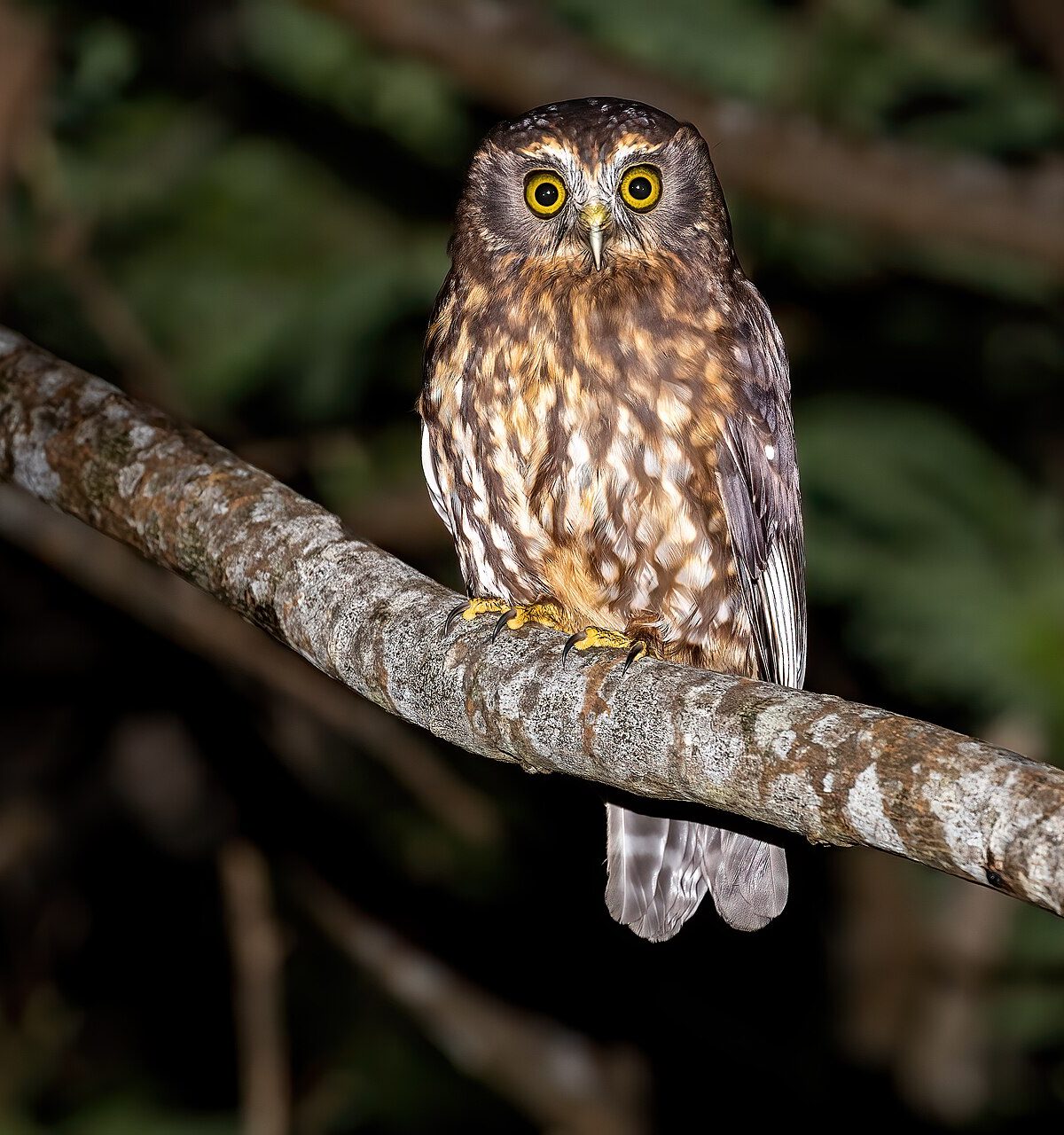
MOREPORK
DESCRIPTION
Morepork, also known as Ruru, is a medium-sized owl native to New Zealand. It has a distinctive appearance with a rounded head, large yellow eyes, and a mottled brown and white plumage that provides excellent camouflage in its forest habitat. Moreporks are primarily nocturnal hunters, known for their haunting calls that echo through the night, which are often mistaken for a human's cry.
FUN FACTS
- Moreporks are known for their unique call, which sounds like 'more-pork', leading to their common name
- This call is not only a means of communication but also serves to establish territory among males
- | Moreporks have a fascinating hunting technique; they often sit quietly and wait for prey to come within striking distance, using their excellent night vision to spot movement in the dark
- Their silent flight allows them to approach prey without being detected, making them effective nocturnal hunters
QUICK INFO
Lifespanup to 15 years in the wild
Average Weight200-400 g
Average Length30-40 cm
Diet TypeCarnivore
Social Structuresolitary, pairs during breeding season
Activity PatternNocturnal
Breeding SeasonSpring to early summer
- Habitat
- Moreporks inhabit a variety of forested areas, including native bush and plantations. They prefer habitats with dense foliage that provides cover for hunting and nesting.
- Biomes
- Temperate Forest, Subtropical Forest
- Native Range
- Endemic to New Zealand, found throughout both the North and South Islands.
- Continent
- Oceania
- Countries
- New Zealand
- Diet
- Moreporks primarily feed on insects, small mammals, and birds. They are skilled hunters, using their keen eyesight and hearing to locate prey in the dark.
- Diet Type
- Carnivore
- Favorite Food
- insects, small mammals, birds
- Social Structure
- solitary, pairs during breeding season
- Activity Pattern
- Nocturnal
- Group Size
- 1-2
- Territorial
- 1
200-400 g
Weight
30-40 cm
Length
- Coloration
- mottled brown and white plumage
- Sexual Dimorphism
- females are generally larger than males
- Lifespan
- up to 15 years in the wild
- Offspring per Birth
- 2-4
- Sexual Maturity
- 1 year
- Breeding Season
- Spring to early summer
LC
Least Concern
IUCN Red List Status
- Population Status
- The population is currently stable, but habitat loss poses a potential threat.
- Wild Population Estimate
- unknown
- Population Trend
- Stable
- Endangered
- 0
- Threats
- Main threats include habitat destruction and predation by introduced species such as rats and cats. Conservation efforts are focused on habitat protection and management.
- Conservation Program
- Various local conservation initiatives aimed at habitat restoration and predator control.
- Predators
- Introduced mammals such as rats, stoats, and cats pose significant threats to Morepork populations.
- Defense Mechanisms
- Moreporks rely on their camouflage and nocturnal habits to avoid detection by predators.
- Found in Zoos
- Uncommon