


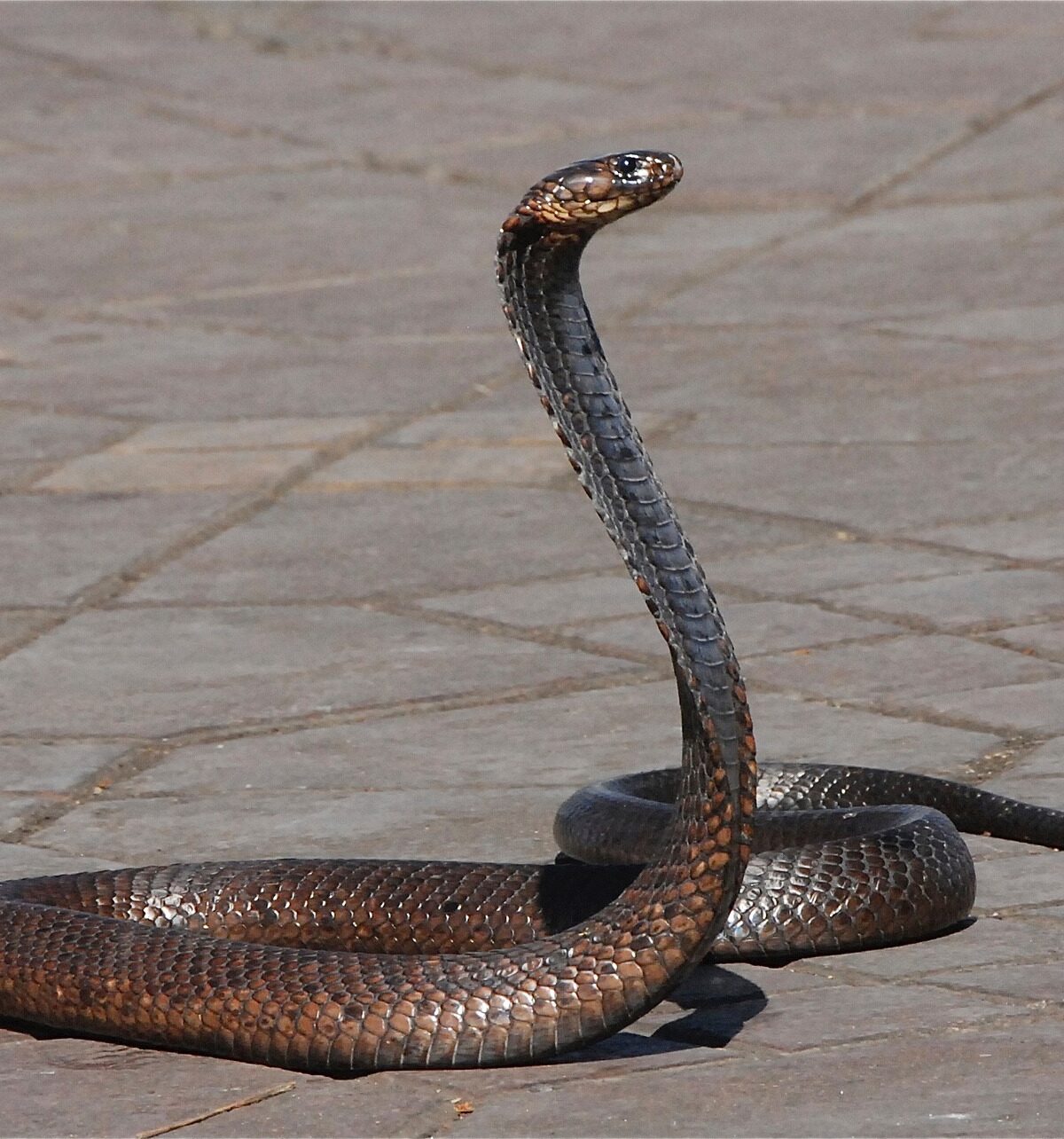
MOROCCAN BLACK COBRA
Naja haje
DESCRIPTION
Moroccan Black Cobra (Naja haje) is a highly venomous snake known for its distinctive black coloration, which can vary in intensity. This species exhibits a hood that it can expand when threatened, displaying a characteristic warning posture. Typically found in arid and semi-arid regions, it plays a crucial role in its ecosystem as both a predator and prey.
FUN FACTS
- The Moroccan Black Cobra is capable of delivering a lethal dose of venom in a single bite, which can cause paralysis and respiratory failure in its prey
- Despite its fearsome reputation, this species plays a vital role in controlling rodent populations in its habitat
- | Interestingly, the Moroccan Black Cobra has been featured in various cultural depictions, often symbolizing danger and power
- Its striking appearance and behavior have made it a subject of fascination in both folklore and modern media
QUICK INFO
Lifespan10-15 years in the wild, up to 20 years in captivi
Average Weight1-2 kg
Average Length1.5-2.0 m
Diet TypeCarnivore
Social Structuresolitary
Activity PatternDiurnal
Breeding SeasonSpring (March-May)
- Habitat
- This species inhabits a variety of environments, including deserts, savannas, and rocky areas. It prefers areas with ample cover for hunting and basking.
- Biomes
- Desert, Savanna
- Native Range
- The Moroccan Black Cobra is native to North Africa, particularly in Morocco and surrounding regions.
- Continent
- Africa
- Countries
- Morocco, Algeria, Tunisia
- Diet
- The Moroccan Black Cobra primarily feeds on small mammals, birds, and other reptiles. It uses its potent venom to immobilize its prey before consumption.
- Diet Type
- Carnivore
- Favorite Food
- small mammals, birds
- Social Structure
- solitary
- Activity Pattern
- Diurnal
- Group Size
- 1
- Territorial
- 1
 VU
VU
1-2 kg
Weight
1.5-2.0 m
Length
- Coloration
- Typically black or dark brown with a lighter underside.
- Sexual Dimorphism
- Males are generally larger than females.
- Lifespan
- 10-15 years in the wild, up to 20 years in captivi
- Offspring per Birth
- 10-30
- Sexual Maturity
- 2-3 years
- Breeding Season
- Spring (March-May)
LC
Least Concern
IUCN Red List Status
- Population Status
- The population is currently stable, but habitat destruction poses a potential threat.
- Wild Population Estimate
- Unknown
- Population Trend
- Stable
- Endangered
- 0
- Threats
- Main threats include habitat loss due to urbanization and agriculture, as well as persecution by humans who fear snakes. Additionally, road mortality poses a risk to their populations.
- Predators
- Birds of prey, larger snakes, and mammals such as mongooses.
- Defense Mechanisms
- The Moroccan Black Cobra can deliver a potent venomous bite and will display its hood to appear larger when threatened.
- Found in Zoos
- Uncommon