


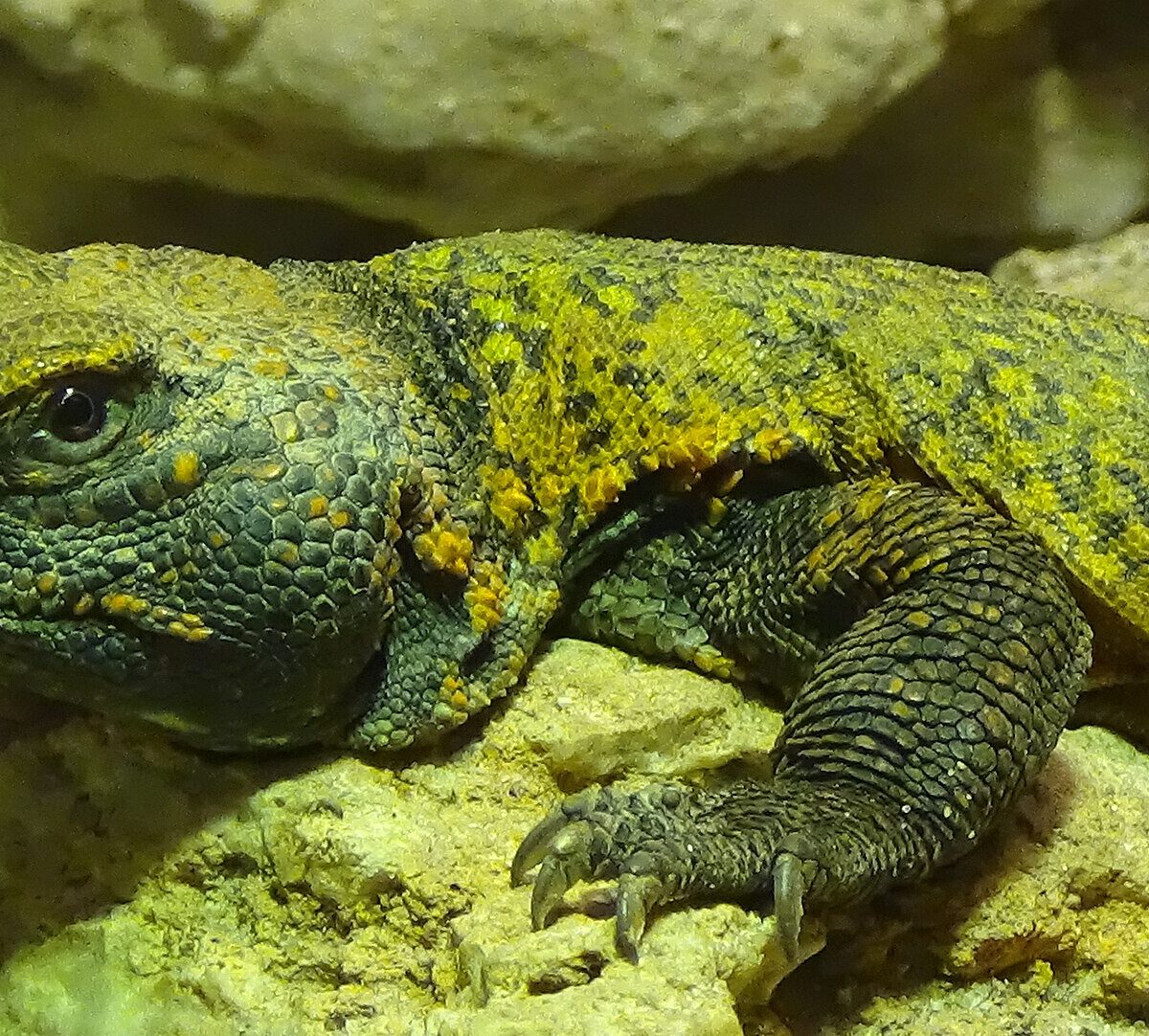
MORROCAN SPINY-TAILED LIZARD
Uromastyx nigriventris
DESCRIPTION
Morrocan spiny-tailed lizard (Uromastyx nigriventris) is also known as the Nigriventris Uromastyx. This species is characterized by its robust body, spiny tail, and distinctive coloration that ranges from yellow to brown with darker patterns. They are primarily terrestrial and are known for their burrowing behavior, often creating extensive tunnel systems in arid environments.
FUN FACTS
- Morrocan spiny-tailed lizards are known for their unique ability to regulate their body temperature by basking in the sun and retreating to their burrows to cool down
- They also exhibit a fascinating social behavior where males will engage in displays of dominance, including head-bobbing and tail waving, to establish territory and attract mates
QUICK INFO
Lifespan10-15 years in the wild, up to 20 years in captivi
Average Weight0.5-1 kg
Average Length30-50 cm
Diet TypeHerbivore
Social StructureSolitary, with individuals often occupying their own burrows.
Activity PatternDiurnal
Breeding SeasonSpring (April-June)
- Habitat
- Morrocan spiny-tailed lizards inhabit rocky, arid regions and sandy deserts. They prefer areas with sparse vegetation where they can bask in the sun and find shelter.
- Biomes
- Desert, Semi-arid
- Native Range
- This species is native to North Africa, particularly found in Morocco and parts of Algeria.
- Continent
- Africa
- Countries
- Morocco, Algeria
- Diet
- They primarily feed on a variety of plant materials, including leaves, flowers, and fruits. Their diet is rich in fiber, which is essential for their digestive health.
- Diet Type
- Herbivore
- Favorite Food
- leaves, flowers, fruits
- Social Structure
- Solitary, with individuals often occupying their own burrows.
- Activity Pattern
- Diurnal
- Group Size
- 1
- Territorial
- 1
 VU
VU
 LC
LC
0.5-1 kg
Weight
30-50 cm
Length
- Coloration
- Typically yellow to brown with darker spots or bands.
- Sexual Dimorphism
- Males tend to be larger and have more pronounced spines on their tails compared to females.
- Lifespan
- 10-15 years in the wild, up to 20 years in captivi
- Gestation Period
- 60-90 days
- Offspring per Birth
- 5-15
- Sexual Maturity
- 2-3 years
- Breeding Season
- Spring (April-June)
LC
Least Concern
IUCN Red List Status
- Population Status
- The population is currently stable, but habitat loss poses a potential threat.
- Wild Population Estimate
- Unknown
- Population Trend
- Stable
- Endangered
- 0
- Threats
- Main threats include habitat destruction due to urbanization and agriculture. Additionally, collection for the pet trade can impact local populations.
- Predators
- Birds of prey, snakes, and larger mammals are known to prey on this species.
- Defense Mechanisms
- They can use their spiny tails for defense and are also capable of burrowing quickly to escape threats.
- Found in Zoos
- Uncommon