


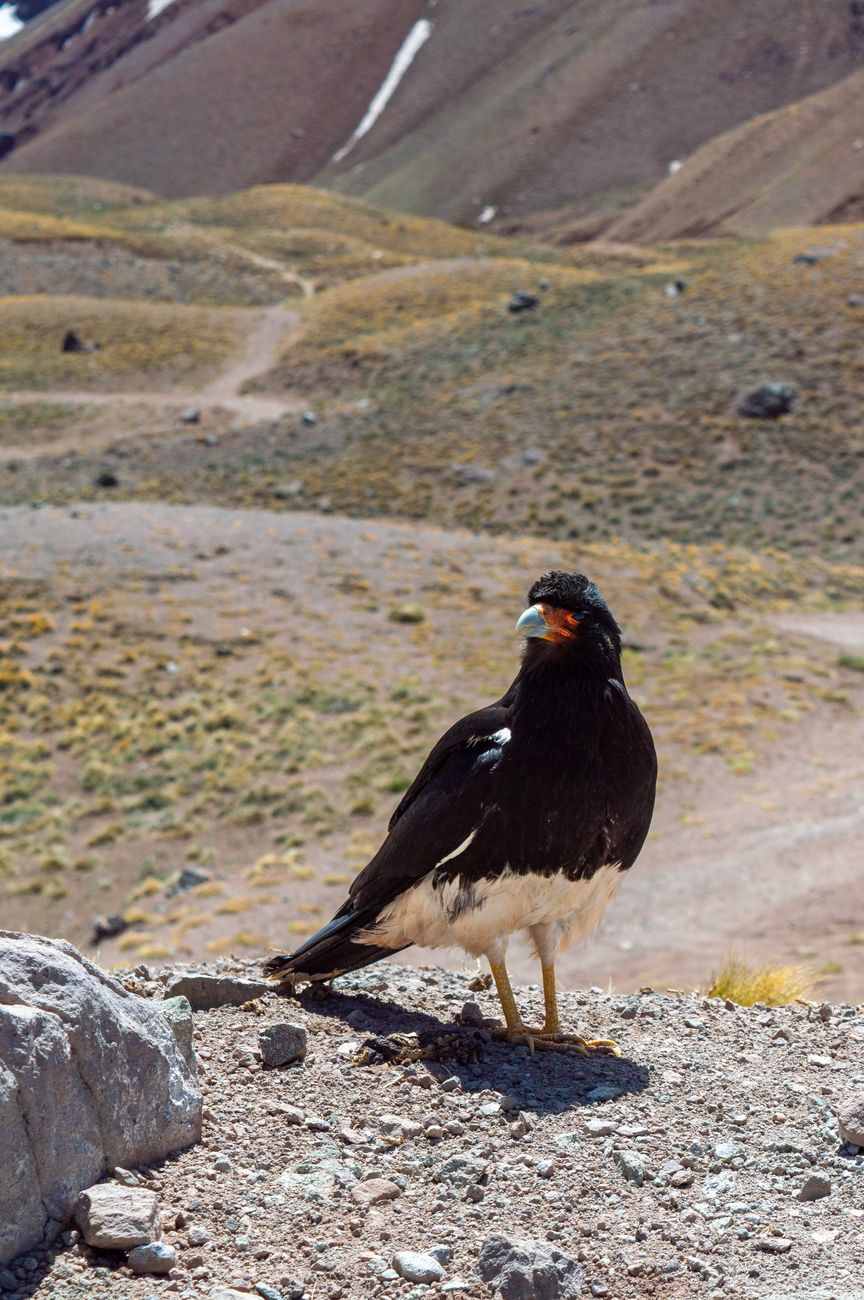
MOUNTAIN CARACARA
Phalcoboenus megalopterus
DESCRIPTION
Mountain Caracara (Phalcoboenus megalopterus) is a large bird of prey known for its striking appearance, featuring a dark brown body with a distinctive white head and neck. This species is often found in high-altitude regions of the Andes, where it exhibits a unique behavior of scavenging and hunting small mammals and birds. Mountain Caracaras are social birds, often seen in pairs or small groups, and they play a vital role in their ecosystem by helping to control populations of rodents and other small animals.
FUN FACTS
- Mountain Caracaras are known for their intelligence and adaptability, often using tools to access food
- They have been observed dropping stones to break open eggs or to access hard-to-reach carrion
- | These birds are also known for their unique social behavior, often engaging in cooperative hunting strategies with other scavengers, which enhances their foraging success in the harsh environments they inhabit
QUICK INFO
Lifespan15-20 years in the wild
Average Weight1.5-2.5 kg
Average Length50-60 cm
Diet TypeOmnivore
Social Structurepair or group, often seen in small family groups or pairs during breeding season.
Activity PatternDiurnal
Breeding SeasonSpring (September-November)
- Habitat
- Mountain Caracaras inhabit open grasslands, rocky slopes, and alpine meadows, typically at elevations ranging from 2,500 to 5,000 meters. They prefer areas with sparse vegetation that provide good visibility for hunting.
- Biomes
- Alpine, Grassland
- Native Range
- The native range of the Mountain Caracara extends along the Andes mountains from southern Peru to southern Chile and Argentina.
- Continent
- South America
- Countries
- Peru, Chile, Argentina
- Diet
- Mountain Caracaras primarily feed on carrion, but they also hunt small mammals, birds, and insects. Their opportunistic feeding habits allow them to thrive in various environments.
- Diet Type
- Omnivore
- Favorite Food
- carrion, small mammals
- Social Structure
- pair or group, often seen in small family groups or pairs during breeding season.
- Activity Pattern
- Diurnal
- Group Size
- 2-10
- Territorial
- 1
 LC
LC
 CR
CR
1.5-2.5 kg
Weight
50-60 cm
Length
- Coloration
- dark brown body with a white head and neck
- Sexual Dimorphism
- males are generally larger than females
- Lifespan
- 15-20 years in the wild
- Offspring per Birth
- 1-3
- Sexual Maturity
- 2-3 years
- Breeding Season
- Spring (September-November)
LC
Least Concern
IUCN Red List Status
- Population Status
- The population of Mountain Caracaras is currently stable, but they face threats from habitat loss.
- Wild Population Estimate
- unknown
- Population Trend
- Stable
- Endangered
- 0
- Threats
- Main threats include habitat destruction due to agriculture and human encroachment. Additionally, they may be affected by poisoning from rodenticides used in farming.
- Predators
- eagles, large hawks, and humans
- Defense Mechanisms
- Mountain Caracaras may use aggressive displays and vocalizations to deter potential threats.
- Found in Zoos
- Uncommon