


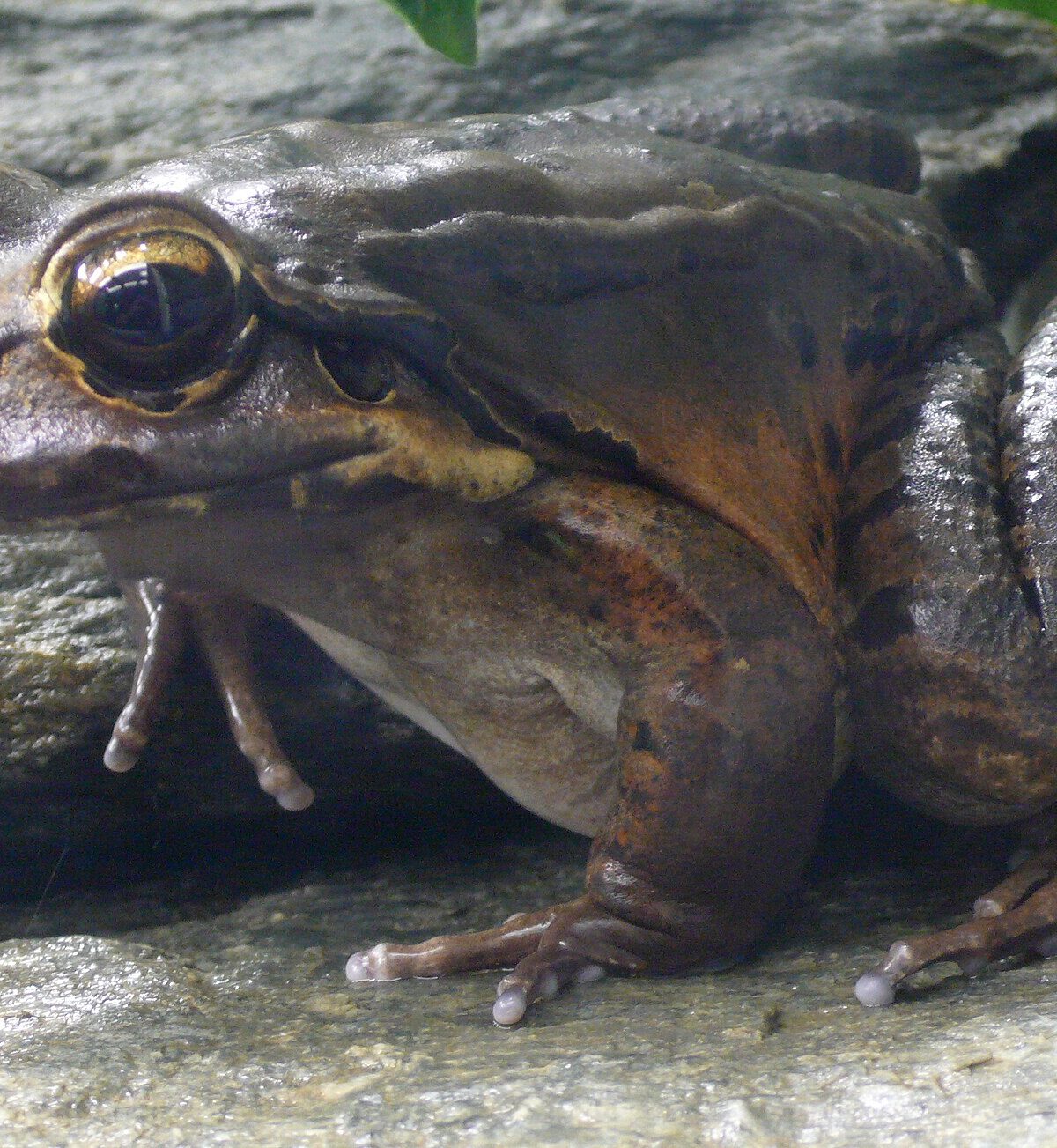
MOUNTAIN CHICKEN
Leptodactylus fallax
DESCRIPTION
Mountain Chicken (Leptodactylus fallax) is a large frog species native to the Caribbean, particularly found in Dominica and Montserrat. It has a robust body with a coloration that ranges from brown to gray, often featuring dark spots and a distinctive pattern that helps it blend into its forest habitat. This species is known for its loud calls during the breeding season, which can be heard from a distance, and it primarily inhabits moist, tropical environments where it can find ample cover and breeding sites.
FUN FACTS
- Mountain Chickens are one of the largest frog species in the Caribbean, with some individuals weighing over a kilogram
- They are also known for their unique vocalizations, which can be heard from great distances, making them a fascinating subject for researchers studying amphibian communication.|Despite their name, Mountain Chickens are not chickens at all; they are frogs! The name comes from their size and the fact that they were once a popular food source for locals, similar to how chickens are raised for meat
QUICK INFO
Lifespanup to 10 years in the wild
Average Weight0.5-1 kg
Average Length15-20 cm
Diet TypeCarnivore
Social Structuresolitary, though males may gather in breeding areas during the mating season
Activity PatternNocturnal
Breeding SeasonSpring to early summer
- Habitat
- Mountain Chickens thrive in tropical rainforests, often near streams and other water sources. They prefer areas with dense vegetation that provides shelter and breeding sites.
- Biomes
- Tropical Rainforest
- Native Range
- This species is endemic to the Caribbean islands of Dominica and Montserrat.
- Continent
- North America
- Countries
- Dominica, Montserrat
- Diet
- Mountain Chickens are primarily carnivorous, feeding on a variety of invertebrates and small vertebrates. Their diet includes insects, worms, and other small creatures they can catch.
- Diet Type
- Carnivore
- Favorite Food
- insects, worms
- Social Structure
- solitary, though males may gather in breeding areas during the mating season
- Activity Pattern
- Nocturnal
- Group Size
- 1-5
- Territorial
- 1
 VU
VU
 LC
LC
0.5-1 kg
Weight
15-20 cm
Length
- Coloration
- brown to gray with dark spots
- Sexual Dimorphism
- males are generally smaller than females and have more pronounced vocal sacs
- Lifespan
- up to 10 years in the wild
- Offspring per Birth
- up to 20
- Sexual Maturity
- 2-3 years
- Breeding Season
- Spring to early summer
CR
Critically Endangered
IUCN Red List Status
- Population Status
- The population of Mountain Chickens has drastically declined due to habitat loss and disease.
- Wild Population Estimate
- less than 1,000
- Population Trend
- Decreasing
- Endangered
- 1
- Threats
- The main threats to Mountain Chickens include habitat destruction due to agriculture and urban development, as well as the spread of the chytrid fungus, which has devastated amphibian populations worldwide. Additionally, invasive species pose a significant risk to their survival.
- Conservation Program
- Conservation efforts are underway, including habitat protection and breeding programs in captivity.
- Predators
- birds of prey, snakes, and larger amphibians
- Defense Mechanisms
- Mountain Chickens rely on their camouflage to avoid detection by predators, and they can also produce loud calls to startle potential threats.
- Found in Zoos
- Rare