


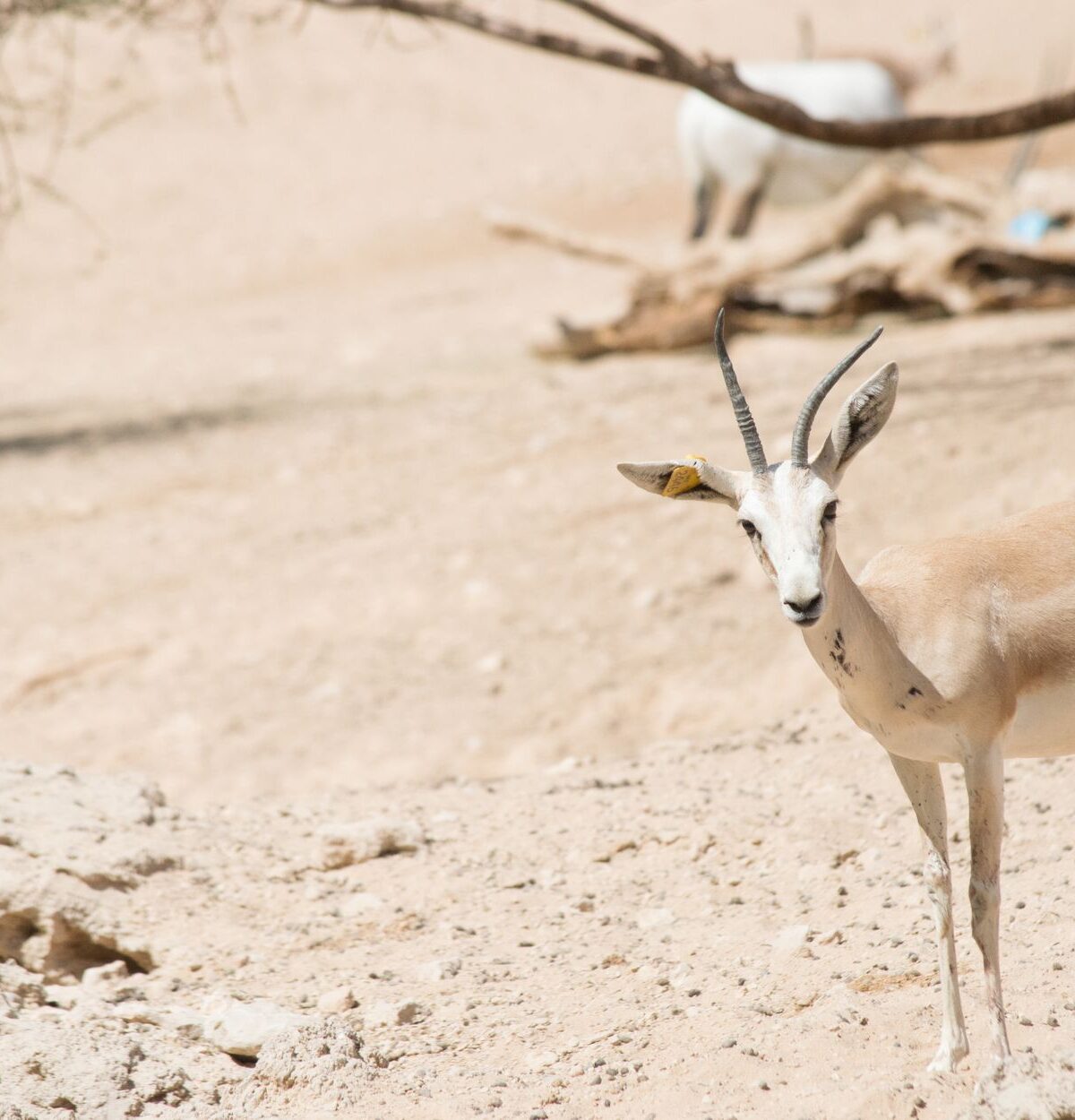
MOUNTAIN GAZELLE
Gazella gazella
DESCRIPTION
Mountain Gazelle (Gazella gazella) is a medium-sized antelope known for its slender build and graceful movements. It has a light brown coat with white underparts and distinctive black markings on its face and legs. These gazelles are primarily found in hilly and mountainous regions, where they exhibit a keen ability to navigate steep terrains and are known for their agility and speed when evading predators.
FUN FACTS
- Mountain Gazelles are known for their incredible jumping ability, which allows them to leap over obstacles and evade predators with ease
- They can jump up to 2 meters high and cover distances of up to 10 meters in a single bound
- | These gazelles have a unique social structure where females often form strong bonds with their offspring, and they are known to communicate through a variety of vocalizations and body language, enhancing their social interactions within the group
QUICK INFO
Lifespan10-12 years in the wild, up to 15 years in captivi
Average Weight30-50 kg
Average Length1.2-1.5 m
Diet TypeHerbivore
Social StructureThey are typically found in small groups or herds, often consisting of females and their young, while males may be solitary or form small bachelor groups.
Activity PatternDiurnal
Breeding SeasonYear-round, with peaks in spring
- Habitat
- Mountain Gazelles inhabit rocky, hilly areas and open grasslands, often favoring regions with sparse vegetation. They are well-adapted to arid environments, which allows them to thrive in their native range.
- Biomes
- Grassland, Mountain
- Native Range
- The native range of the Mountain Gazelle includes parts of the Middle East and North Africa, particularly in countries like Israel, Jordan, and Saudi Arabia.
- Continent
- Asia, Africa
- Countries
- Israel, Jordan, Saudi Arabia, Egypt
- Diet
- Mountain Gazelles are herbivores that primarily graze on grasses, leaves, and shrubs. They are known to adapt their diet based on seasonal availability of food sources.
- Diet Type
- Herbivore
- Favorite Food
- grasses, leaves, shrubs
- Social Structure
- They are typically found in small groups or herds, often consisting of females and their young, while males may be solitary or form small bachelor groups.
- Activity Pattern
- Diurnal
- Group Size
- 2-10
- Territorial
- 0
 VU
VU
 VU
VU
30-50 kg
Weight
1.2-1.5 m
Length
0.8-1.0 m at shoulder
Height (Shoulder)
- Coloration
- light brown with white underparts and black markings
- Sexual Dimorphism
- Males are generally larger and have longer horns than females.
- Lifespan
- 10-12 years in the wild, up to 15 years in captivi
- Gestation Period
- 180 days
- Offspring per Birth
- 1
- Sexual Maturity
- 1-2 years
- Breeding Season
- Year-round, with peaks in spring
VU
Vulnerable
IUCN Red List Status
- Population Status
- The population of Mountain Gazelles is currently declining due to habitat loss and hunting.
- Wild Population Estimate
- 10,000-15,000
- Population Trend
- Decreasing
- Endangered
- 1
- Threats
- Main threats to Mountain Gazelles include habitat destruction due to urbanization and agriculture, as well as hunting. These pressures have led to a significant decline in their populations across their range.
- Conservation Program
- Various conservation efforts are underway, including habitat protection and management programs.
- Predators
- Main predators include wolves, leopards, and large birds of prey.
- Defense Mechanisms
- Mountain Gazelles rely on their speed and agility to escape from predators, often using their keen eyesight to detect danger from a distance.
- Found in Zoos
- Uncommon