


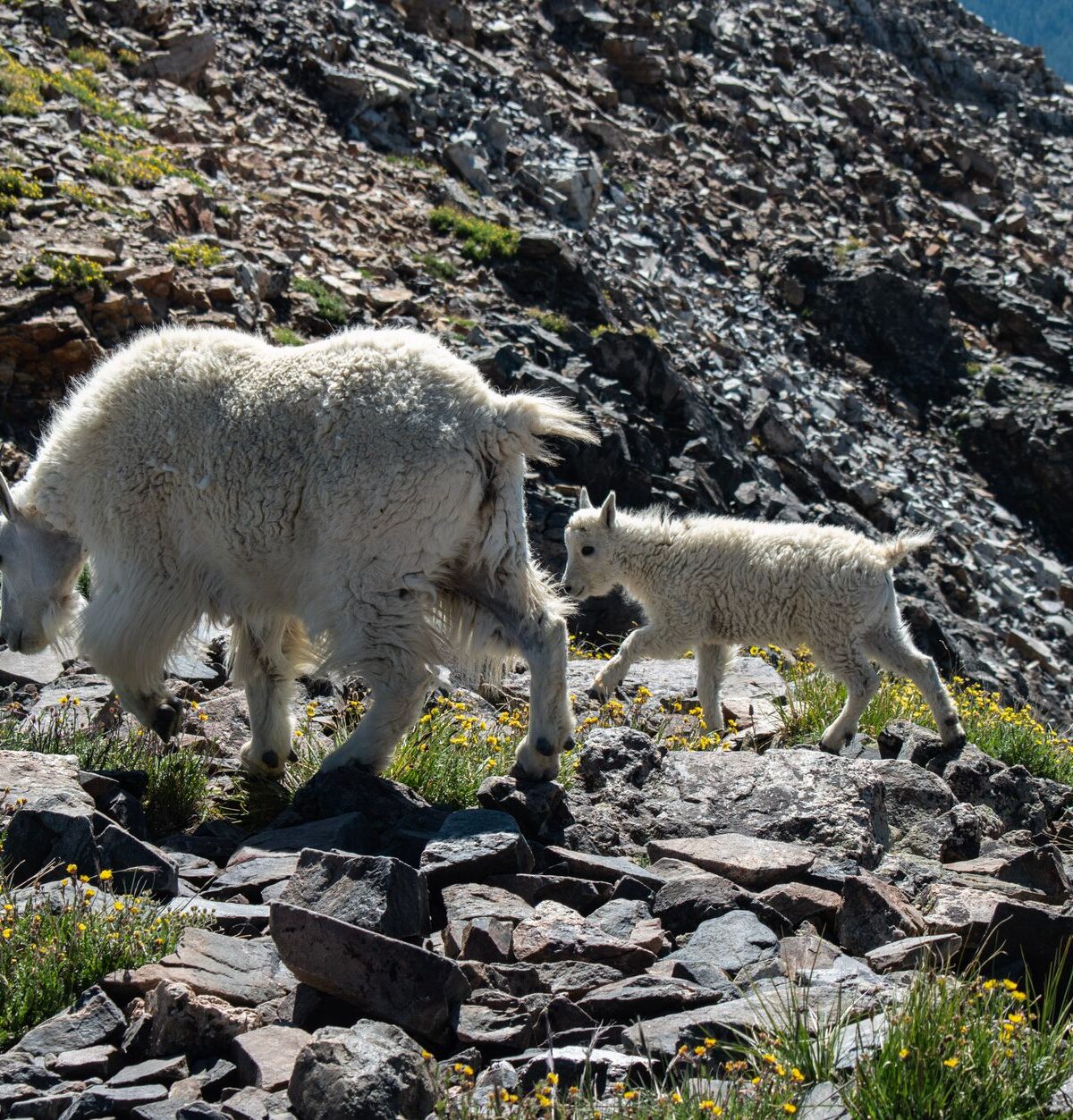
MOUNTAIN GOAT
DESCRIPTION
Also called the Rocky Mountain Goat, the Mountain Goat is a robust and agile ungulate known for its impressive climbing abilities. It has a thick white coat that helps insulate it against cold temperatures, and its sharp, curved hooves provide excellent traction on rocky terrain. Mountain Goats are social animals, often found in small groups, and they are well adapted to their steep, mountainous habitats, where they can be seen grazing on vegetation.
FUN FACTS
- Mountain Goats are not true goats; they belong to a different genus and are more closely related to antelopes
- They can jump up to 12 feet in a single leap, which helps them navigate their steep, rocky habitats.|Despite their name, Mountain Goats are not found in all mountainous regions; they are specifically adapted to the rugged terrains of North America, where they thrive in high altitudes and cold climates
QUICK INFO
Lifespan12-15 years in the wild, up to 20 years in captivi
Average Weight70-125 kg
Average Length1.2-1.5 m
Diet TypeHerbivore
Social Structuregroup — typically found in small herds consisting of females and their young, while males may be more solitary.
Activity PatternDiurnal
Breeding SeasonFall (November-December)
- Habitat
- Mountain Goats inhabit steep, rugged terrains, often in alpine and subalpine regions. They prefer areas with rocky outcrops and cliffs that provide safety from predators.
- Biomes
- Alpine, Mountain
- Native Range
- Mountain Goats are native to the mountainous regions of North America, particularly in the western United States and Canada.
- Continent
- North America
- Countries
- United States, Canada
- Diet
- Mountain Goats primarily feed on grasses, shrubs, and other vegetation found in their mountainous habitats. They are known to consume a variety of plant materials, including lichens and mosses.
- Diet Type
- Herbivore
- Favorite Food
- grasses, shrubs
- Social Structure
- group — typically found in small herds consisting of females and their young, while males may be more solitary.
- Activity Pattern
- Diurnal
- Group Size
- 5-15
- Territorial
- 0
 LC
LC
LC
LC
 LC
LC
70-125 kg
Weight
1.2-1.5 m
Length
0.9-1.1 m at shoulder
Height (Shoulder)
- Coloration
- thick white coat with a shaggy appearance
- Sexual Dimorphism
- males are generally larger than females
- Lifespan
- 12-15 years in the wild, up to 20 years in captivi
- Gestation Period
- 150 days
- Offspring per Birth
- 1
- Sexual Maturity
- 2-3 years
- Breeding Season
- Fall (November-December)
LC
Least Concern
IUCN Red List Status
- Population Status
- The Mountain Goat population is currently stable, with healthy numbers in many areas.
- Wild Population Estimate
- approximately 100,000
- Population Trend
- Stable
- Endangered
- 0
- Threats
- Main threats to Mountain Goats include habitat loss due to human encroachment and climate change, which can affect their alpine environments. Additionally, they may face predation from mountain lions and wolves.
- Predators
- Mountain lions, wolves, bears
- Defense Mechanisms
- Mountain Goats rely on their agility and ability to escape to steep cliffs to avoid predators.
- Found in Zoos
- Uncommon