


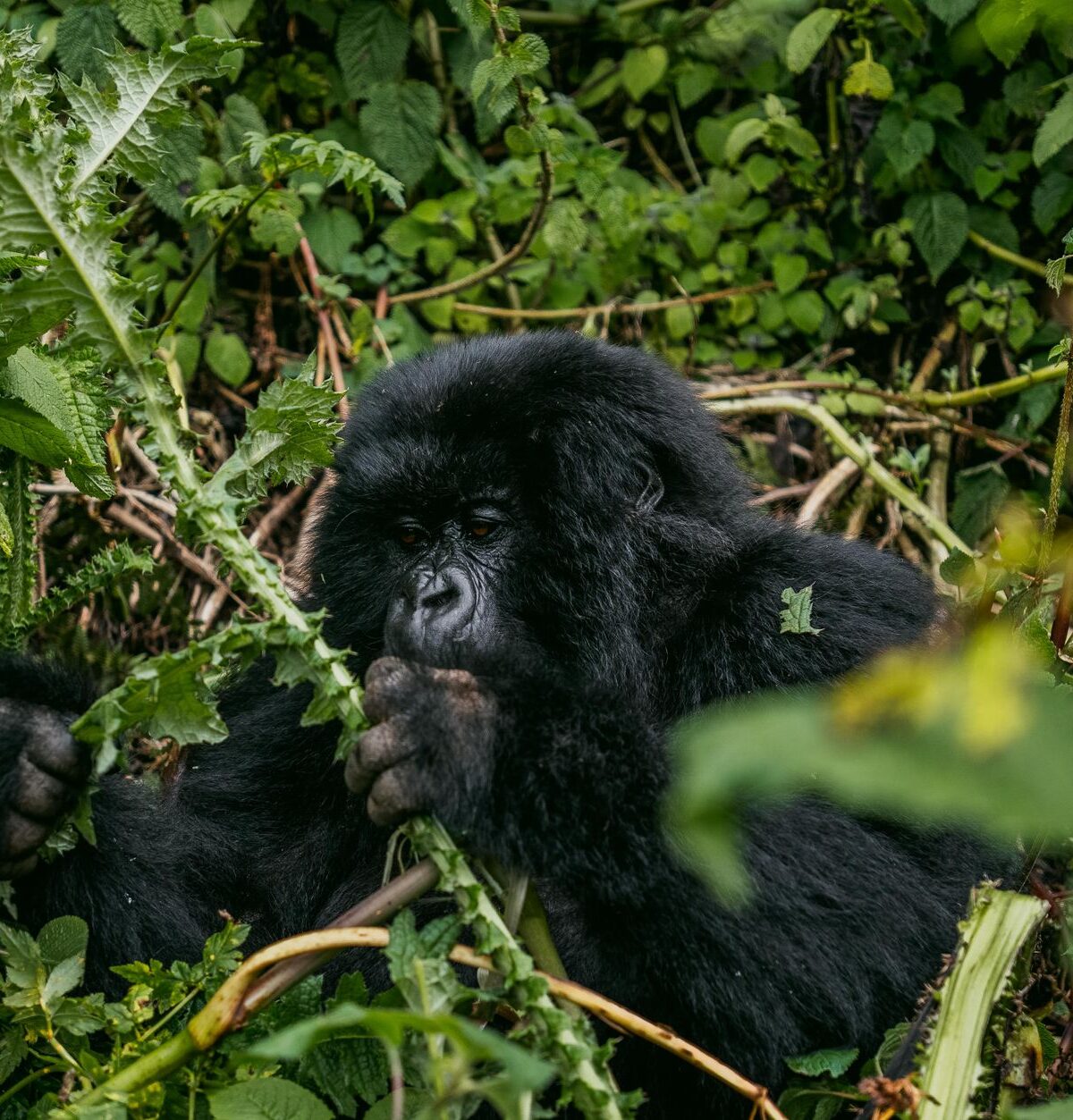
MOUNTAIN GORILLA
Gorilla beringei beringei
DESCRIPTION
Mountain Gorilla (Gorilla beringei beringei) is commonly known as the Eastern Gorilla, a subspecies of the Eastern Gorilla. They are characterized by their robust build, with a thick coat of dark fur that helps them survive in the cool, misty montane forests of their habitat. These gorillas are social animals, living in groups led by a dominant silverback male, and they exhibit complex behaviors including communication through vocalizations and gestures.
FUN FACTS
- Mountain Gorillas are known for their intelligence and have been observed using tools, such as sticks, to help them forage for food
- They also exhibit a range of emotions, including joy, sadness, and empathy, which has been documented in various studies of their social interactions
- | Unlike many other primates, Mountain Gorillas have a unique way of communicating through a series of grunts and hoots, which helps them maintain group cohesion and coordinate activities
- Their social structure is matriarchal, with females often playing a crucial role in nurturing and teaching the young
QUICK INFO
Lifespan35-40 years in the wild, up to 50 in captivity
Average Weight140-250 kg
Average Length1.5-1.8 m
Diet TypeHerbivore
Social Structuregroup — typically consists of a dominant silverback, several females, and their young.
Activity PatternDiurnal
Breeding Seasonyear-round
- Habitat
- Mountain Gorillas inhabit the dense montane forests and bamboo forests of the Virunga Mountains. These habitats provide the necessary cover and food resources for their survival.
- Biomes
- Tropical Rainforest, Montane Forest
- Native Range
- Mountain Gorillas are found in the Virunga Mountains, which span the borders of Rwanda, Uganda, and the Democratic Republic of the Congo.
- Continent
- Africa
- Countries
- Rwanda, Uganda, Democratic Republic of the Congo
- Diet
- Mountain Gorillas are primarily herbivorous, feeding on a variety of plant materials including leaves, stems, and fruits. They have a diverse diet that allows them to thrive in their mountainous environment.
- Diet Type
- Herbivore
- Favorite Food
- leaves, stems, fruits
- Social Structure
- group — typically consists of a dominant silverback, several females, and their young.
- Activity Pattern
- Diurnal
- Group Size
- 5-30
- Territorial
- 1
140-250 kg
Weight
1.5-1.8 m
Length
1.5 m at shoulder
Height (Shoulder)
- Coloration
- dark black to brown fur with a lighter patch on the chest
- Sexual Dimorphism
- males are significantly larger than females
- Lifespan
- 35-40 years in the wild, up to 50 in captivity
- Gestation Period
- about 8.5 months
- Offspring per Birth
- 1
- Sexual Maturity
- around 10-12 years
- Breeding Season
- year-round
CR
Critically Endangered
IUCN Red List Status
- Population Status
- The population of Mountain Gorillas has been increasing due to conservation efforts, but they remain critically endangered.
- Wild Population Estimate
- 1,000-1,100
- Population Trend
- Increasing
- Endangered
- 1
- Threats
- Main threats to Mountain Gorillas include habitat loss due to agriculture and human encroachment, poaching, and disease transmission from humans. Conservation efforts are crucial to their survival.
- Conservation Program
- The International Gorilla Conservation Programme (IGCP) is a notable initiative aimed at protecting Mountain Gorillas and their habitat.
- Predators
- Humans are the primary threat, but young gorillas may be vulnerable to leopards and other large carnivores.
- Defense Mechanisms
- Mountain Gorillas use vocalizations and displays of strength to deter threats, and the silverback will charge at intruders to protect the group.
- Found in Zoos
- Uncommon