


MOUNTAIN TAPIR
Tapirus pinchaque
DESCRIPTION
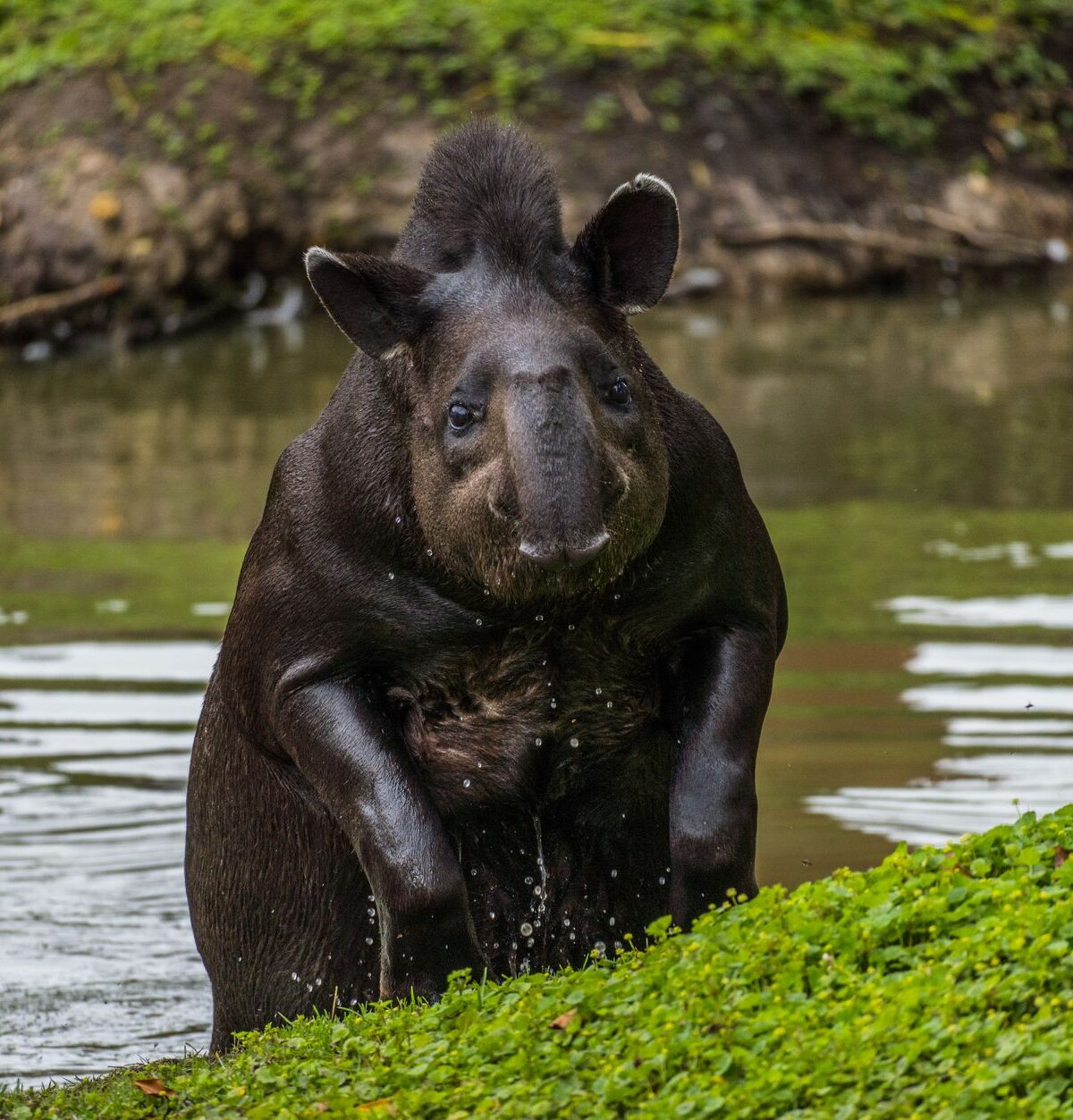
Mountain Tapir (Tapirus pinchaque) is commonly known as the Andean Tapir. This species is characterized by its stocky body, short legs, and a distinctive, prehensile snout that resembles a small trunk. They have a thick, bristly coat that is typically dark brown or gray, which helps them blend into their mountainous forest habitat, and they are known for their shy and elusive behavior.
FUN FACTS
- Mountain Tapirs are the smallest of the tapir species and are often referred to as the 'living fossils' of the tapir family due to their ancient lineage
- They have a unique adaptation in their snout, which allows them to grasp leaves and fruits, making them efficient foragers in their mountainous habitat.|Despite their size, Mountain Tapirs are excellent swimmers and can often be found in rivers and streams, where they cool off and find additional food sources
- Their thick skin helps protect them from cold temperatures in their high-altitude environments
QUICK INFO
Lifespan15-20 years in wild, up to 30 in captivity
Average Weight150-250 kg
Average Length1.8-2.5 m
Diet TypeHerbivore
Social Structuresolitary, occasionally seen in pairs during mating
Activity PatternCrepuscular
Breeding SeasonSpring (March-May)
- Habitat
- Mountain Tapirs inhabit cloud forests and high-altitude grasslands, typically at elevations between 2,500 and 4,000 meters. They prefer areas with dense vegetation that provide cover and food sources.
- Biomes
- Montane Forest, Grassland
- Native Range
- The native range of the Mountain Tapir includes the Andes mountains of Colombia, Ecuador, and northern Peru.
- Continent
- South America
- Countries
- Colombia, Ecuador, Peru
- Diet
- Mountain Tapirs are herbivores that primarily feed on leaves, fruits, and grasses. They play a crucial role in their ecosystem by aiding in seed dispersal.
- Diet Type
- Herbivore
- Favorite Food
- leaves, fruits, grasses
- Social Structure
- solitary, occasionally seen in pairs during mating
- Activity Pattern
- Crepuscular
- Group Size
- 1-2
- Territorial
- 0

150-250 kg
Weight
1.8-2.5 m
Length
1.2 m at shoulder
Height (Shoulder)
- Coloration
- dark brown or gray with a bristly coat
- Lifespan
- 15-20 years in wild, up to 30 in captivity
- Gestation Period
- 110 days
- Offspring per Birth
- 1
- Sexual Maturity
- 3-4 years
- Breeding Season
- Spring (March-May)
EN
Endangered
IUCN Red List Status
- Population Status
- The Mountain Tapir population is currently declining due to habitat loss and hunting.
- Wild Population Estimate
- 2,500-5,000
- Population Trend
- Decreasing
- Endangered
- 1
- Threats
- Main threats to the Mountain Tapir include habitat destruction due to agriculture and logging, as well as poaching. These factors have significantly impacted their population numbers.
- Conservation Program
- Conservation programs in Colombia and Ecuador focus on habitat protection and restoration.
- Predators
- Main predators include large cats such as jaguars and pumas, as well as humans.
- Defense Mechanisms
- Mountain Tapirs rely on their elusive nature and dense forest habitat for protection from predators.
- Found in Zoos
- Uncommon