


MULE DEER
Odocoileus hemionus
DESCRIPTION
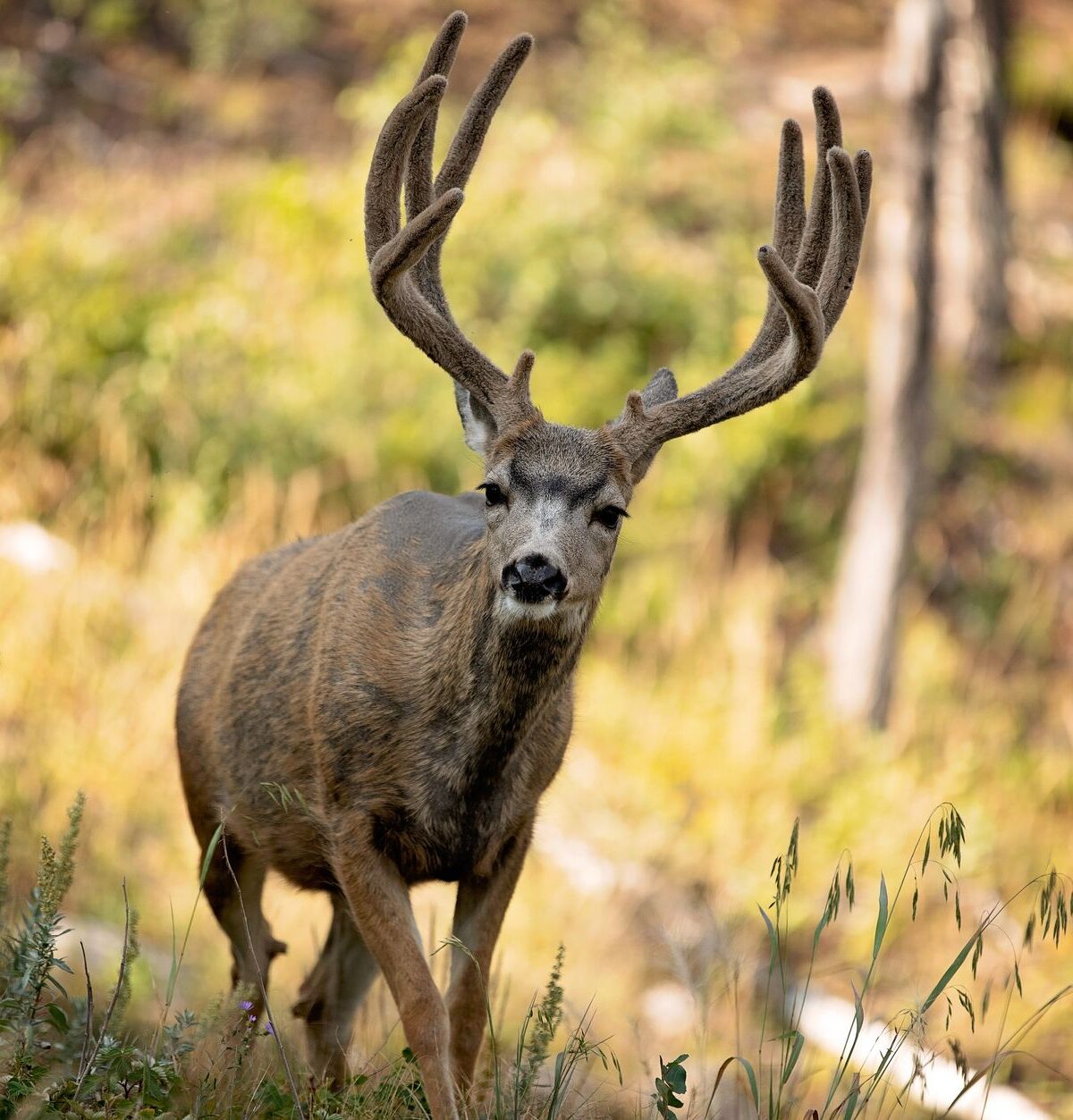
Mule Deer (Odocoileus hemionus) is commonly known as Black-tailed Deer and is characterized by its large ears and distinctive forked antlers in males. These deer have a robust body with a grayish-brown coat that can vary in shade depending on the season and region. They are primarily active during dawn and dusk, exhibiting a crepuscular behavior, and are known for their agility and ability to leap over obstacles with ease.
FUN FACTS
- Mule Deer are known for their unique bounding style called 'stotting,' where they leap high into the air to escape predators, making them difficult to catch
- | Their name 'Mule Deer' comes from their large, mule-like ears, which help them detect sounds from far away, enhancing their ability to avoid threats
QUICK INFO
Lifespan10-15 years in the wild, up to 20 in captivity
Average Weight45-150 kg
Average Length1.5-2.1 m
Diet TypeHerbivore
Social Structuresolitary or small groups, typically females with fawns
Activity PatternCrepuscular
Breeding SeasonFall (November-December)
- Habitat
- Mule Deer inhabit a range of environments, including forests, grasslands, and deserts. They prefer areas with ample cover for hiding and foraging, often found in hilly or mountainous regions.
- Biomes
- Temperate Forest, Grassland, Desert
- Native Range
- Mule Deer are native to western North America, ranging from Canada down to Mexico.
- Continent
- North America
- Countries
- United States, Canada, Mexico
- Diet
- Mule Deer are herbivores, primarily feeding on a variety of vegetation including leaves, shrubs, and grasses. They adapt their diet based on seasonal availability, often consuming more forbs in the spring and summer.
- Diet Type
- Herbivore
- Favorite Food
- shrubs, forbs, grasses
- Social Structure
- solitary or small groups, typically females with fawns
- Activity Pattern
- Crepuscular
- Group Size
- 1-5
- Territorial
- 0
 LC
LC
LC
LC
 LC
LC
45-150 kg
Weight
1.5-2.1 m
Length
0.9-1.2 m at shoulder
Height (Shoulder)
- Coloration
- grayish-brown coat with white underbelly and tail
- Sexual Dimorphism
- males are larger and have antlers
- Lifespan
- 10-15 years in the wild, up to 20 in captivity
- Gestation Period
- 200 days
- Offspring per Birth
- 1-2
- Sexual Maturity
- 1-2 years
- Breeding Season
- Fall (November-December)
LC
Least Concern
IUCN Red List Status
- Population Status
- Mule Deer populations are generally stable, though some local populations may face declines due to habitat loss.
- Wild Population Estimate
- 3 million
- Population Trend
- Stable
- Endangered
- 0
- Threats
- Main threats include habitat loss due to urban development and agriculture, as well as vehicle collisions. Additionally, hunting can impact local populations, although regulated hunting is often used as a management tool.
- Predators
- Mountain Lions, Coyotes, Wolves, Bears, Humans
- Defense Mechanisms
- Mule Deer rely on their keen senses and agility to evade predators, often using their ability to leap and run quickly to escape danger.
- Found in Zoos
- Uncommon