


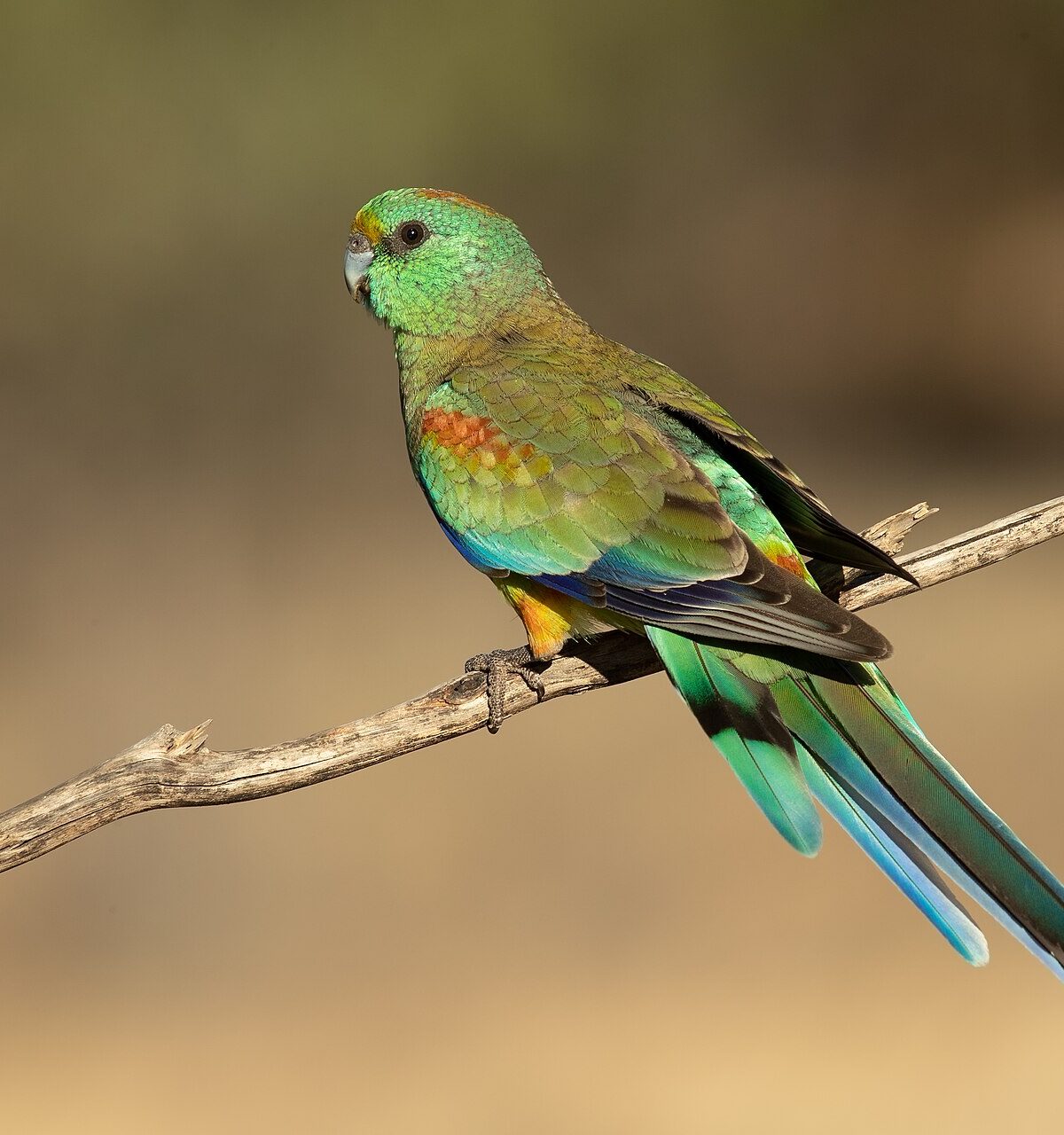
MULGA PARROT
Psephotus varius
DESCRIPTION
Also called the Australian Parakeet, the Mulga Parrot (Psephotus varius) is a small, colorful bird native to Australia. It exhibits a vibrant plumage with a mix of green, blue, and yellow, making it visually striking. These parrots are often found in pairs or small groups, displaying social behaviors and engaging in playful interactions.
FUN FACTS
- Mulga Parrots are known for their acrobatic flying skills, often performing aerial displays that showcase their agility and colorful plumage
- They are also popular in aviculture due to their striking appearance and engaging personalities.|These parrots have a unique ability to adapt to various environments, allowing them to thrive in both natural and urban settings
- Their social nature makes them fascinating to observe, as they often engage in playful interactions with one another
QUICK INFO
Lifespan10-15 years in the wild, up to 20 years in captivi
Average Weight70-100 g
Average Length25-30 cm
Diet TypeHerbivore
Social StructureThey are typically found in pairs or small groups, often forming loose flocks.
Activity PatternDiurnal
Breeding SeasonSpring to early summer (September to January)
- Habitat
- Mulga Parrots inhabit arid and semi-arid regions, often found in open woodlands and scrublands. They prefer areas with plenty of vegetation for foraging and nesting.
- Biomes
- Desert, Savanna, Grassland
- Native Range
- The native range of the Mulga Parrot includes much of central and western Australia.
- Continent
- Australia
- Countries
- Australia
- Diet
- Mulga Parrots primarily feed on seeds, fruits, and flowers, foraging on the ground and in trees. They are known to enjoy a variety of native Australian plants.
- Diet Type
- Herbivore
- Favorite Food
- seeds, fruits, flowers
- Social Structure
- They are typically found in pairs or small groups, often forming loose flocks.
- Activity Pattern
- Diurnal
- Group Size
- 2-20
- Territorial
- 0
 LC
LC
70-100 g
Weight
25-30 cm
Length
- Coloration
- The Mulga Parrot has a bright green body with blue and yellow accents, particularly on the wings and tail.
- Sexual Dimorphism
- Males are generally more colorful than females, with brighter blue and yellow markings.
- Lifespan
- 10-15 years in the wild, up to 20 years in captivi
- Offspring per Birth
- 3-6
- Sexual Maturity
- 1 year
- Breeding Season
- Spring to early summer (September to January)
LC
Least Concern
IUCN Red List Status
- Population Status
- The population of Mulga Parrots is currently stable, with no immediate threats to their numbers.
- Wild Population Estimate
- Unknown
- Population Trend
- Stable
- Endangered
- 0
- Threats
- Main threats include habitat loss due to land clearing and agriculture. However, they are adaptable and can thrive in modified habitats.
- Predators
- Natural predators include birds of prey such as hawks and eagles, as well as feral cats.
- Defense Mechanisms
- They rely on their agility and speed to evade predators, often taking flight to escape danger.
- Compatible Animals
- Other small parrots, finches, canaries
- Found in Zoos
- Common