


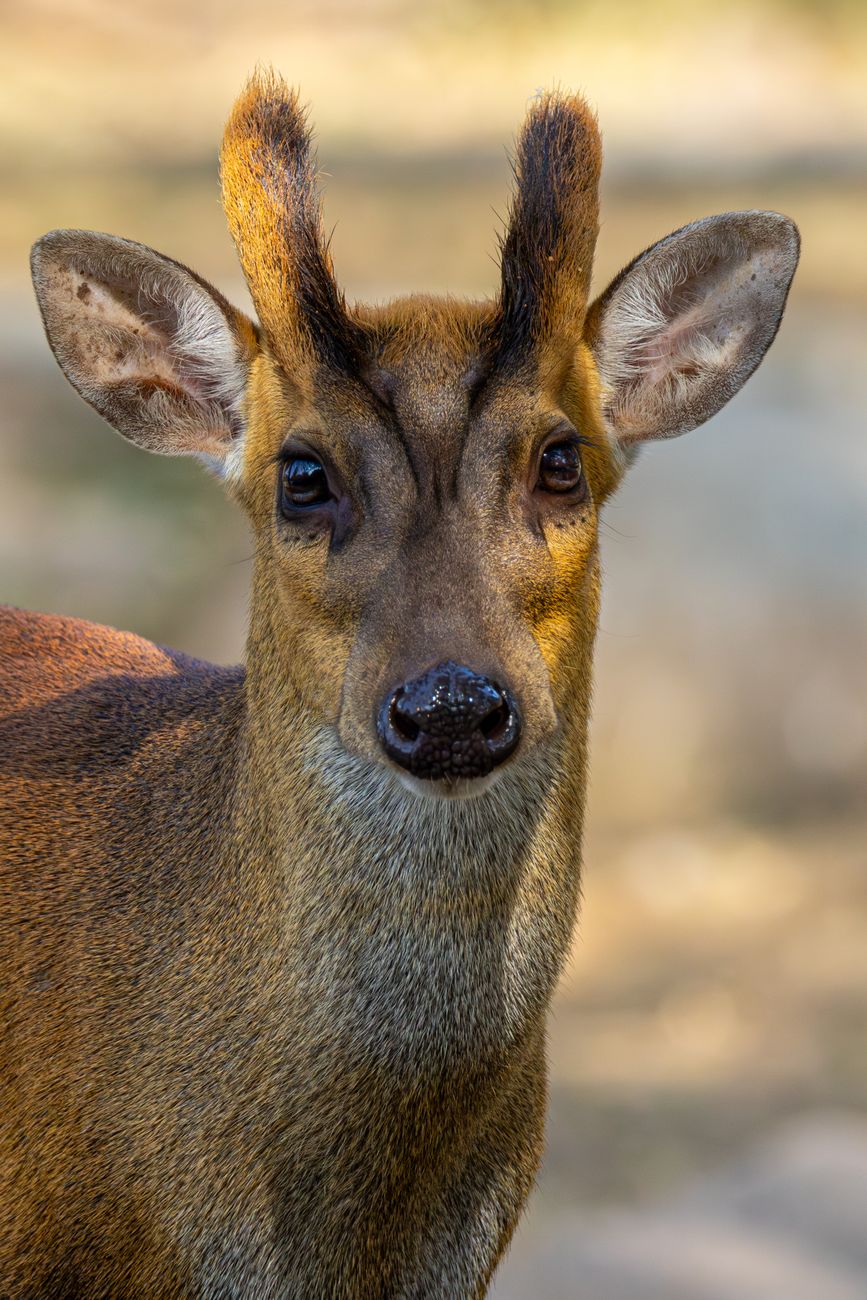
MUNTJAC DEER
Muntiacus
DESCRIPTION
Muntjac Deer (Muntiacus) is commonly known as the Barking Deer due to its distinctive vocalizations that resemble barking. This small deer species is characterized by its short stature, with adults typically standing about 60-90 cm at the shoulder, and its unique antlers, which are small and often shed annually. Muntjacs are solitary or live in small groups, and they are known for their elusive behavior, often hiding in dense vegetation to avoid predators.
FUN FACTS
- Muntjac Deer are known for their unique vocalizations, which can sound like a dog barking, hence their common name
- This vocal behavior is particularly pronounced during the mating season when males call to attract females
- | Interestingly, Muntjacs are one of the oldest known deer species, with fossil records dating back over 15 million years
- Their evolutionary history has allowed them to adapt to a variety of habitats across Asia
QUICK INFO
Lifespan10-15 years in the wild, up to 20 years in captivi
Average Weight15-30 kg
Average Length0.9-1.2 m
Diet TypeHerbivore
Social Structuresolitary or small groups, often consisting of a mother and her offspring
Activity PatternCrepuscular
Breeding SeasonYear-round, with peaks in spring and autumn
- Habitat
- Muntjac Deer inhabit a range of environments, including tropical and subtropical forests, grasslands, and scrublands. They prefer areas with dense underbrush for cover and foraging.
- Biomes
- Tropical Rainforest, Temperate Forest, Grassland
- Native Range
- Muntjac Deer are native to South and Southeast Asia, with a range that extends from India and Nepal to China and Indonesia.
- Continent
- Asia
- Countries
- India, Nepal, China, Vietnam, Indonesia
- Diet
- Muntjac Deer primarily feed on a variety of plant materials, including leaves, fruits, and flowers. They are known to graze on grasses and shrubs, making them adaptable to different habitats.
- Diet Type
- Herbivore
- Favorite Food
- leaves, fruits, flowers
- Social Structure
- solitary or small groups, often consisting of a mother and her offspring
- Activity Pattern
- Crepuscular
- Group Size
- 1-3
- Territorial
- 1
 EN
EN
 VU
VU
15-30 kg
Weight
0.9-1.2 m
Length
0.6-0.9 m at shoulder
Height (Shoulder)
- Coloration
- brown to reddish-brown fur with lighter underparts
- Sexual Dimorphism
- males have antlers, females do not
- Lifespan
- 10-15 years in the wild, up to 20 years in captivi
- Gestation Period
- 210 days
- Offspring per Birth
- 1
- Sexual Maturity
- 1-2 years
- Breeding Season
- Year-round, with peaks in spring and autumn
LC
Least Concern
IUCN Red List Status
- Population Status
- The population of Muntjac Deer is currently stable in many areas, although habitat loss poses a threat in some regions.
- Wild Population Estimate
- Unknown
- Population Trend
- Stable
- Endangered
- 0
- Threats
- Main threats include habitat destruction due to agriculture and urbanization, as well as hunting in some areas. These factors can lead to localized declines in their populations.
- Predators
- Tigers, leopards, and large birds of prey are known to prey on Muntjac Deer.
- Defense Mechanisms
- Muntjacs rely on their agility and ability to hide in dense vegetation to evade predators.
- Found in Zoos
- Common