


MUSK LORIKEET
Glossopsitta concinna
DESCRIPTION
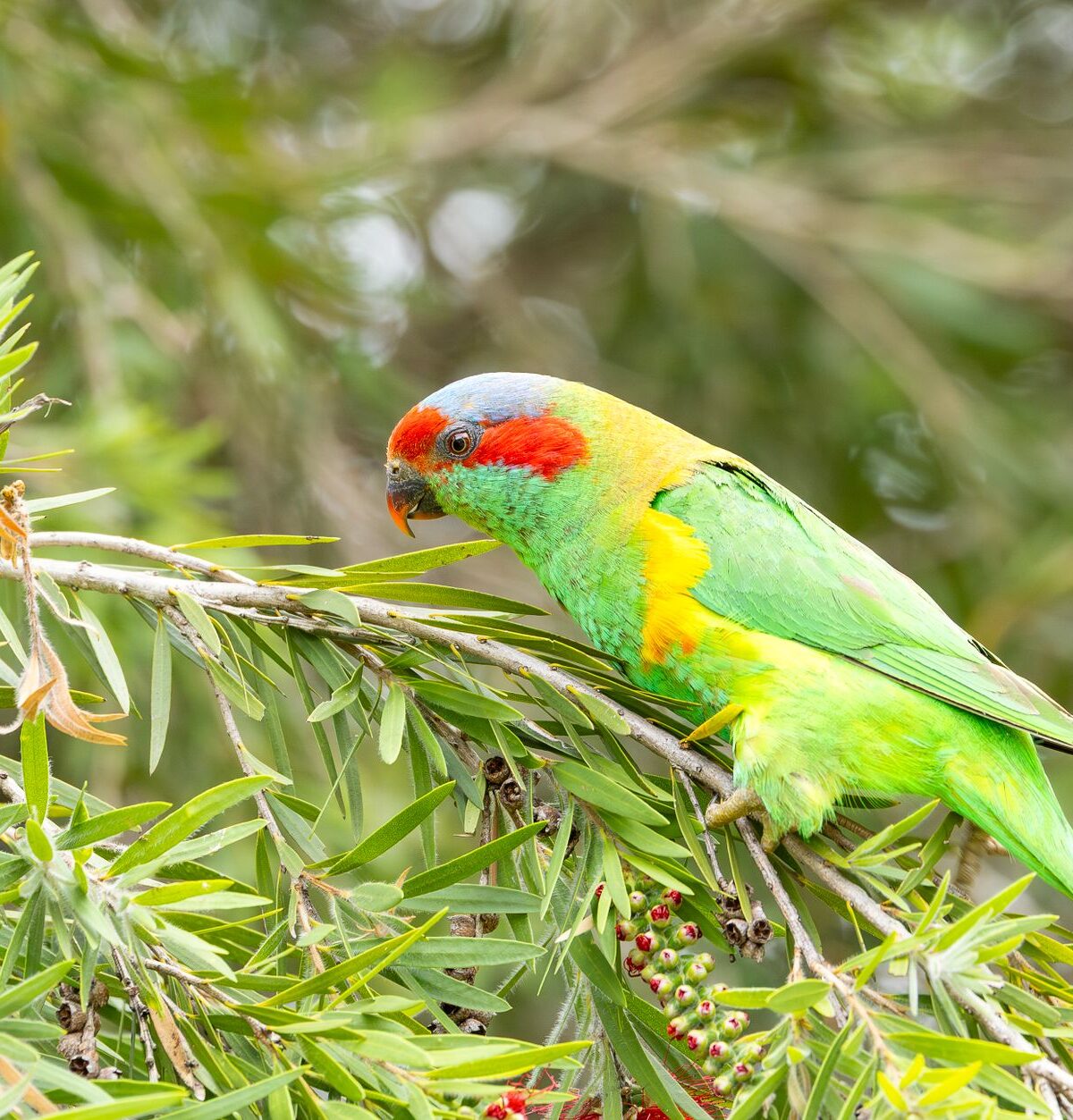
Musk Lorikeet (Glossopsitta concinna) is a small, vibrant parrot known for its striking green plumage and distinctive yellow and red markings on its head and underparts. This species is highly social and often found in flocks, displaying playful behavior as they feed and interact with one another. They are primarily nectarivorous, playing a crucial role in pollination within their ecosystems.
FUN FACTS
- Musk Lorikeets are known for their playful and curious nature, often engaging in acrobatic displays while feeding
- They have a unique feeding behavior where they can extract nectar from flowers with their specialized tongues, which are long and brush-like, allowing them to access deep floral structures.| These birds are also known for their loud and cheerful calls, which can be heard from a distance
- Their social nature means they often engage in vocal duets with their mates, strengthening their pair bonds and enhancing their social interactions
QUICK INFO
Lifespan10-15 years in the wild, up to 20 years in captivi
Average Weight70-100 g
Average Length20-25 cm
Diet TypeHerbivore
Social StructureThey are typically found in pairs or small groups, often forming larger flocks during feeding.
Activity PatternDiurnal
Breeding SeasonSpring to early summer
- Habitat
- Musk Lorikeets inhabit open forests, woodlands, and gardens, often near flowering trees. They prefer areas with abundant food sources and nesting sites.
- Biomes
- Temperate Forest, Tropical Rainforest
- Native Range
- They are native to eastern Australia, particularly in coastal regions and nearby islands.
- Continent
- Australia
- Countries
- Australia
- Diet
- Musk Lorikeets primarily feed on nectar from flowers, fruits, and occasionally pollen. Their specialized tongues allow them to extract nectar efficiently from various flowering plants.
- Diet Type
- Herbivore
- Favorite Food
- nectar, fruits
- Social Structure
- They are typically found in pairs or small groups, often forming larger flocks during feeding.
- Activity Pattern
- Diurnal
- Group Size
- 5-30
- Territorial
- 0
 LC
LC
70-100 g
Weight
20-25 cm
Length
- Coloration
- They have bright green feathers with yellow and red accents on the head and underparts.
- Sexual Dimorphism
- Males and females are similar in appearance, making it difficult to distinguish between the sexes.
- Lifespan
- 10-15 years in the wild, up to 20 years in captivi
- Offspring per Birth
- 1-3
- Sexual Maturity
- 1-2 years
- Breeding Season
- Spring to early summer
LC
Least Concern
IUCN Red List Status
- Population Status
- The population is currently stable, with no immediate threats to their survival.
- Wild Population Estimate
- Unknown
- Population Trend
- Stable
- Endangered
- 0
- Threats
- Main threats include habitat loss due to deforestation and urbanization. Additionally, competition for food and nesting sites with other species can impact their populations.
- Predators
- Natural predators include birds of prey, such as hawks and eagles, as well as snakes and larger mammals that may prey on their eggs or young.
- Defense Mechanisms
- They rely on their agility and speed to evade predators, often using their ability to fly quickly and maneuver through trees.
- Compatible Animals
- other lorikeets, small parrots
- Found in Zoos
- Common