


MUSKOX
Ovibos moschatus
DESCRIPTION
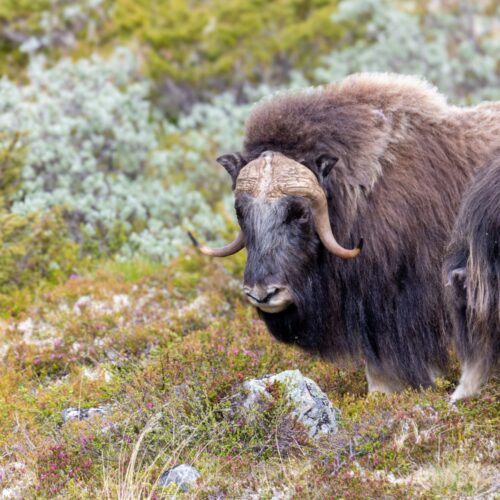
Muskoxen are large, shaggy mammals known for their thick fur and distinctive curved horns. They have a robust build, with males typically larger than females, and can weigh up to 400 kg. These animals are well adapted to cold environments, with a double-layered coat that insulates them against harsh Arctic conditions.
FUN FACTS
- Muskoxen have a unique adaptation called 'qiviut,' which is an incredibly warm undercoat that they shed in spring
- This wool is softer than cashmere and is highly sought after for making warm clothing
- | Despite their size and strength, muskoxen are known for their gentle demeanor and social behavior, often seen grooming each other and forming strong bonds within their herds
QUICK INFO
Lifespan12-20 years in the wild, up to 25 years in captivi
Average Weight250-400 kg
Average Length1.5-2.0 m
Diet TypeHerbivore
Social Structuregroup — they often live in herds that can range from a few individuals to over 20, providing safety in numbers.
Activity PatternDiurnal
Breeding SeasonAutumn (September-November)
- Habitat
- Muskoxen inhabit tundra and Arctic regions, where they can find sufficient vegetation to sustain their diet. They are often found in areas with low shrubs and grasses, which provide cover and food.
- Biomes
- Tundra, Arctic
- Native Range
- Muskoxen are native to the Arctic regions of North America and Greenland, with some populations also found in parts of Siberia.
- Continent
- North America, Europe, Asia
- Countries
- Canada, Greenland, Alaska (USA), Russia
- Diet
- Muskoxen are herbivores that primarily graze on grasses, mosses, and lichens. They are known to dig through snow to reach vegetation during the winter months.
- Diet Type
- Herbivore
- Favorite Food
- grasses, mosses, lichens
- Social Structure
- group — they often live in herds that can range from a few individuals to over 20, providing safety in numbers.
- Activity Pattern
- Diurnal
- Group Size
- 5-30
- Territorial
- 0
 LC
LC
 LC
LC
250-400 kg
Weight
1.5-2.0 m
Length
1.2 m at shoulder
Height (Shoulder)
- Coloration
- dark brown to light brown with a thick, long coat
- Sexual Dimorphism
- males are larger and have larger horns than females
- Lifespan
- 12-20 years in the wild, up to 25 years in captivi
- Gestation Period
- 240 days
- Offspring per Birth
- 1
- Sexual Maturity
- 2-3 years
- Breeding Season
- Autumn (September-November)
LC
Least Concern
IUCN Red List Status
- Population Status
- Muskox populations have recovered in some areas due to conservation efforts, but they still face threats in others.
- Wild Population Estimate
- 80,000-100,000
- Population Trend
- Stable
- Endangered
- 0
- Threats
- Main threats include climate change, habitat loss, and hunting. As the Arctic warms, their habitat is changing, which can affect their food sources.
- Conservation Program
- Successful reintroduction programs in Alaska and Canada have helped boost populations.
- Predators
- Wolves, bears, and humans are the primary predators of muskoxen.
- Defense Mechanisms
- Muskoxen can form a defensive circle around their young when threatened, using their large bodies and horns to fend off predators.
- Compatible Animals
- none
- Found in Zoos
- Uncommon