


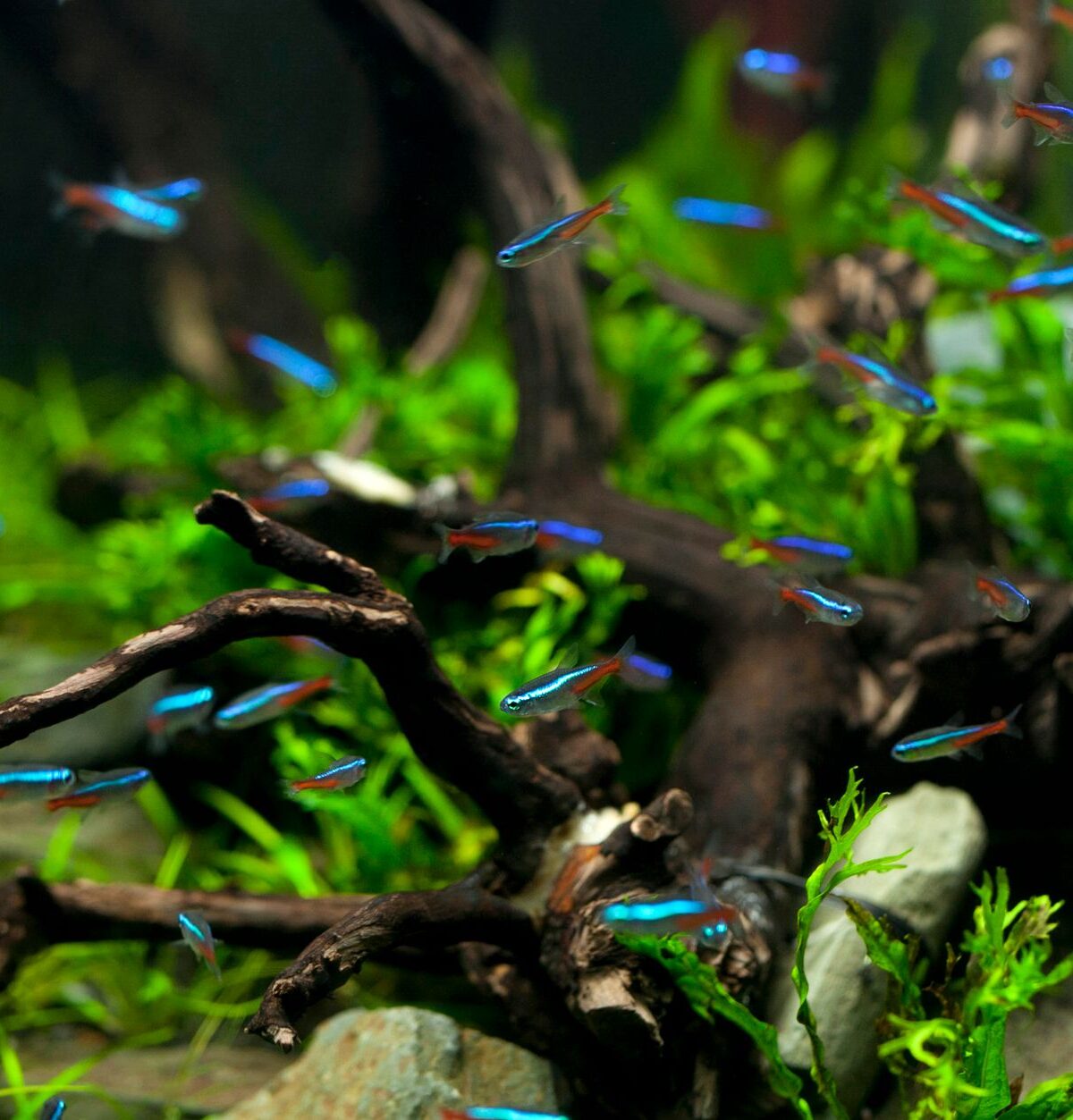
NEONTETRA
DESCRIPTION
Neontetra is commonly known as the Neon Tetra, a small freshwater fish that is popular in the aquarium trade. It is characterized by its vibrant blue body and a striking red stripe that runs horizontally from the middle of its body to the base of its tail. These fish are social creatures, often found in schools, and they thrive in well-planted tanks that mimic their natural habitat in the Amazon River basin.
FUN FACTS
- Neontetras are known for their stunning coloration, which can be enhanced by providing a proper diet and environment
- They are also popular in aquascaping due to their peaceful nature and ability to thrive in planted tanks.|In the wild, Neontetras are often found in large schools, which can number in the hundreds
- This schooling behavior not only provides safety in numbers but also creates a beautiful display in aquariums, making them a favorite among fish enthusiasts
QUICK INFO
Lifespan5-10 years in captivity
Average Weight1-2 g
Average Length3-4 cm
Diet TypeOmnivore
Social Structuregroup — they are social fish that thrive in schools of at least six individuals.
Activity PatternDiurnal
Breeding SeasonYear-round in captivity, often stimulated by water changes
- Habitat
- Neontetras inhabit slow-moving waters in the Amazon River basin, often found in densely vegetated areas. They prefer soft, acidic water with plenty of cover from plants and driftwood.
- Biomes
- Freshwater, Tropical Rainforest
- Native Range
- Native to the Amazon River basin in South America, particularly in countries like Brazil, Colombia, and Peru.
- Continent
- South America
- Countries
- Brazil, Colombia, Peru
- Diet
- Neontetras are omnivorous, feeding on a variety of small foods including flakes, pellets, and live or frozen foods like brine shrimp and daphnia. They require a balanced diet to maintain their bright coloration and overall health.
- Diet Type
- Omnivore
- Favorite Food
- small flakes, brine shrimp, daphnia
- Social Structure
- group — they are social fish that thrive in schools of at least six individuals.
- Activity Pattern
- Diurnal
- Group Size
- 6-20
- Territorial
- 0
 VU
VU
 LC
LC
1-2 g
Weight
3-4 cm
Length
- Coloration
- vibrant blue body with a red stripe
- Sexual Dimorphism
- males are typically smaller and have a more pronounced blue coloration than females
- Lifespan
- 5-10 years in captivity
- Offspring per Birth
- up to 100
- Sexual Maturity
- 6-12 months
- Breeding Season
- Year-round in captivity, often stimulated by water changes
LC
Least Concern
IUCN Red List Status
- Population Status
- The population is generally stable in the wild, but habitat destruction poses a threat.
- Wild Population Estimate
- unknown
- Population Trend
- Stable
- Endangered
- 0
- Threats
- Main threats include habitat loss due to deforestation and pollution in their native waters. Over-collection for the aquarium trade can also impact local populations.
- Predators
- Larger fish, birds, and aquatic predators such as pike and catfish.
- Defense Mechanisms
- They rely on their schooling behavior and quick swimming to evade predators.
- Compatible Animals
- small tetras, rasboras, guppies, corydoras
- Found in Zoos
- Common