


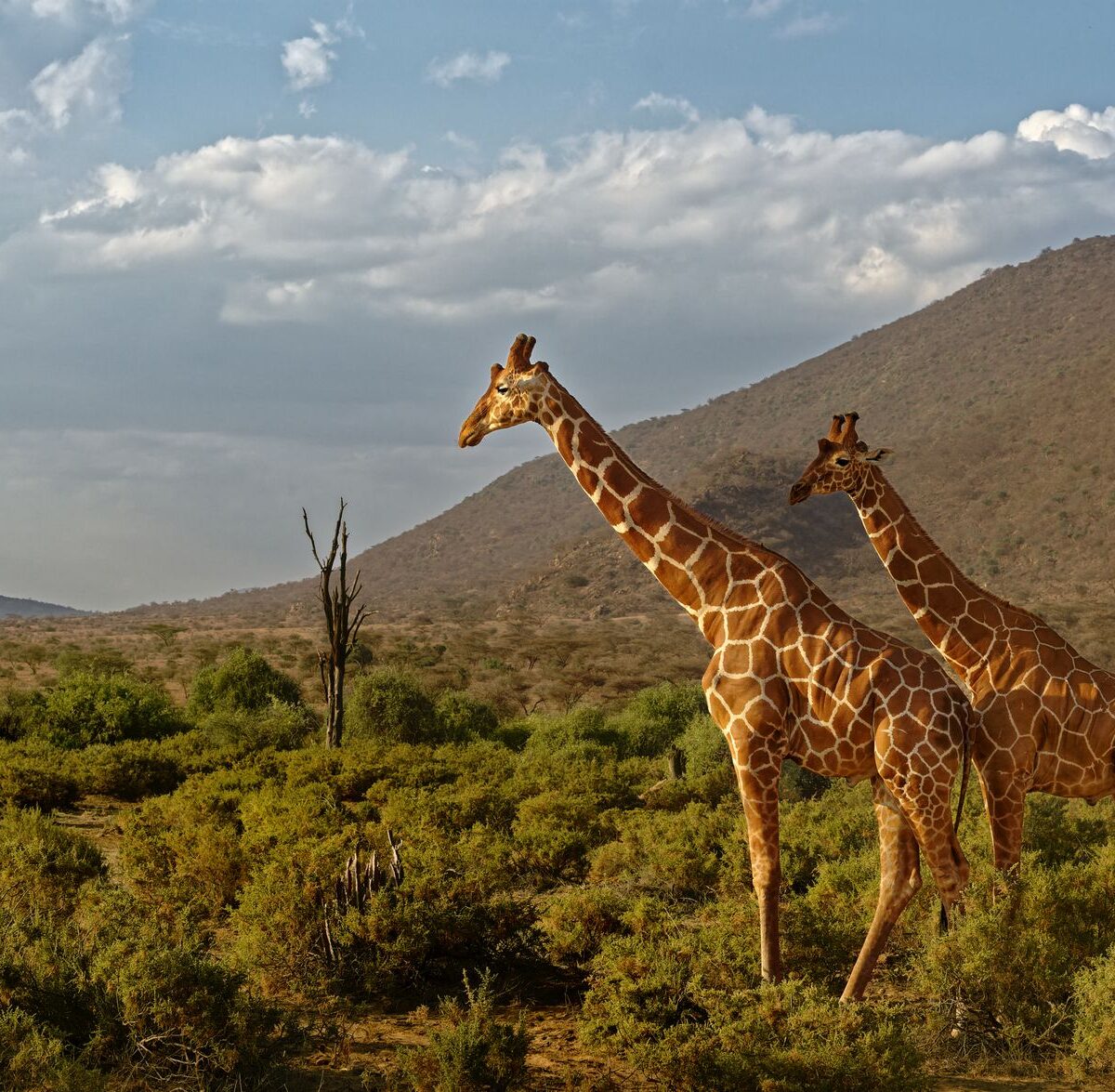
NET GIRAFFE
DESCRIPTION
Net Giraffe, also known as the Reticulated Giraffe, is distinguished by its striking coat pattern, which features a network of white lines separating large, polygonal patches of brown. This species is native to the dry savannas and open woodlands of East Africa, where it can often be seen browsing on the leaves of acacia trees. Socially, Net Giraffes are generally found in loose herds, exhibiting a unique behavior of necking, where males engage in combat using their necks to establish dominance.
FUN FACTS
- Net Giraffes have a unique way of drinking water; they must spread their legs apart and bend down, which makes them vulnerable to predators
- Additionally, their long necks are not just for reaching high foliage; they also play a crucial role in social interactions and mating displays, as males often engage in necking battles to establish dominance and attract females
QUICK INFO
Lifespan20-25 years in the wild, up to 30 years in captivi
Average Weight800-1,200 kg
Average Length4.3-5.7 m
Diet TypeHerbivore
Social Structuregroup — they typically form loose herds that can vary in size, often consisting of females and their young, while males may be more solitary.
Activity PatternDiurnal
Breeding SeasonYear-round, with peaks depending on local conditions
- Habitat
- Net Giraffes inhabit savannas, grasslands, and open woodlands, where they can find ample food sources. They prefer areas with a mix of trees and open spaces to facilitate foraging and spotting predators.
- Biomes
- Savanna, Grassland
- Native Range
- The native range of the Net Giraffe includes parts of Kenya and Somalia, primarily in the eastern regions of Africa.
- Continent
- Africa
- Countries
- Kenya, Somalia
- Diet
- Net Giraffes are herbivores, primarily feeding on leaves, fruits, and flowers from trees and shrubs. Their long necks allow them to reach high foliage that many other herbivores cannot access.
- Diet Type
- Herbivore
- Favorite Food
- Acacia leaves
- Social Structure
- group — they typically form loose herds that can vary in size, often consisting of females and their young, while males may be more solitary.
- Activity Pattern
- Diurnal
- Group Size
- 5-20
- Territorial
- 0
 LC
LC
 LC
LC
800-1,200 kg
Weight
4.3-5.7 m
Length
4.5-6 m
Height (Shoulder)
- Coloration
- The coloration of the Net Giraffe is characterized by a light brown coat with distinct, polygonal patches outlined by white lines.
- Sexual Dimorphism
- Males are generally larger and have thicker necks than females.
- Lifespan
- 20-25 years in the wild, up to 30 years in captivi
- Gestation Period
- 450 days
- Offspring per Birth
- 1
- Sexual Maturity
- 3-4 years
- Breeding Season
- Year-round, with peaks depending on local conditions
EN
Endangered
IUCN Red List Status
- Population Status
- The population of Net Giraffes is currently declining due to habitat loss and poaching.
- Wild Population Estimate
- Approximately 15,000
- Population Trend
- Decreasing
- Endangered
- 1
- Threats
- Main threats to the Net Giraffe include habitat destruction due to agriculture and urbanization, as well as poaching for their skin and body parts. These factors have significantly impacted their populations in the wild.
- Conservation Program
- Various conservation programs are in place, including habitat protection and anti-poaching initiatives.
- Predators
- Lions, hyenas, and crocodiles are known predators of the Net Giraffe, particularly targeting calves.
- Defense Mechanisms
- Net Giraffes use their height to spot predators from a distance and can deliver powerful kicks to defend themselves.
- Compatible Animals
- Zebras, antelopes, ostriches
- Found in Zoos
- Common