


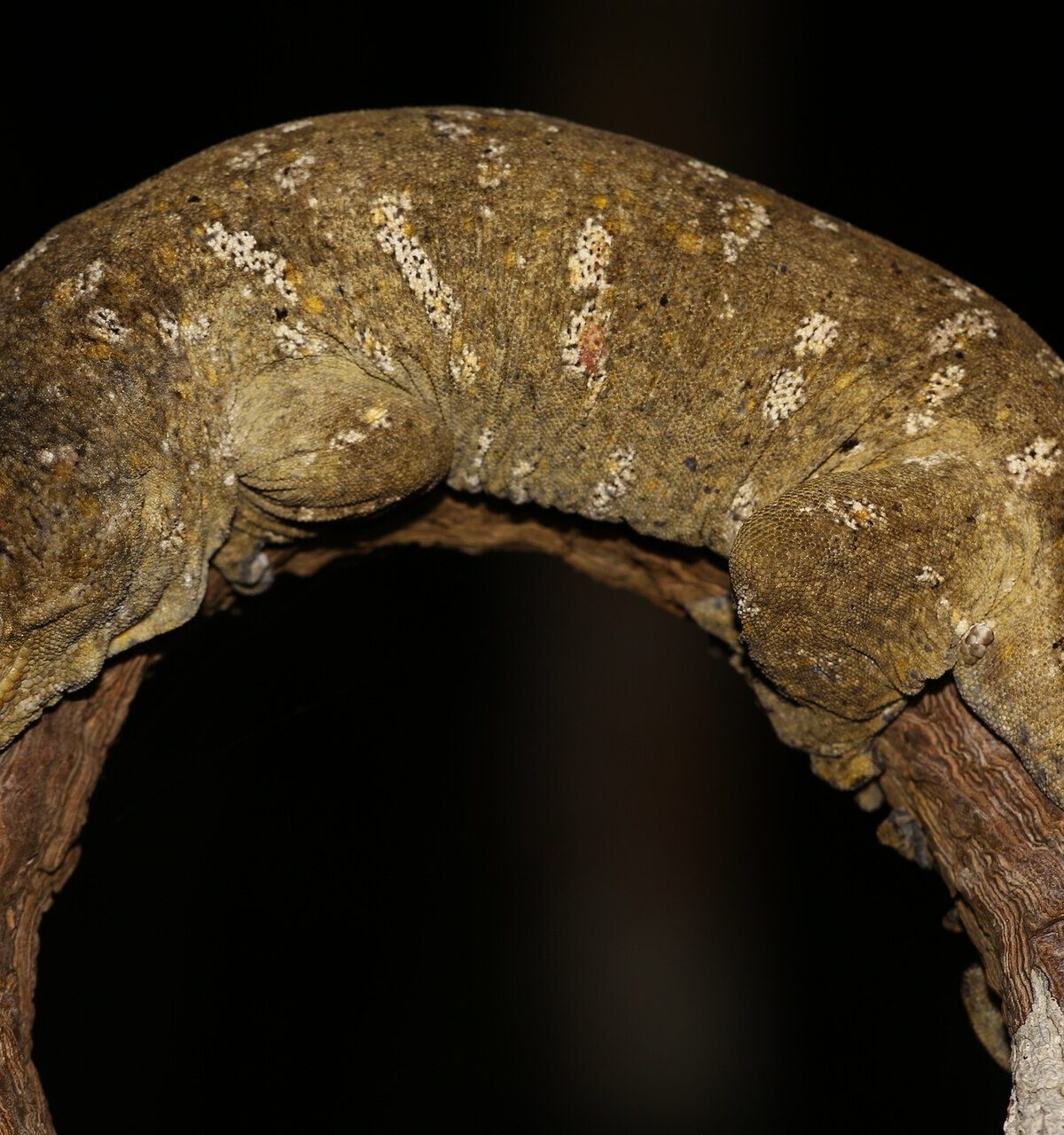
NEW CALEDONIAN GIANT GECKO
Rhacodactylus leachianus
DESCRIPTION
New Caledonian Giant Gecko (Rhacodactylus leachianus) is one of the largest gecko species, known for its robust body and large head. It exhibits a variety of color patterns, often featuring shades of green, brown, and gray, which help it blend into its forest habitat. This species is primarily nocturnal, spending its nights foraging for food and basking in the trees during the day.
FUN FACTS
- New Caledonian Giant Geckos are known for their impressive size, being one of the largest gecko species in the world, which can reach lengths of up to 40 cm
- They have a unique ability to regenerate their tails, which can be a crucial survival mechanism when escaping predators
- | These geckos are also known for their vocalizations, which can include a range of sounds from hisses to barks, especially during mating season
- Their vocal communication is an important aspect of their social behavior, helping to establish territory and attract mates
QUICK INFO
Lifespan15-20 years in the wild, up to 30 years in captivi
Average Weight200-400 g
Average Length30-40 cm
Diet TypeOmnivore
Social Structuresolitary, with males being territorial
Activity PatternNocturnal
Breeding SeasonSpring to early summer
- Habitat
- New Caledonian Giant Geckos inhabit humid, tropical forests, often found in trees and shrubs. They prefer areas with plenty of cover and climbing opportunities.
- Biomes
- Tropical Rainforest
- Native Range
- Endemic to New Caledonia, specifically the main island and some surrounding islets.
- Continent
- Oceania
- Countries
- New Caledonia
- Diet
- It primarily feeds on fruits, flowers, and insects, showcasing an omnivorous diet. In captivity, they are often provided with a diet of commercial gecko food, fruits, and insects.
- Diet Type
- Omnivore
- Favorite Food
- fruits, insects
- Social Structure
- solitary, with males being territorial
- Activity Pattern
- Nocturnal
- Group Size
- 1-2
- Territorial
- 1
 VU
VU
 LC
LC

200-400 g
Weight
30-40 cm
Length
- Coloration
- Typically greenish-brown with darker spots or bands, providing excellent camouflage.
- Sexual Dimorphism
- Males are generally larger and have more pronounced femoral pores than females.
- Lifespan
- 15-20 years in the wild, up to 30 years in captivi
- Offspring per Birth
- 1-2
- Sexual Maturity
- 2-3 years
- Breeding Season
- Spring to early summer
LC
Least Concern
IUCN Red List Status
- Population Status
- The population is currently stable, but habitat loss poses a potential threat.
- Wild Population Estimate
- Unknown
- Population Trend
- Stable
- Endangered
- 0
- Threats
- Main threats include habitat destruction due to deforestation and invasive species. These factors can lead to a decline in their natural habitat and food sources.
- Predators
- Birds of prey, snakes, and introduced mammals such as rats and cats.
- Defense Mechanisms
- They can drop from trees to escape predators and have a strong grip that allows them to cling to surfaces.
- Found in Zoos
- Uncommon