


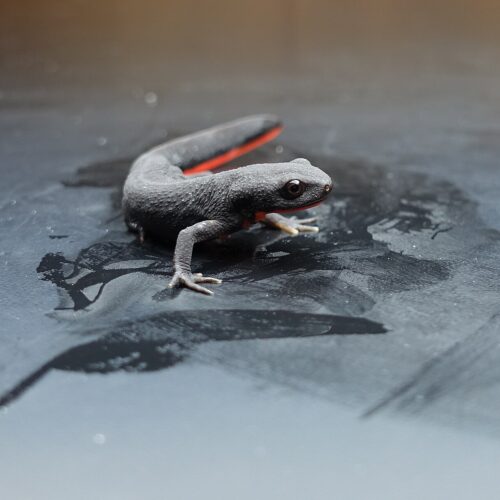
NEWT
Notophthalmus
DESCRIPTION
Newts are small to medium-sized amphibians that exhibit a range of colors, often featuring bright orange or yellow with black spots. They have a slender body, a long tail, and smooth skin, which can vary in texture depending on the species and life stage. Newts are known for their aquatic larval stage, during which they develop gills, and they often return to water bodies to breed, showcasing complex courtship behaviors.
FUN FACTS
- Newts are capable of regenerating lost limbs, tails, and even parts of their heart and eyes, making them a subject of scientific research into regenerative medicine
- | During the breeding season, male newts perform intricate courtship dances, which can include tail waving and the release of pheromones to attract females
QUICK INFO
Lifespan10-15 years in the wild, up to 20 in captivity
Average Weight10-30 g
Average Length7-15 cm
Diet TypeCarnivore
Social Structuresolitary, with males and females coming together only for breeding
Activity PatternNocturnal
Breeding SeasonSpring (March-June)
- Habitat
- Newts inhabit a variety of environments, including freshwater ponds, marshes, and wooded areas. They require both aquatic and terrestrial habitats for different life stages, often seeking shelter under rocks or leaf litter.
- Biomes
- Temperate Forest, Freshwater
- Native Range
- Newts are native to North America and parts of Europe and Asia.
- Continent
- North America, Europe, Asia
- Countries
- United States, Canada, United Kingdom, Germany, France
- Diet
- Newts primarily consume small invertebrates, including insects, worms, and crustaceans. They are opportunistic feeders and may also eat small fish and amphibian larvae.
- Diet Type
- Carnivore
- Favorite Food
- small invertebrates, insects
- Social Structure
- solitary, with males and females coming together only for breeding
- Activity Pattern
- Nocturnal
- Group Size
- 1-5
- Territorial
- 1
 VU
VU
 LC
LC

10-30 g
Weight
7-15 cm
Length
- Coloration
- bright orange or yellow with black spots
- Sexual Dimorphism
- males often have more vibrant colors and a more pronounced crest during breeding season
- Lifespan
- 10-15 years in the wild, up to 20 in captivity
- Offspring per Birth
- 100-300 eggs
- Sexual Maturity
- 2-4 years
- Breeding Season
- Spring (March-June)
LC
Least Concern
IUCN Red List Status
- Population Status
- Newt populations are generally stable, but some species face habitat loss and pollution.
- Wild Population Estimate
- unknown
- Population Trend
- Stable
- Endangered
- 0
- Threats
- Main threats include habitat destruction, pollution, and climate change. Invasive species can also pose a risk to local newt populations.
- Predators
- birds, snakes, larger fish, and mammals such as raccoons and otters
- Defense Mechanisms
- Newts possess toxic skin secretions that deter predators, and some species can regenerate lost limbs.
- Found in Zoos
- Common